May 2026 Wildlife Column 

May 2026 Wildlife Column 

Written by Gwyn Loud for the Lincoln Land Conservation Trust. She welcomes your sightings and questions at 781-259-8690 or gwynloud555@gmail.com. 

It seems that the blooming trees and shrubs have been more beautiful than ever this spring, perhaps because we have had enough cool weather to sustain the blossoms. Sporadic rain has also helped, although we are still in drought, a drought which began in 2024. Basically, we are low in ground water due to insufficient rainfall. See link to read more details. There have been many winter-jacket-chilly mornings, but as I write, in the midst of an unseasonable mini-heat wave, it is 96℉.

Deciduous trees are largely leafed out, with the black locusts leafing out last, as usual. I always marvel at the numerous shades of green at this time of year. Horse chestnut trees are about to display their erect clusters of white flowers, and the samaras of red maples add touches of red to the scene. In response to the numerous trees marked by Eversource for removal, Marcia Gnagey did some research and she shared the letter with me which she wrote especially in defense of oaks. For example, “According to a 2019 study a mature white oak can support over 2,300 species of wildlife”, from chickweed, and cinquefoil. On a woodland walk you might come birds, to invertebrates, to lichen, and fungi. And ecologist/author Doug Tallamy advises us, if we love birds, to plant oaks. Baby birds need to eat caterpillars (think soft, easy to digest); over 500 species of moths and butterflies lay eggs on oaks, which hatch into caterpillars i.e. baby birds’ breakfast, lunch, and dinner. We know that the population of songbirds has seriously declined over the past thirty years, so let’s do all we can to help the birds prosper by planting bird-friendly trees and shrubs on our properties. See link for suggested list.

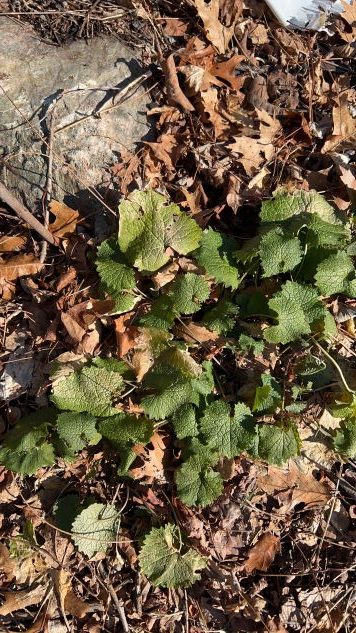
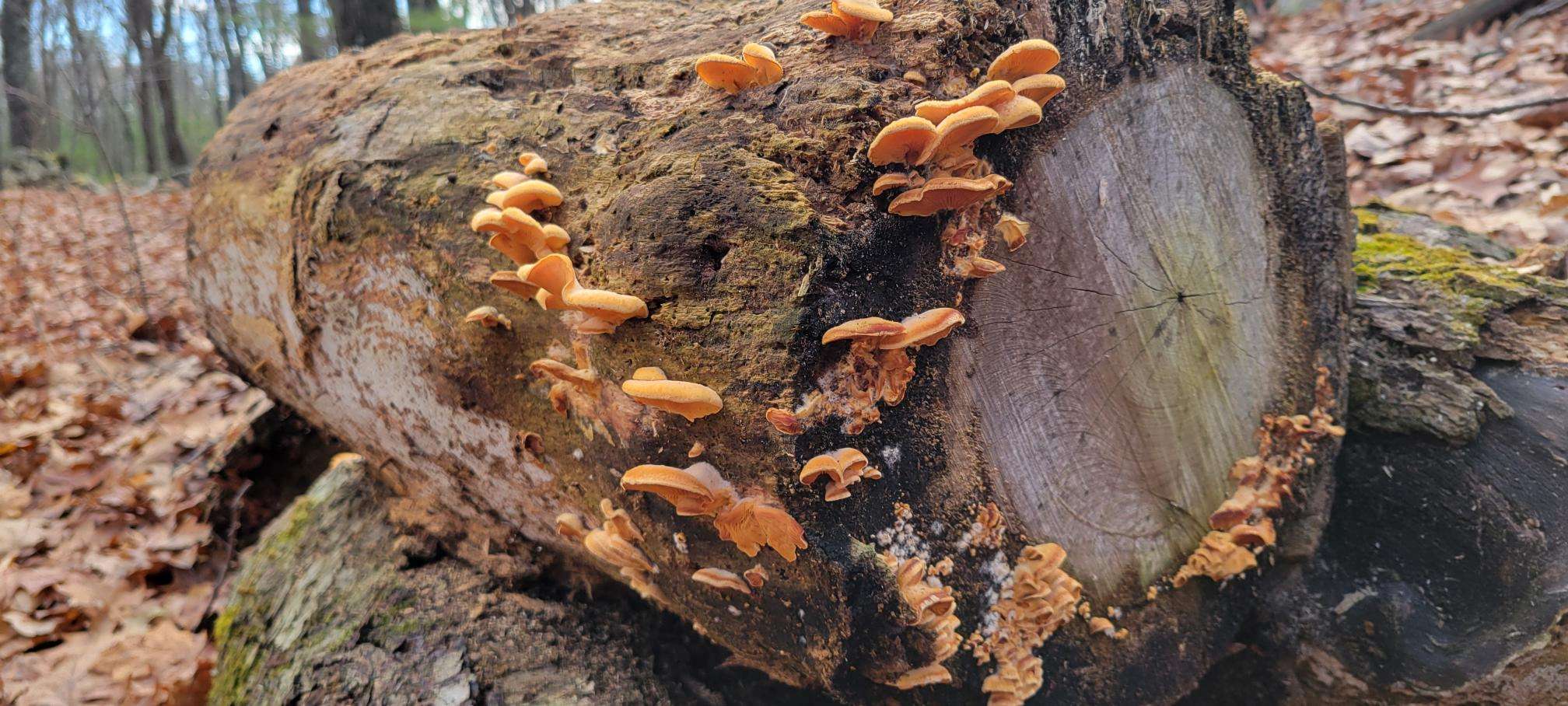
Roadside flowers blooming now include greater celandine, dame’s rocket, and carpet bugle. Garlic mustard, an invasive, is everywhere and this is the time to pull it, while it is flowering and before it sets seed. My lawn is sprinkled with small flowers such as dandelions, buttercups, violets, ground ivy, across bloodroot, wood anemone, jack-in-the-pulpit and Solomon’s seal. Canada mayflower (aka wild lily of the valley) carpets the woodland floor and the beautiful lady’s slippers, members of the orchid family, have just started blooming. Both high bush and low bush blueberries are in flower in the woods, giving promise of wildlife food to come. A flowering pink azalea is a spectacular find and honeysuckle is a pervasive shrub in flower. I was happy to come across a bright orange chicken of the woods, one of the bracket fungi.

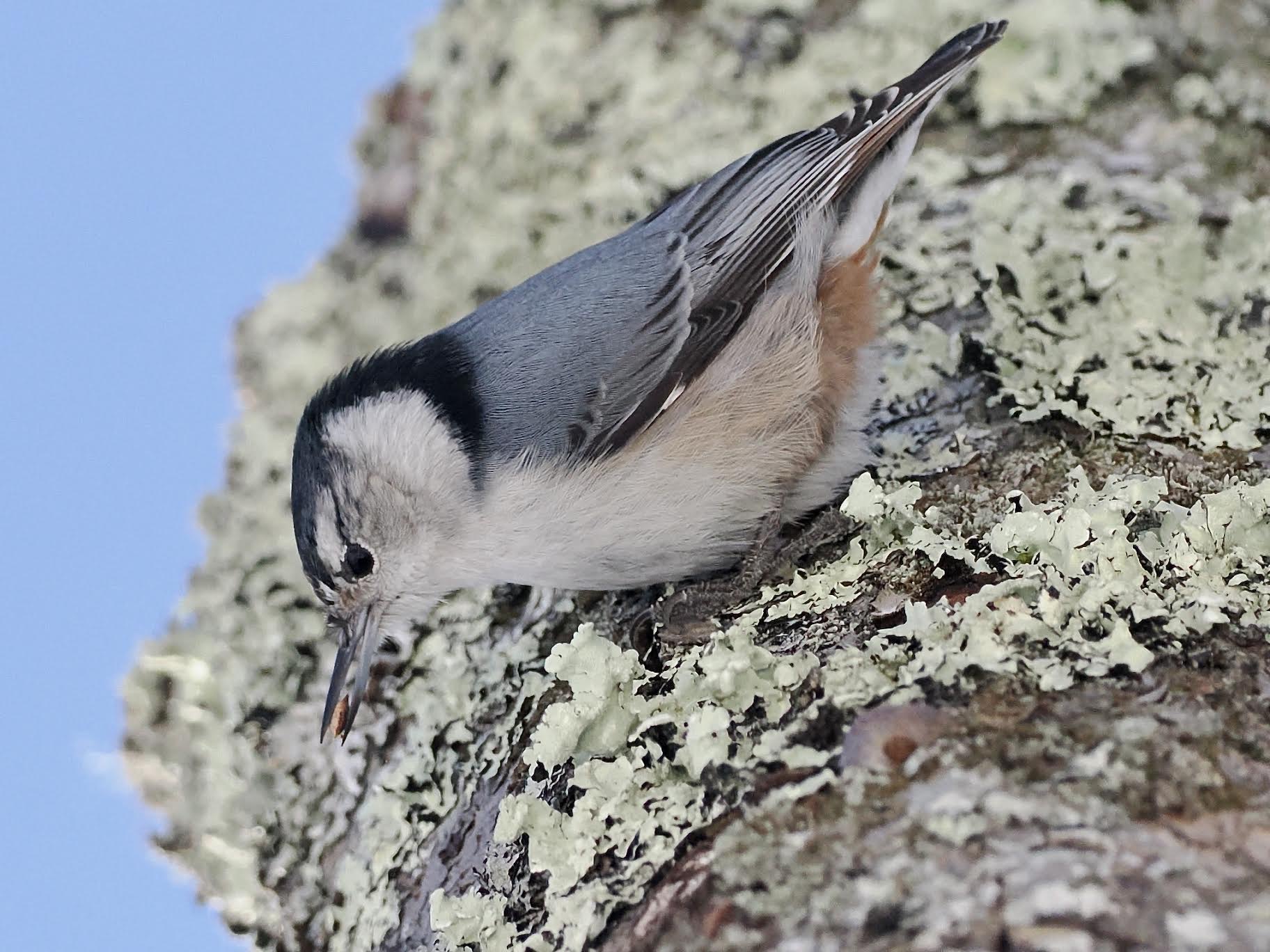
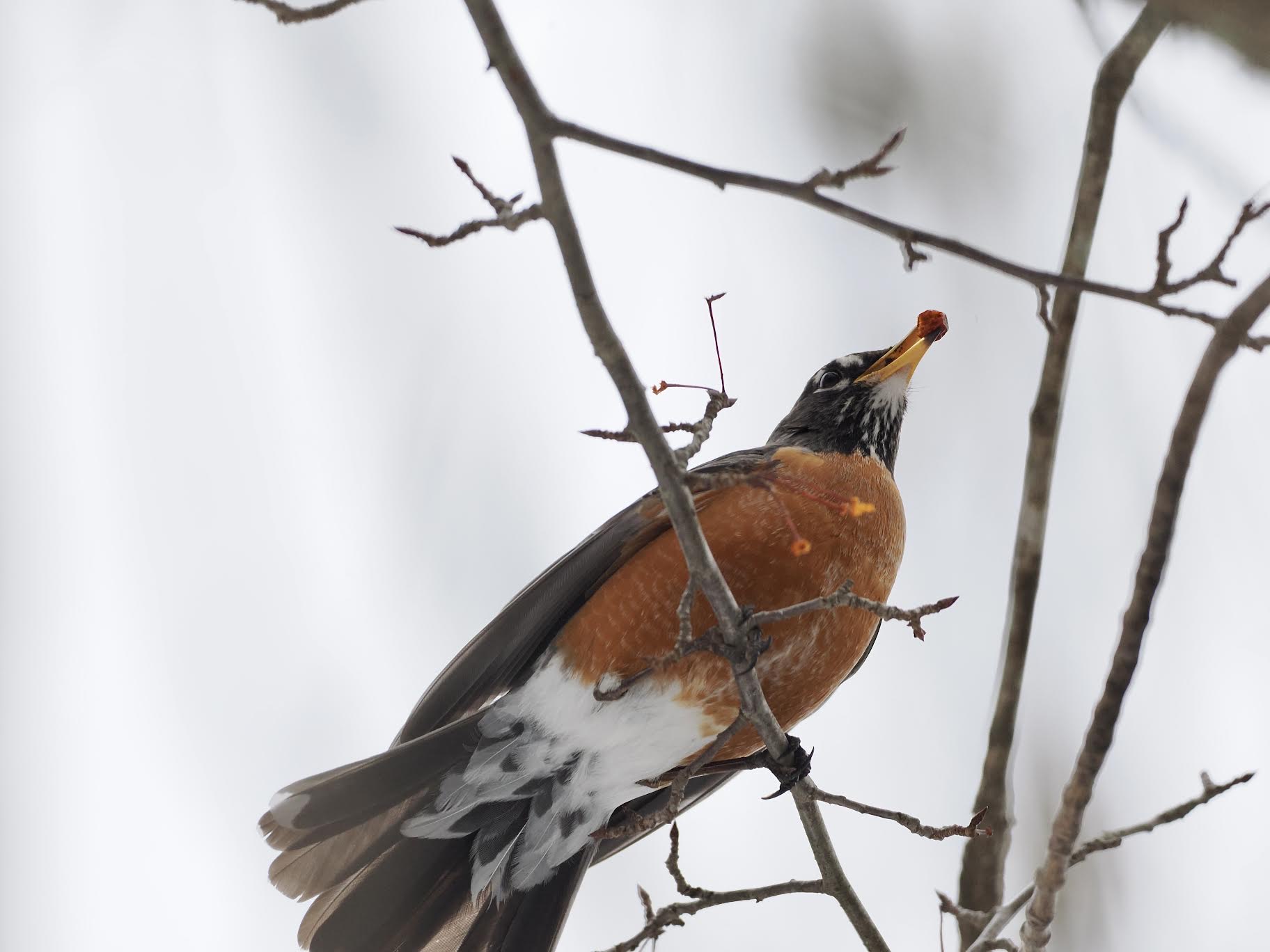
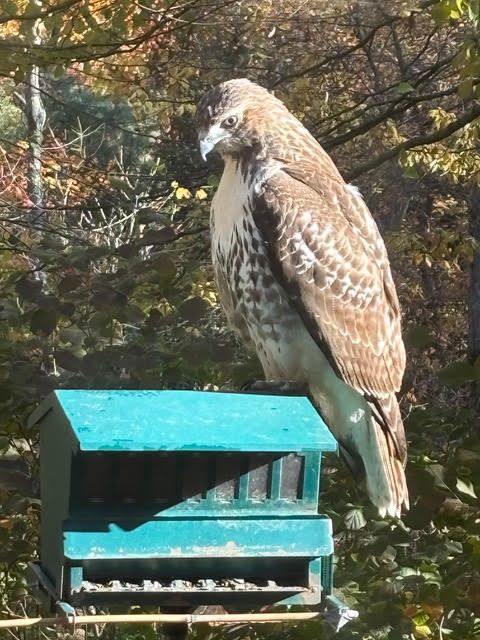
Bird song greets us early in the morning and many people now use the Merlin app. to identify what species they are hearing. The loud warbling whistle of the Baltimore oriole is my dawn alarm clock. The spring bird migration has just peaked, and many birders have signed up for alerts from a website, BirdCast, forecasting the numbers and locations of migrants on a given night. The common summer residents in our backyards, woods, and fields are busy in May and June raising young. “My” first four bluebird fledglings fledged into the big wide world on May 10, and now the parents are building a nest in the same box for family #2. Nature has its share of tragedy. For example, one of my neighbors found very young dead baby bluebirds tossed out of the box onto the ground. What did it? Why? She also saw a red-tailed hawk grab a wood duck and fly off, and another neighbor, admiring six Canada goose goslings, watched them disappear one by one, until none were left in only a few days. Maybe a snapping turtle was the predator or perhaps the afore-mentioned neighborhood red-tailed hawk? Of course, the predators have to eat too but it is always hard to watch when our sympathies are with the innocent victim. Only 20-30% of baby birds survive to adulthood due to predation, weather, disease, or starvation during the vulnerable nestling and fledgling stages.

On a happier note, the wood warblers, dressed in their best breeding plumage, are annual highlights for birders during migration. Warblers such as pine, yellow, common yellowthroat, ovenbird, and American redstart will nest here. Magnolia, black-and white, black-throated blue, black-throated green, blackpoll, prairie, yellow-rumped, Northern parula, Nashville, Canada, Cape May, and Wilson’s have all been spotted as they pass through on their way farther north. We may see them again if we vacation this summer in the woods of Maine, New Hampshire, Vermont, or Canada.

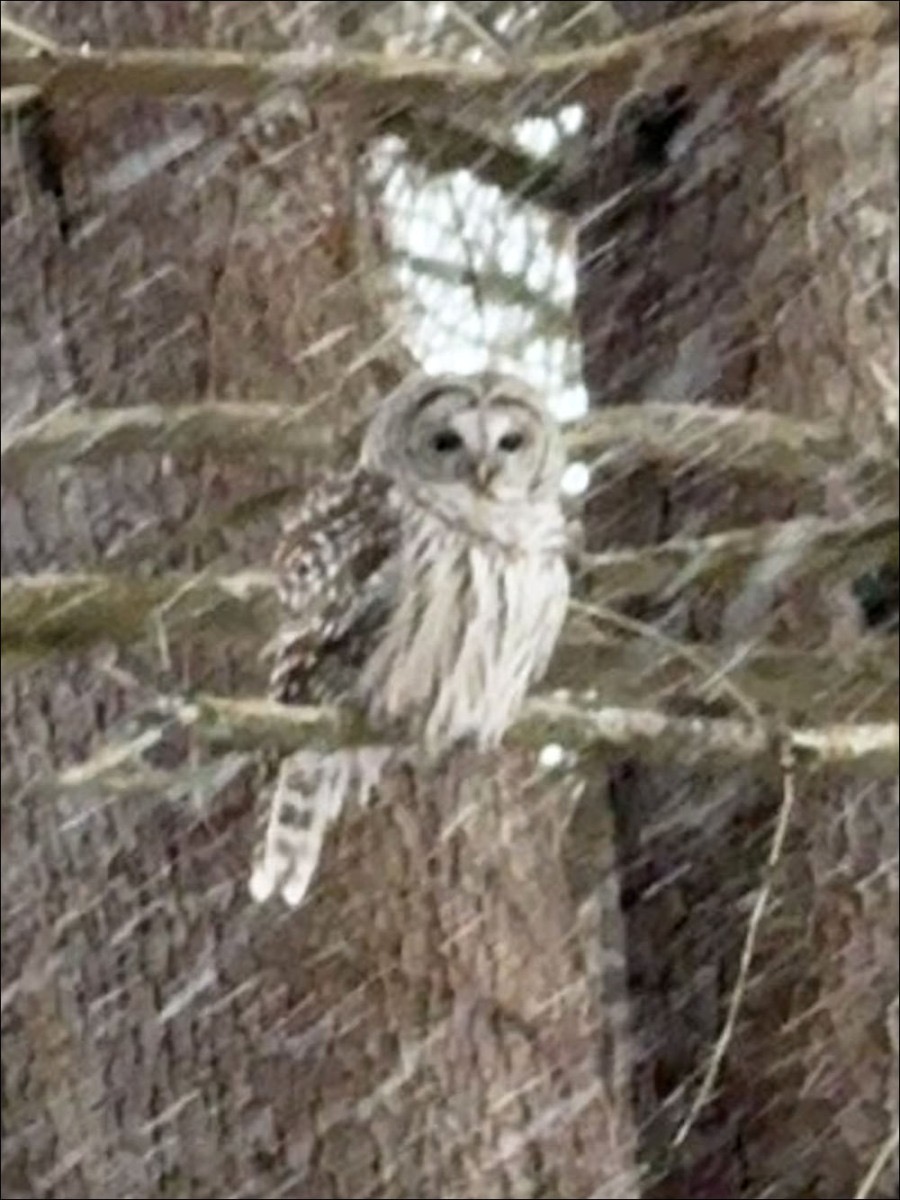
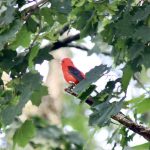
Other colorful summer residents have arrived, such as ruby-throated hummingbirds, scarlet tanagers, indigo buntings. Baltimore orioles, and rose breasted grosbeaks. The melodious “ee-o-lay’ song of the wood thrush calling from the woods adds a dreamy note to a summer evening. Tree swallows and barn swallows swoop over ponds and fields, catching mosquitoes and other insects on the wing. A notable sighting on a recent bird walk was of Virginia rails skulking amongst the cattails in the pond below St. Anne’s. Our summer flycatchers such as Eastern phoebes, great crested flycatchers, Eastern wood-pewees and Eastern kingbirds are back for the summer. Other recent notable avian sightings include a Northern waterthrush, a pair of barred owls, American kestrels, orchard orioles, and a few bobolinks.

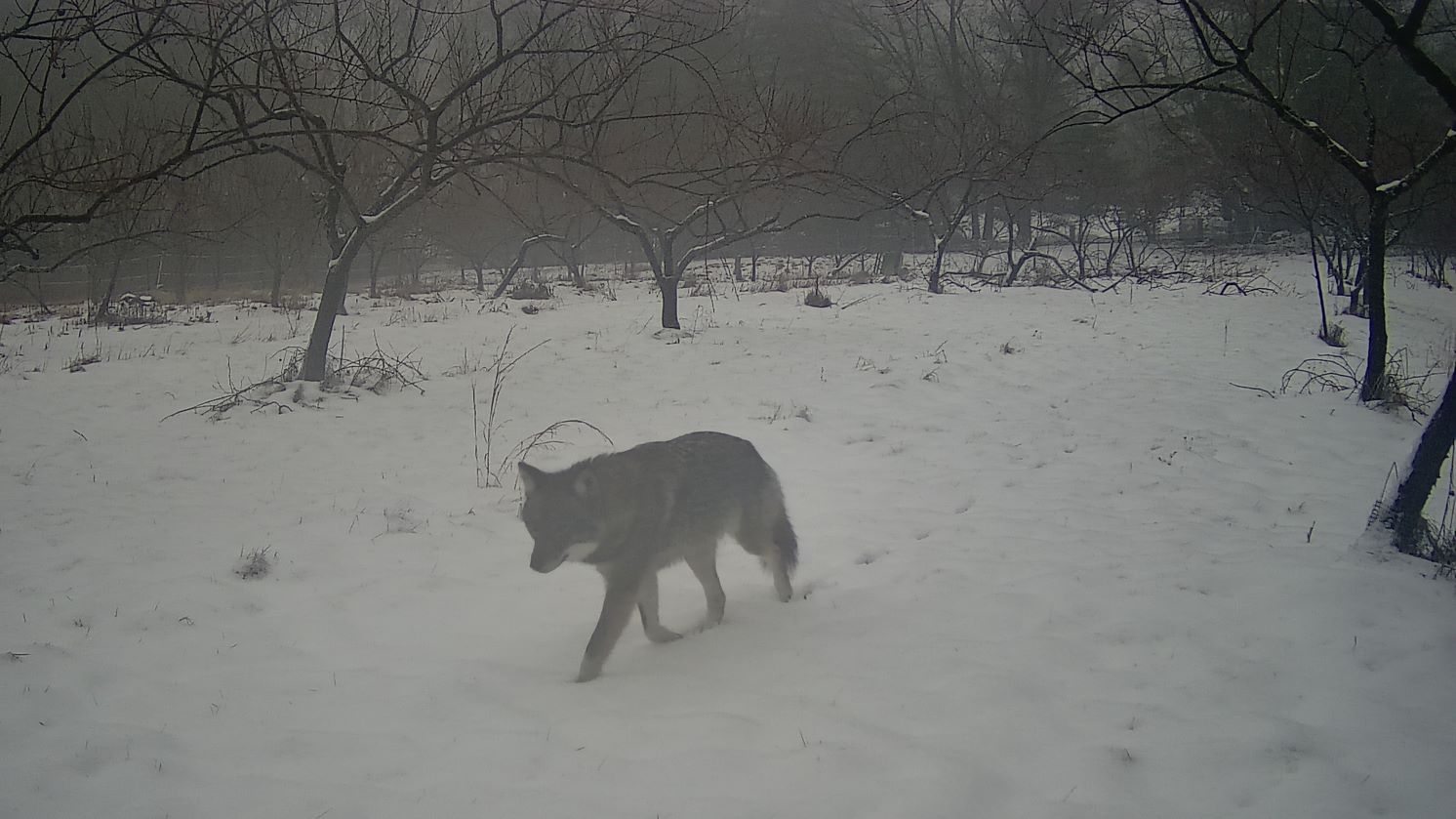
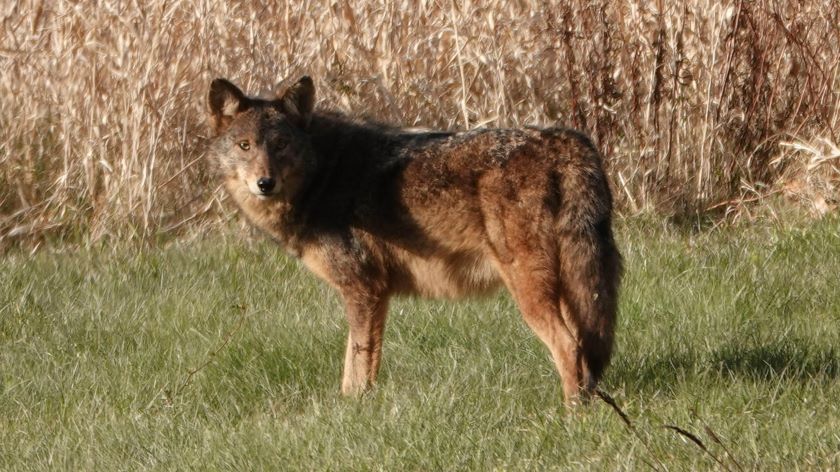
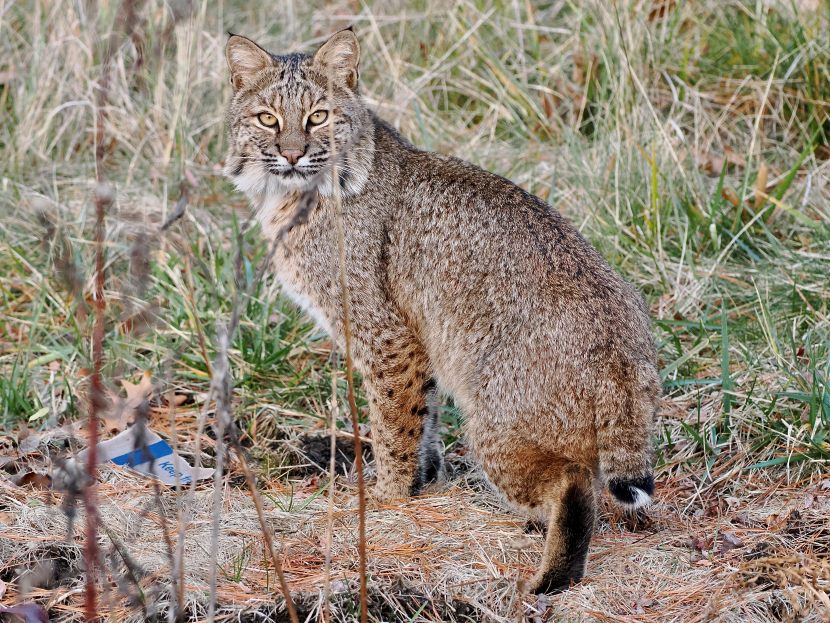
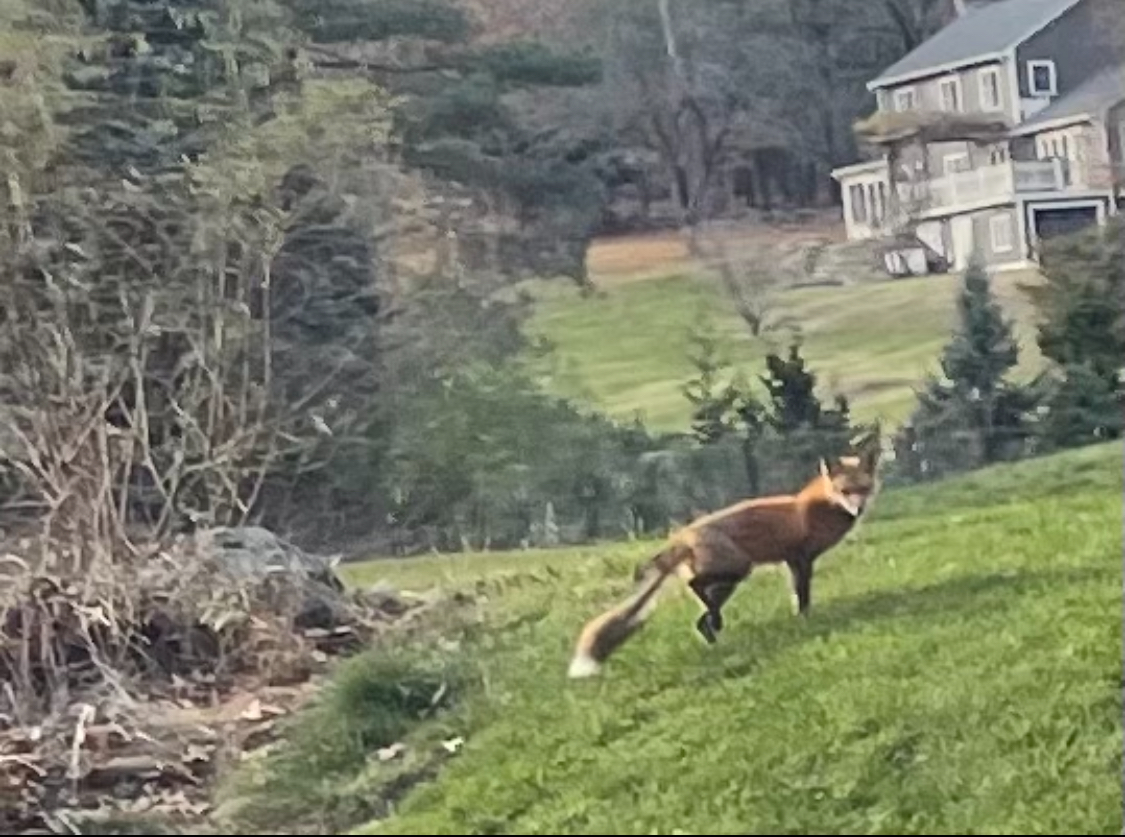
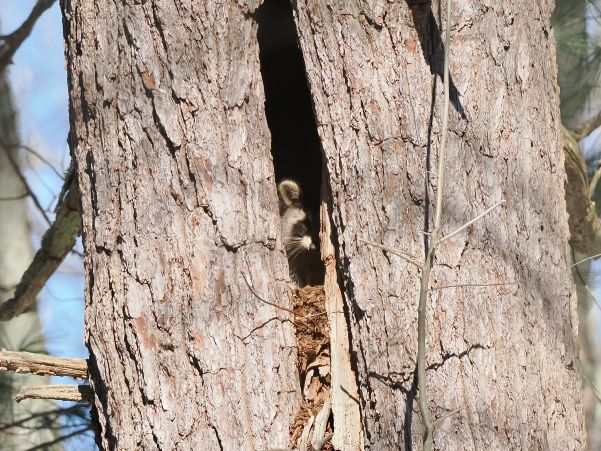
An exciting report in the world of mammals was of a black bear wandering through a backyard on Tabor Hill Rd. and a Winter St. resident was amazed to see a bobcat quite close to their house on their deck. A lone coyote has been seen frequently near my house on Conant Rd, and a howling coyote chorus is an eerie sound at night. The Taylor family on Beaver Pond Rd. had the pleasure of watching a family of foxes born in a den near their house, with the fox kits even exploring the backyard play equipment. The kits are now weaned and out on their own. For years I have had numerous chipmunks on my property but now I just see one or two darting along the stone walls. I do not know why there are so few this year but since there are two, there will be more! Raccoons took down bird feeders by a house on Bowles Terrace, and an enterprising raccoon climbed up to the second story to peek in an office window in Gordon Hall. Carol Roede’s trail cam recorded a raccoon carrying a turtle.

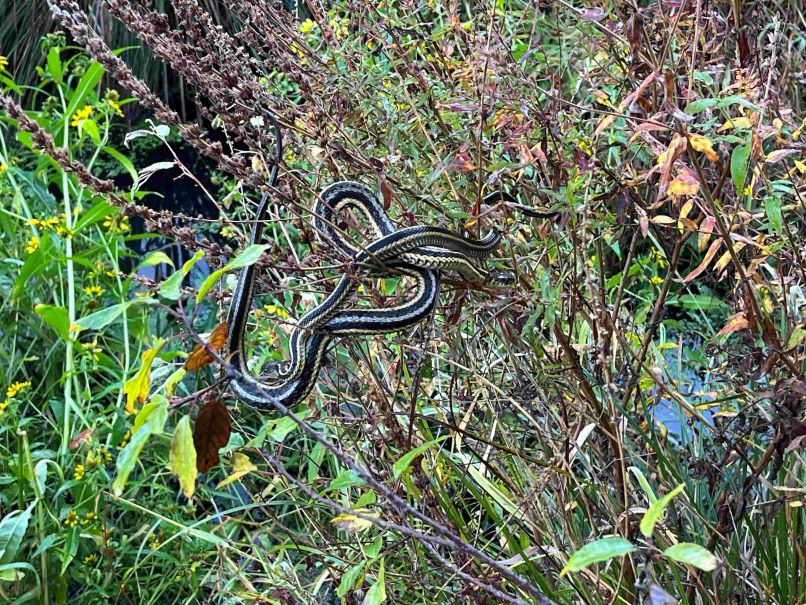
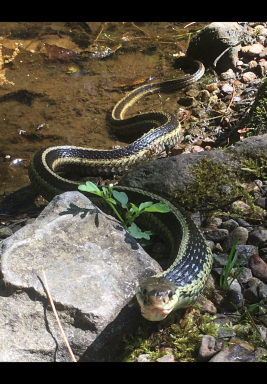
Ranger Will Leona writes,”Our reptile friends are all enjoying the recent warmer weather. Painted turtles and garter snakes have been out in full force trying to catch some rays in the sunny spots scattered throughout your forests and ponds.” This is the season when female snapping turtles are hunting for good places to lay their eggs and sometimes they cross roads on their mission. Please watch out for them. If you decide to help them cross, you need to do it safely for both you and the turtle, See link for tips on how to do it.

Frog and salamander eggs laid in March and April are now tadpoles and may even be growing legs. If you find jet black tadpoles they would be American toad tadpoles. We can now hear gray tree frogs giving their trilling calls and you might even discover one clinging to a low window using the sticky pads on its feet. The last frog to sing in the frog chorus line-up is the bull frog, calling a deep “jug-a-rum”, a sound which can carry quite a distance on a hot summer night.

We are starting to see various butterflies, including the blue spring azures and cabbage whites. Soon it will be time to watch for fireflies blinking their signals after dark. Norman Levey visited the Pollinator Meadow behind Smith School and wrote, “There are two early flowering native plums recently planted by the fenced meadow and one attracted two species of mining bee and the cellophane bee shown below during my survey. Native flowering plants for bees are scarce in April and May so this is a good one to cultivate in your yard.”

Looking skyward, the western evening sky after sunset gives a beautiful show, dominated by the waxing moon, Jupiter, and Venus.

Links:

To read about the on-going drought in Massachusetts

A starter list of the best trees and shrubs to benefit birds

To see the avian migration forecast map

Watch Diane Climo’s video of a hummingbird taking a shower in a sprinkler

With Carol Roede’s video of a raccoon carrying a turtle

Watch Susan Taylor’s video of four fox kits playing

Check out the night sky this week

How to move a turtle safely across the road

April 2026 Wildlife Column 

Written by Gwyn Loud for the Lincoln Land Conservation Trust. She welcomes your sightings and questions at 781-259-8690 or gwynloud555@gmail.com.

The weather over the past month has see-sawed between frosty mornings and summer-like days, with my thermometer hitting 83℉ on April 14 and 30℉ on April 21. The news of extreme weather events across the country is a clear message that climate change is making its mark. Rain over recent weeks has been welcome, whether in gentle showers or downpours, and we see the impact in rushing streams and the rapid greening of the landscape. Trees and shrubs are leafing out and trees such as Norway maples are displaying their bright green clusters of flowers. Red maple flowers give a reddish haze to my woodland view across a field, and, near homes, forsythia, daffodils, and magnolias brighten the landscape. In the woods, look for shadbush (aka serviceberry and Juneberry) in flower, and you might come across spicebush, with small yellow flowers. Scratch a stem to smell a spicy scent. Marsh marigolds, bright yellow, are blooming near streams, and ferns are unfolding leaves in their fiddlehead shapes. Pussy willows catkins are another early spring treasure; the male flowers have a fuzzy gray cover, which will soon open to reveal the pollen inside.


Phenology is the study of the timing of seasonal biological events, such as when various trees bloom or migrating birds arrive. Naturalists’ journals, such as those of Henry David Thoreau, are important in showing how a warming climate has affected phenology. In some cases there is a “mis-match” for birds migrating from great distances, such as from South or Central America. They may arrive in our backyards only to find that a tree whose blossoms attract the insects the bird eats has finished flowering. Short-distance migrants, such as birds which winter in the mid-Atlantic states, can sense warming weather and start north earlier.
Recent avian arrivals include house wrens, chipping sparrows, Baltimore orioles, and a blue-headed vireo, all “early” according to my personal records, perhaps in response to unusually warm temperatures farther south last week. Let’s hope they can find the insects they need to eat. Both tree swallows and barn swallows have returned. May will see the arrival of more summer favorites such as tanagers and rose-breasted grosbeaks, along with many colorful wood warblers passing through on their way north. If you feed hummingbirds, it’s best to put your sugar-water feeders out by the end of April. Make sure to clean the feeder regularly to remove black mold which can harm the birds.
Migrants we expect each spring, such as Eastern phoebes, pine warblers, and killdeer, are here for the summer, and ruby-crowned kinglets are giving their very high tsee- tsee-tsee and twittering calls from evergreens. Ron McAdow had the treat of watching this tiny bird bathing in Heywood’s Brook. It is often hard to spot the ruby crown, but his photo captured the gem.
The usual migrating ducks such as bufflehead, and ring-necked have been seen on Farrar Pond and Valley Pond as well as a rare pair of Redheads. Mute swans are back on Farrar Pond, Canada geese are nesting in many places, and wood ducks are nesting in tree cavities or boxes in swamps. A mallard is sitting on a nest in an unusual (and maybe unwise) place: just outside the gift shop at Drumlin Farm!
“Our Flint’s Pond loon pair should be reuniting on the pond soon for a fourth nesting year. As readers know, we had a successfully reared loon chick two years ago after a hatching failure the previous year. Last year’s chick, sadly, did not survive beyond a week. Most common loon chicks are lost the first few weeks after leaving the nest and many clutches are predated or do not hatch but adult parents can live for decades and will attempt to nest and rear chicks the rest of their lives” Norman Levey, whom I quote, has informally monitored their summer presence on the pond for almost a decade and will continue.
The air is filled with bird song, as the birds warble and whistle to attract mates and establish territories. Several people have reported Eastern bluebirds in boxes, eggs laid, and even some early hatchlings. House finches are nesting, including one in a bird feeder. Brown creepers are singing their thin wispy songs in the woods as they spiral up tree trunks, and will build a nest under loose bark. Woodpeckers abound, using their drumming to send messages. Ranger Will Leona wrote,”I was fortunate enough to watch an interesting scene with 3 pileated woodpeckers at Mt. Misery. Two males were engaged in either a territorial dispute or were trying to win a battle for the same female. The female was hanging out…. shouting out some calls of her own. I watched silently for a good 10 minutes before I gave them their space. Even then, they were still going at it.” Naturalist Mary Holland explains, “ A multitude of species of wildlife rely on the holes left behind by woodpeckers for nesting, roosting, and shelter. Squirrels, owls, salamanders, wood ducks, bats, nuthatches, grey treefrogs, mergansers – animals incapable of making their own cavities – benefit from the weeks of work that woodpeckers devote to creating them.”
What should you do if you find a baby bird on the ground, or, for that matter, other baby animals such as fawns or bunnies? In almost all cases it is best to leave them alone, and the mother will find the young. Check link to read more details and advice.

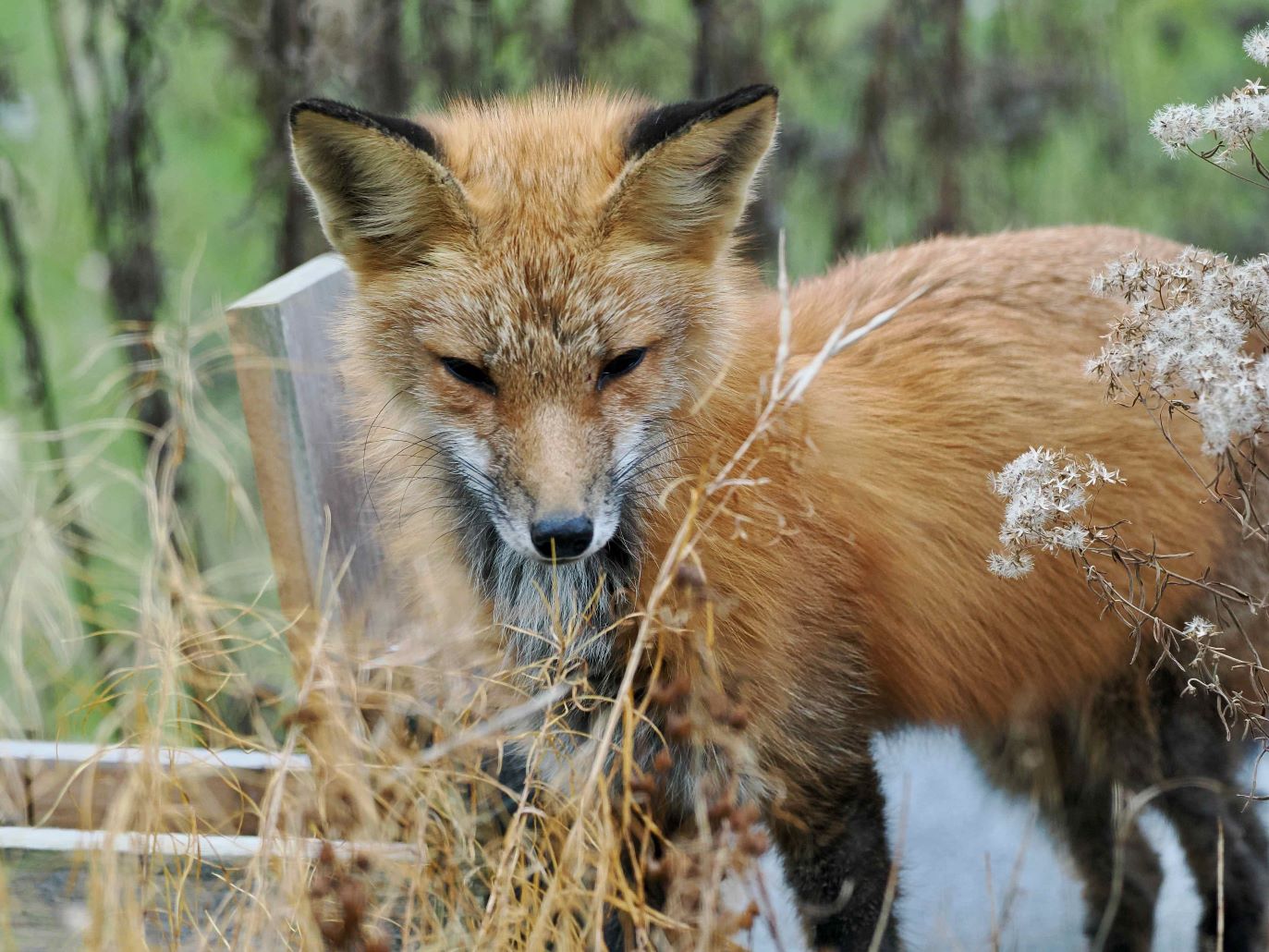
Red fox pups, born in a den, blind and helpless, between mid-January to the end of February, are cared for by both parents, and by now should be venturing out but still staying close to the den until they are weaned at 12 weeks. If you think you are smelling a skunk it could be a fox, as they often mark their territories with a skunk-like scent. I was astonished to read in a Mass Audubon publication that, “Foxes are the only animal known to use the earth’s magnetic field for hunting. They use it to judge the distance and direction of their prey to make a more accurate pounce. When listening for prey underground, the fox waits until the angle of the sound matches the slope of the earth’s magnetic field telling the fox the distance it is away from its prey. The fox then knows exactly how far to pounce to land upon it.” Chipmunks are normally numerous around my property but, so far, I have only seen one, a month ago. I consulted Flavio Sutti, Senior Conservation Ecologist at Mass. Audubon and he wrote, “Chipmunks, like many other small mammals, fluctuate in numbers every year. Often the numbers are tied to previous years mast production of acorns. Also, a very snowy winter with low food storage could have caused higher mortality.” Last fall was a low mast season, so perhaps that was the problem. A number of mammals are molting their fur at this time, shedding a thick winter coat for a lighter-weight one. For white-railed dear, the color changes as well, from the darker-colored winter coat, which absorbs heat from the sun, to a more reddish color, which better reflects the sun on hot days. An odd recent sighting was reported from Heywood’s Meadow: a white gray squirrel, obviously leucistic and not albino, since it had dark eyes.

Wood frogs and spotted salamanders completed their migration, laid their eggs in vernal pools, and tadpoles are hatching. Spring peepers will continue singing their chorus of peeping from wetlands right through May. Research shows that male peepers can peep up to 5000 times an hour, inflating their vocal sac each time (sounds exhausting). I was happy to learn that Will Leona has been helping students at Minuteman High School collect data to certify vernal pools. These students are our future conservationists. Among other things, they found fairy shrimp, one-inch long crustaceans which swim on their backs, waving gill feet which provide breathing, feeding and swimming. They are indicators of a healthy eco-system. Any day we should hear the high trilling of American toads and soon after you might come across their eggs, which are laid in shallow water and look like strings of tiny black pearls. Gray tree frogs will be next in the frog chorus line-up, with American bullfrogs coming last.
Snakes and turtles are emerging as warmer weather returns. Painted turtles can be found sunning on logs in the pond on mild sunny days. Some baby snapping turtles, laid in eggs last June, emerge in the fall but others wait until spring. Rakesh Karmacharya captured the perilous journey of one baby snapper on video as it made its way to a pond.

In Norman Levey’s words, “April is the month our queen bumble bees emerge from their hibernacula after a long winter’s nap. The queens we see now were some of the last bumble bees to leave nests mid to late summer last with the males who wander far and wide searching for other new queens to mate. The males die before November and the overwintering queens fat with eggs and sperm are the ones we are seeing now searching for suitable nest sites and foraging on scarce early April nectar and pollen sources. Early bloomers for bumble bee queens are willow, callery pear, and rhododendron.”

Other insects are appearing as the weather warms. Blackflies are out, tiny ants have appeared in my kitchen, and observers have seen mourning cloak butterflies. Dog-walkers tell me that ticks, (which are not insects), are numerous now, so please check for them after you have been in woods and fields.

Looking skyward, early risers before dawn may spot the Lyrid meteor shower, which lasts until April 25, peaking on April 22. Quoting space.com, “Shooting stars associated with Comet Thatcher are known for producing fast-moving meteors that tend to lack long-lasting trains. The shower can also spawn impressive fireball events that outshine even the brightest planets, as bigger chunks of cometary debris — sometimes the size of a basketball, or larger — forge a flaming path through Earth’s atmosphere”. Read the link to see how best to see the show.
Finally, Earth Day began on April 22, 1970. The environmental movement began, leading to the creation of the EPA, the Clean Air Act, the Clean Water Act and banning DDT, to name a few results. A major catalyst for the movement was the publication of Silent Spring by Rachel Carson in 1962, in which Lincoln’s own Paul Brooks had an important part. He was Editor-in-Chief at Houghton Mifflin, a conservationist himself, helped Carson edit her book and championed it, getting it published by Houghton Mifflin. It became an immediate best-seller. We are now in the throes of an Administration trying to undo environmental regulations. I hope we can each honor Earth Day by taking action in some way, small or big. Our planet needs help.

Links

What to do if you find young wildlife

Rich Rosenbaurm’s video of a pine warbler eating mealworms

Rakesh Karmacharya’s video of a snapping turtle baby making its way to the pond

How, where and where to observe the Lyrid meteor shower

To read about the first Earth Day

Turtle Conservation for Kids!

In early April 2026, LLCT and Lincoln Extended-Day Activities Program (LEAP) sponsored a visiting Turtle Travels program from the Worcester Ecotarium for over thirty 3rd and 4th graders. Check out the photos below to follow along with this hands-on activity! Turtle time: Students were first given plastic turtles and asked to lay them out evenly … Read more

Pocket Forests Zoom Presentation by Rachel Summers and Luca Kaskiewicz

Discover how small patches of land can become powerful ecological assets in this Zoom talk with Rachel Summers of Summers Gardening. A Pocket Forest is a densely planted, multilayered mini-forest — often as small as a few parking spaces — that combines many species of native trees and shrubs to create a thriving, self-sustaining ecosystem. … Read more

March 2026 Wildlife Column 

Written by Gwyn Loud for the Lincoln Land Conservation Trust. She welcomes your sightings and questions at 781-259-8690 or gwynloud555@gmail.com. 

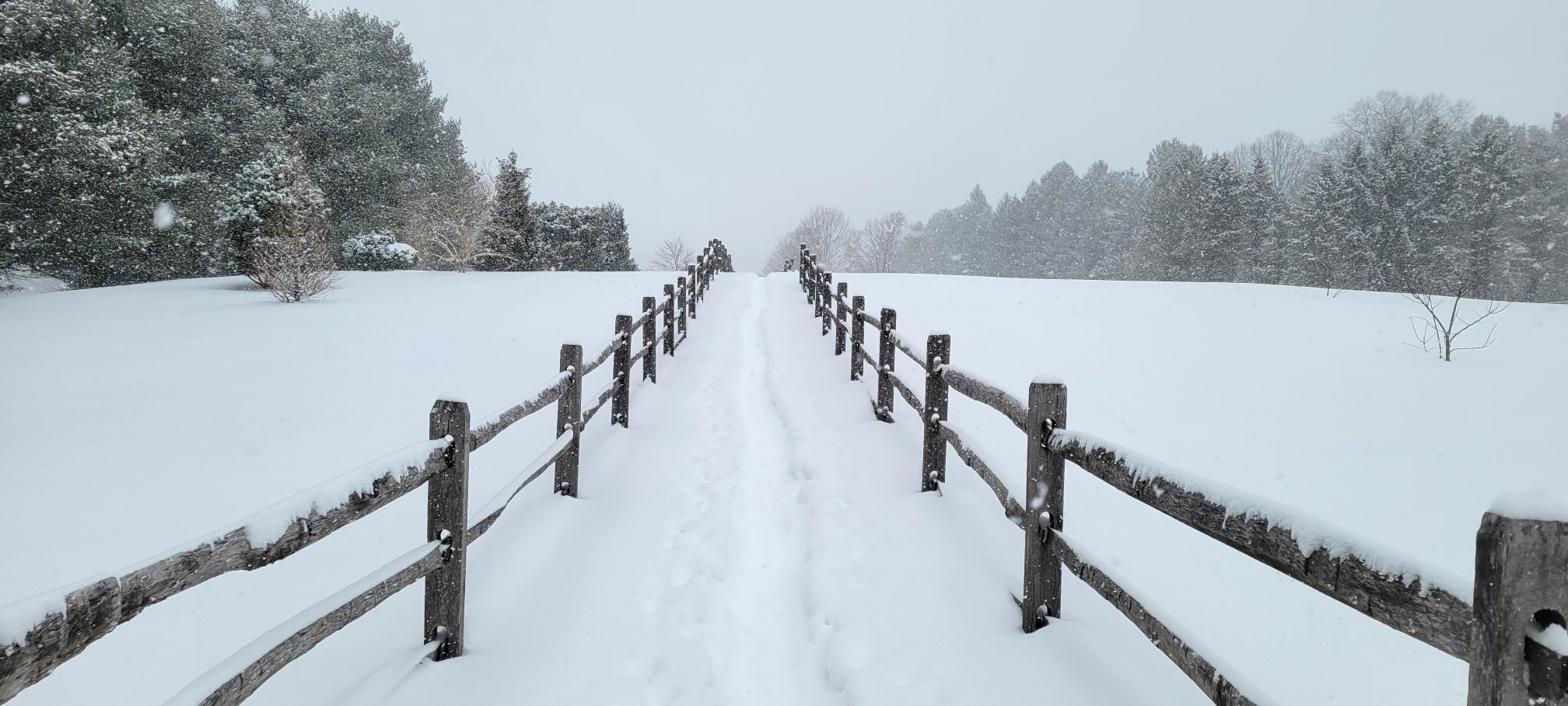
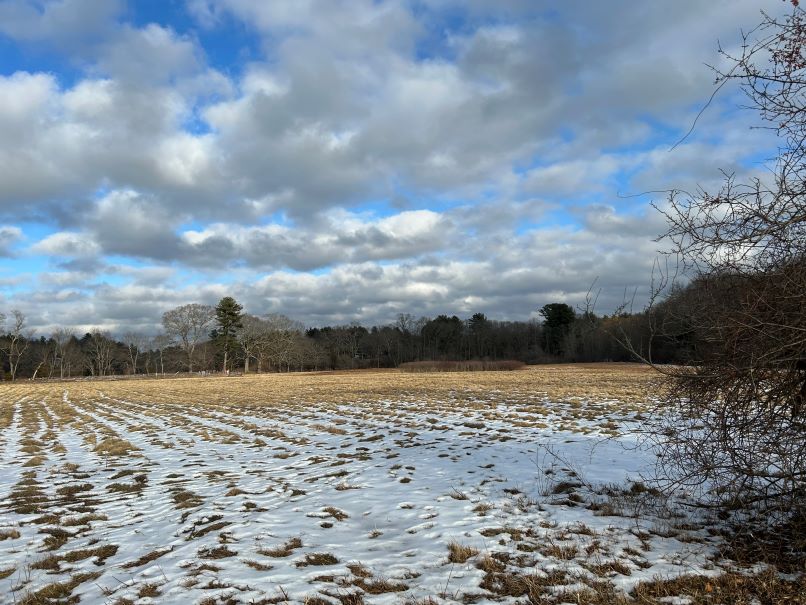
A blizzard on February 23 gave us over twenty inches of snow and the weather in March swung wildly from severe cold to summer teasers, such as 75℉ on March 10. Such is the nature of March, a month of transition and awakenings. The vernal equinox ushered in spring officially on March 20, and signs of the new season are all around us as days lengthen, birds sing, and a few remaining snow piles from a very snowy winter melt away. As I write, some ponds which get little sun are still largely ice-covered, but, in general, the big melt happened quickly. Is it safe to put away the snow shovel? Mine remains by the door, just in case, but the cross-country skis are back in the barn. Given the rushing streams, a snowy winter, and recent rain, it seems paradoxical that northeast Massachusetts is actually in critical drought status due to low ground water. See link to learn more.

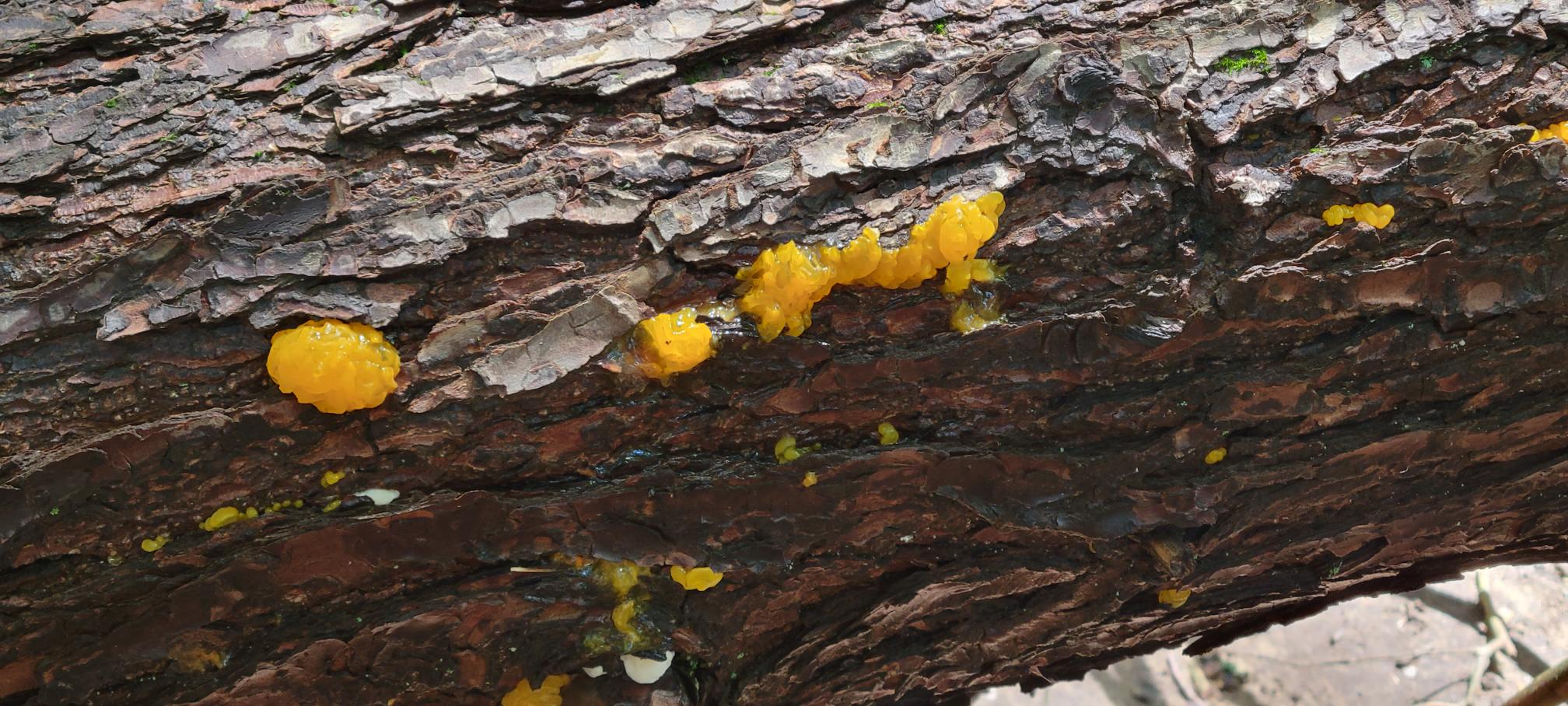
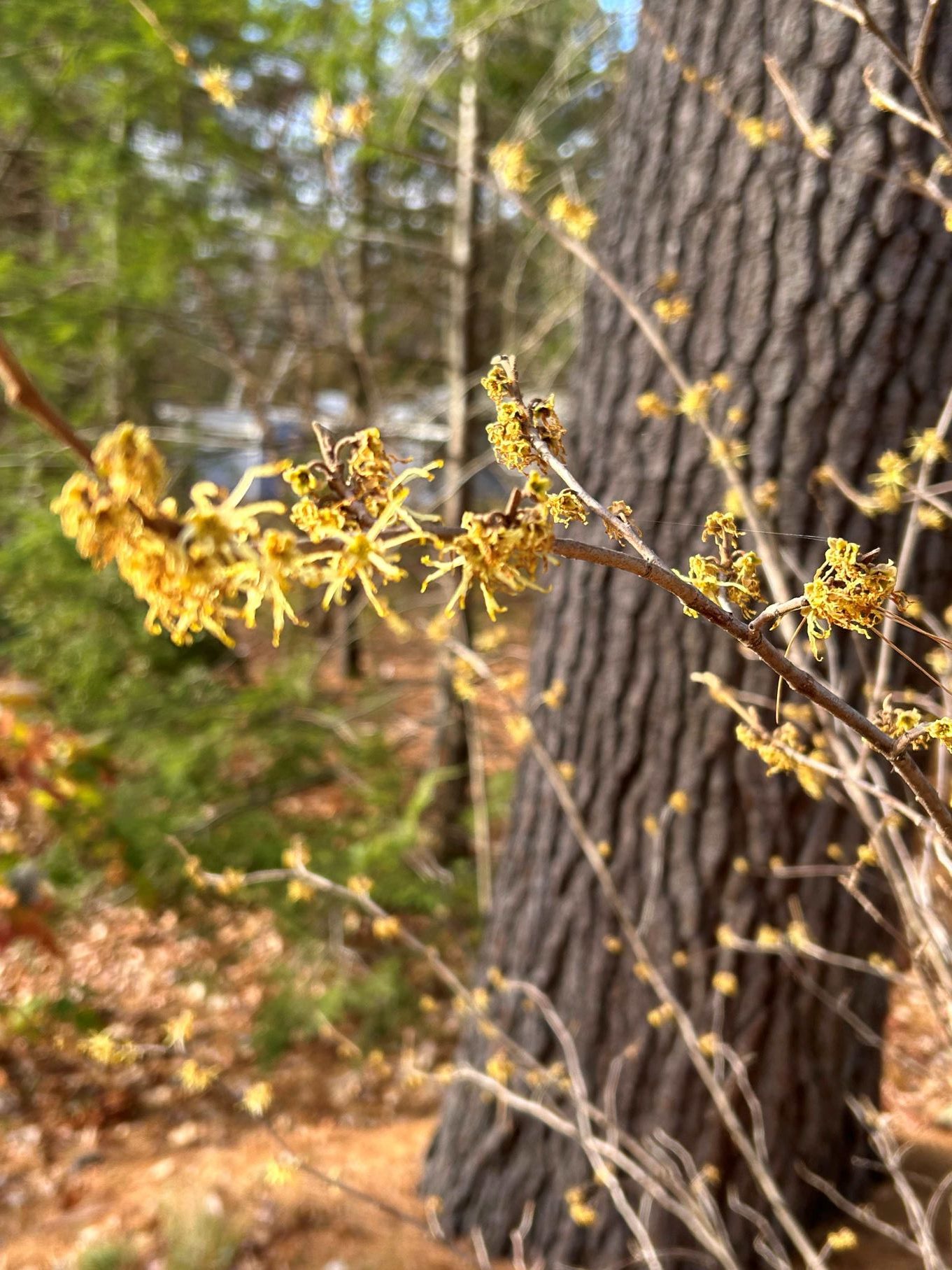
The palette of the landscape is largely brown but each day more hints of green appear in lawns, willows are yellowing, and the buds of red maples will soon burst into flower. Silky dogwood’s red stems provide color and snowdrops and crocuses bring cheer in gardens.  Some homeowners have witch hazel (not wild) in bloom. Staghorn sumac’s hairy berry clusters can still be found; birds and other wildlife wait to eat them as “emergency food”, once more palatable berries have been consumed earlier in the fall and winter. Fungus such as mock-oyster (orange) may brighten your woodland walk. The purple spathe of skunk cabbage, a common but unusual plant found in marshy spots and along streams, is now visible. As I wrote in an earlier column, “skunk cabbage is among a small group of plants which produce their own warm micro-climate in a process called thermogenesis. In this process, skunk cabbage increases its intake of oxygen and rapidly burns starch from its massive underground root system, thus creating heat, which it maintains at a steady 72℉, no matter what the outside temperature is. The pollen in the flower provides early food for honeybees, and insects such as carrion beetles, flesh flies, and blowflies are attracted to the skunk cabbage’s fetid carrion-like odor, which is intensified by the plant’s warmth. Several species of spiders then prey upon these insects- a whole food chain happening in a small warm space.” Supposedly the roots may live over 200 years!

We have observed sap buckets hanging on sugar maples around town. Nan Bergen and Eph Flint run a sugaring business and say this will be a short season and probably not as productive as usual, due to deep snow around the trees, requiring lots of shoveling, then temperatures which were unfavorable. Ideal weather for sap flow has nights below freezing and sunny days, with temperatures in the mid-forties.

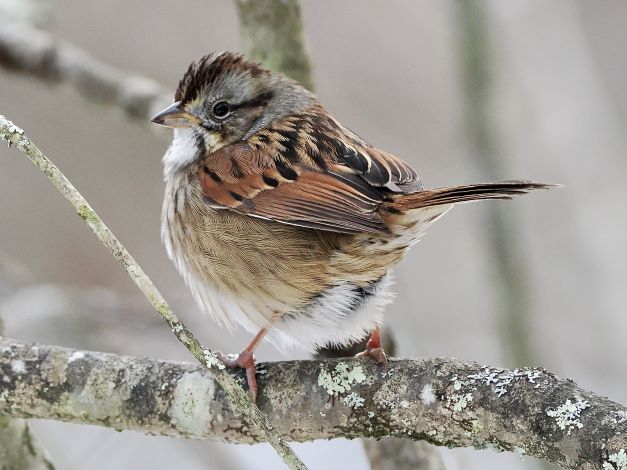
Increasing bird song is noticeable and welcome, starting with the mournful cooing of mourning doves as early as 4AM. Birds sing at this season primarily to attract mates and establish nesting territories, so they are busy! Winter visitors such as white-throated sparrows are “dressing up” in crisp breeding plumage, and dark-eyed juncos are trilling their spring songs. Both of these species will leave us soon to breed farther north. American goldfinches are molting to their summer plumage, with the males already showing hints of yellow. The skin on the skin of wild turkey toms (males) turns white, vibrant red, and blue to entice hens when the toms strut about in their mating displays.
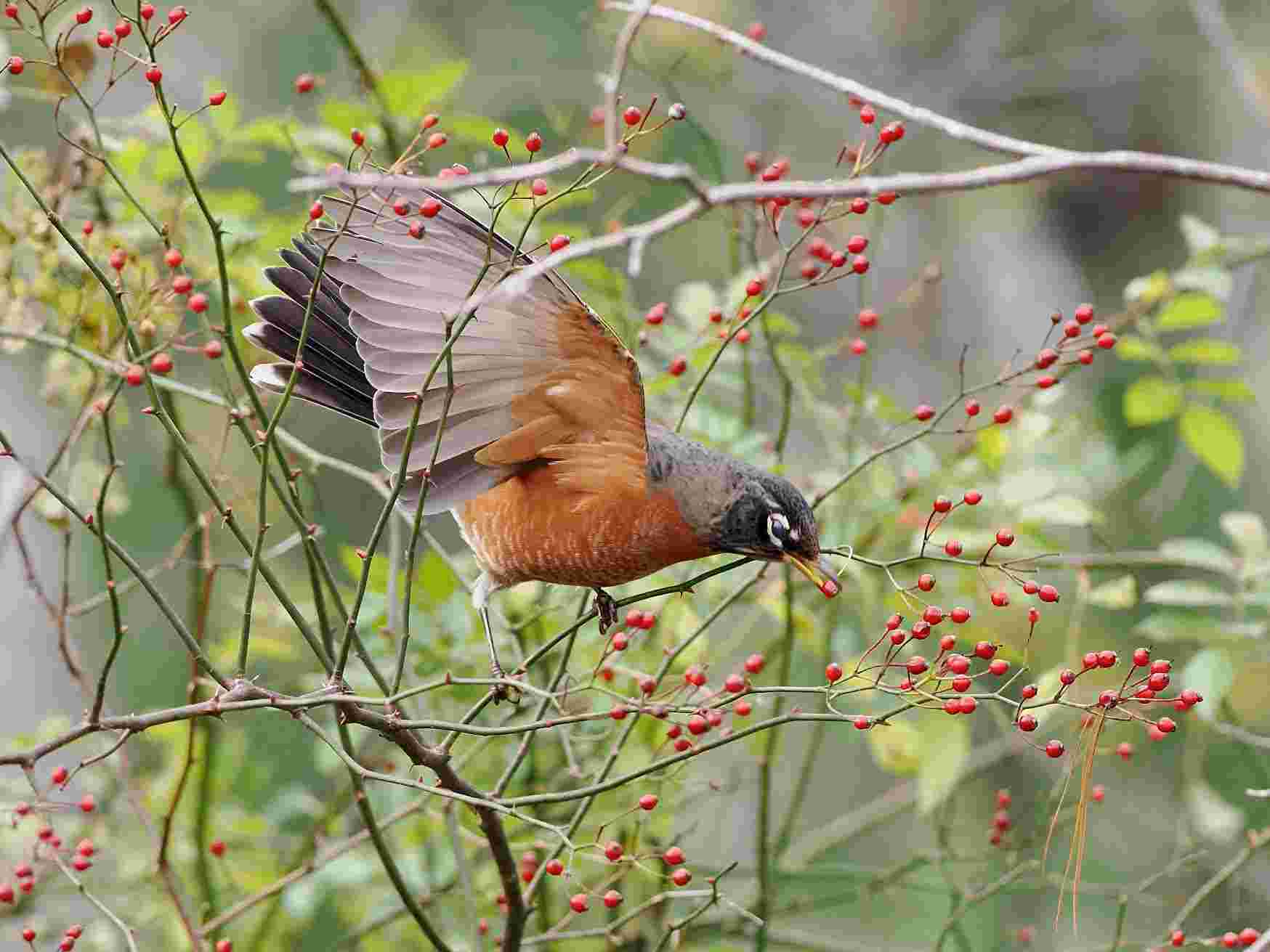
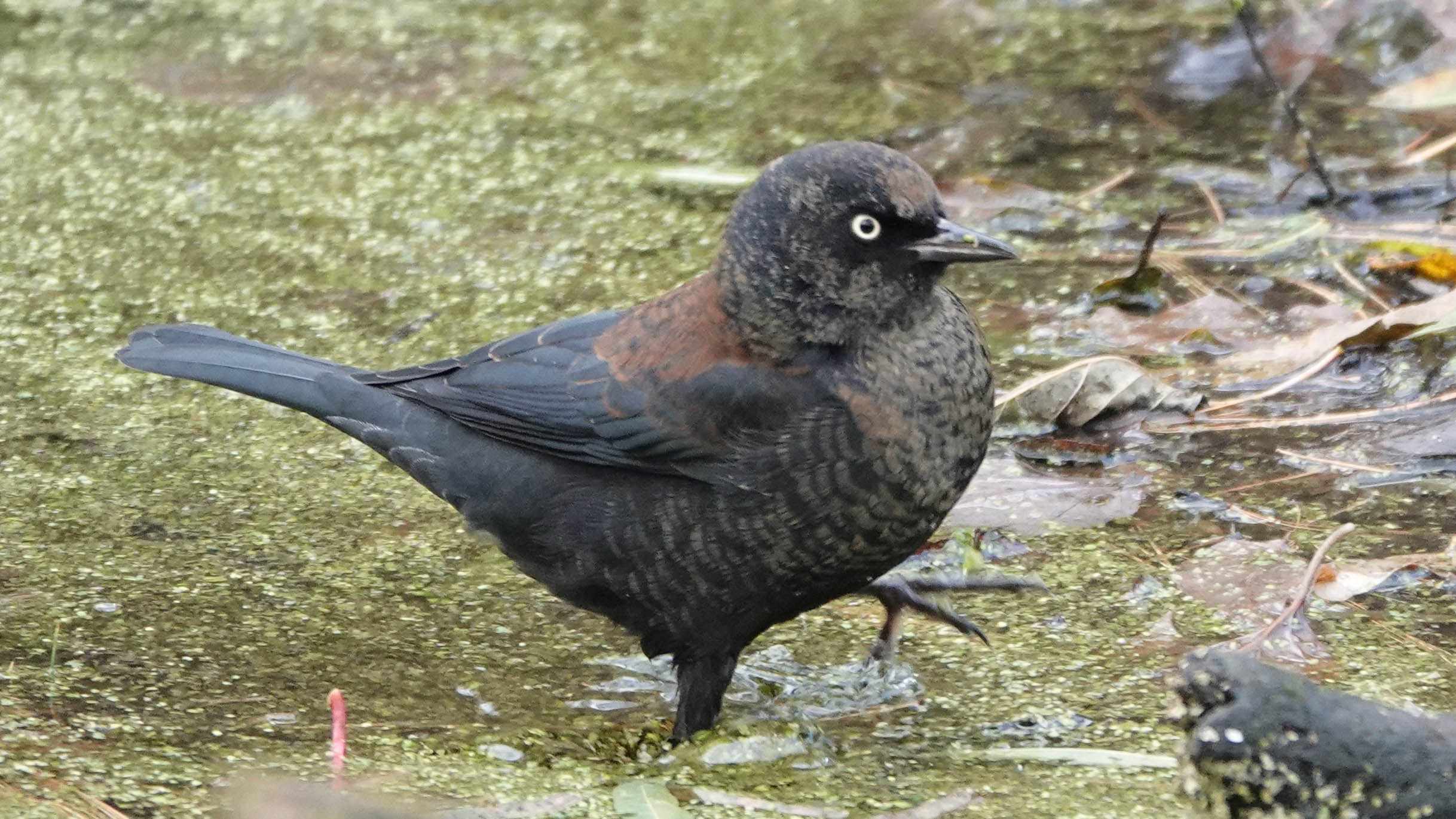
Flocks of grackles, red-winged blackbirds, and robins are back from points south. Brown-headed cowbirds have been seen, and a few killdeer have taken up residence in plowed fields, where they will nest right on the ground. Eastern bluebirds are investigating real estate (aka bird houses) and owls such as screech owls, barred owls, and great-horned owls are already on the nest. Other early avian arrivals include turkey vultures, pine warblers, and tree swallows. Rusty blackbirds and fox sparrows, both spotted recently, are migrants just passing through on their way north. The American woodcocks arrived on time in mid-March, with the males primed to do their mating dance ritual in damp fields soon after sunset. Check link to see and hear it. Great blue herons have returned and will start right away fixing up old nests made of sticks high on dead trees along streams or in swamps.
Farrar Pond, Flint’s Pond, Valley Pond, and the Cambridge Reservoir have hosted many rafts of ducks recently, including common mergansers, hooded mergansers, and bufflehead, all passing through on their way farther north. Wood ducks were early spring arrivals in secluded ponds; they will nest here, raising their brood in tree cavities or wood duck boxes. As usual, mallards and Canada geese are common Lincoln residents.

On the evening of March16 the conditions were perfect for the annual amphibian migration of spotted salamanders, wood frogs, and spring peepers to their natal vernal pools. These amphibians spend the winter in protected places in the woods, and after laying eggs in the vernal pools, the wood frogs and salamanders will return to the woods for the rest of the year. The salamanders do not make sounds, but the wood frogs sound a lot like quaking ducks for the roughly two weeks when they are mating and laying eggs, in gelatinous fist-sized blobs. The spring peepers are tree frogs, with sticky pads on their toes which allow them to climb up twigs and stems of grass in the swamp. They lay their tiny eggs singly or in small clusters, and will sing their loud chorus for several months.

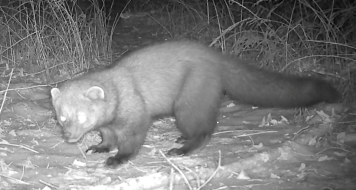
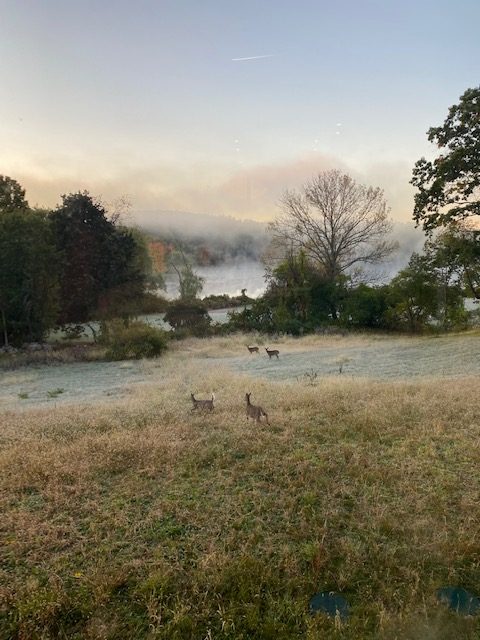
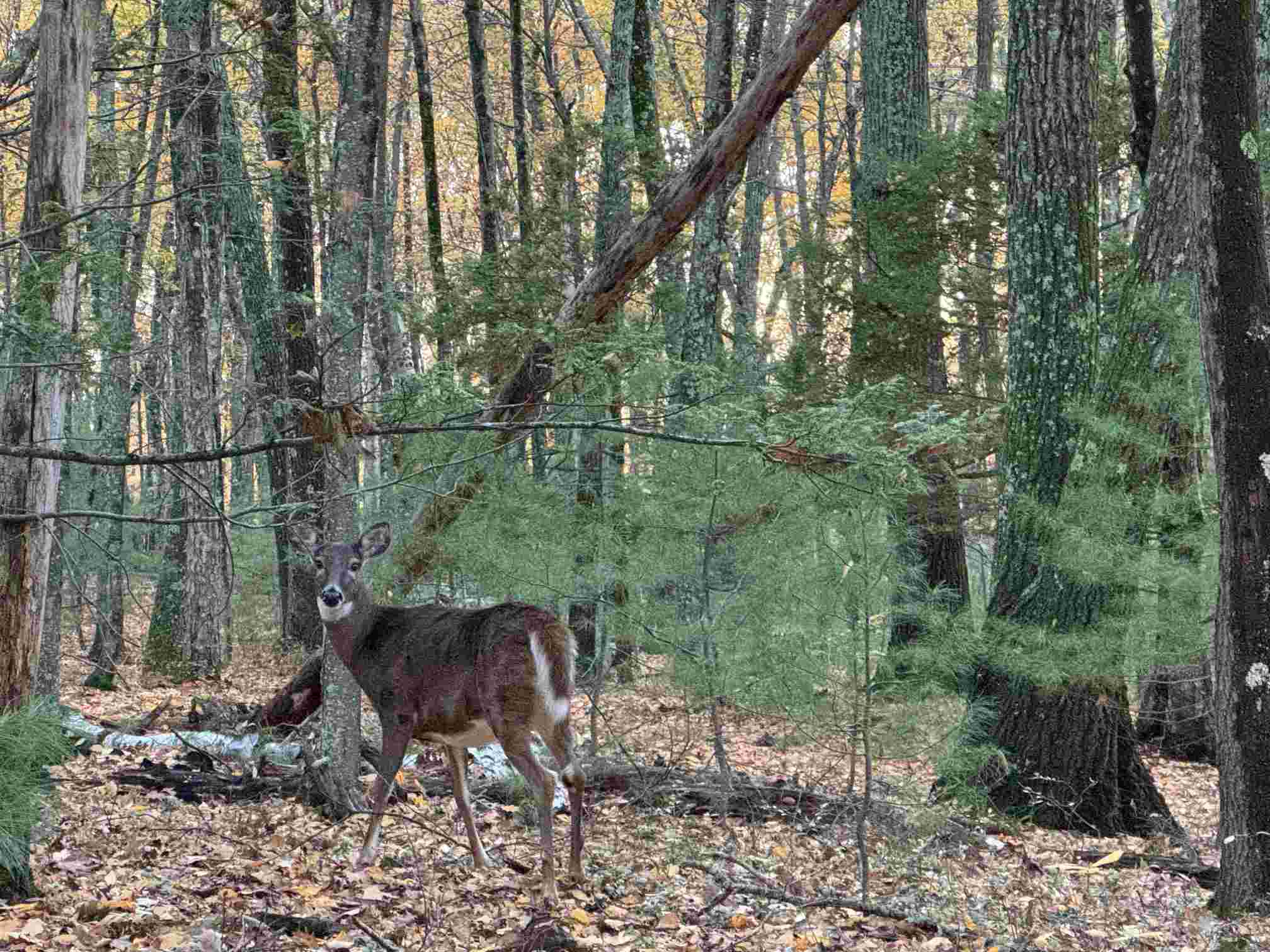
Many of our local mammals are breeding at this season, including woodchucks and chipmunks. I have not personally seen chipmunks or woodchucks yet but expect to any day. Woodchucks are true hibernators and the chipmunks have just been in a dormant state in their burrows. River otter, gray fox, mink, otter, and striped skunks are also breeding; the Drumlin Farm trail cam picked up pair of skunks denning under the shrub pile, which sounds promising. I read that skunks give birth to four-eight young in May or early June, that they are born with musk, and can spray when they are only eight days old. Red foxes and fishers give birth now; observers on Bowles Terrace watched a fisher catch and eat a rabbit right after the blizzard in February. Raccoons have emerged from their winter naps and I suspect it was raccoons which recently took down a couple of my bird feeders at night, as I have caught them in the act before. This means I need to bring the relevant feeders inside each evening. It has been a rough winter for white-tailed deer, navigating deep snow and trying to find enough food. They have had to resort to eating twigs and bark, and a Woods End Rd. resident wrote that deer had eaten all the rhododendrons and azaleas from the ground up to nose height. Our small mammals such as voles, moles and shrews, have been bustling about all winter in subnivian tunnels, which provide protection and a steady temperature of 32℉ under the snow. Now that the snow has melted, the patterns of tunnels are revealed.

I normally avoid politics in this column, but in this issue I want to urge Lincoln residents to vote in favor of Article 36 at Town Meeting on March 28. Passing the article would be the first step towards banning the use of anticoagulant rodenticides (ARs) on both public and private property in Lincoln. To quote Save Our Wildlife, “Raptors, foxes, coyotes, and other predators keep our ecosystems in balance. But rodent poisons- specifically first and second-generation anticoagulant rodenticides (ARs) – harm thousands of these creatures in Massachusetts each year after they eat poisoned rodents. SGARS can also harm children and pets who eat the poison itself.” See link to learn more, including about safe alternatives to rodenticides.

An insect we may notice climbing tree bark on mild winter days is the winter firefly. Unlike its summer relative, it does not flash. It is drawn to the sweet sap rising in trees and can find its way to sap taps and may fall into buckets of sap, giving it another common name: the sap-bucket beetle. Norm Levey writes about, “a truly first native bee of Spring called the Unequal Cellophane Bee which, like most solitary bees, nests in the ground. The nests are most often near early flowering pollen and nectar sources such as red maple and native willows The egg hatches into a larva and develops into an adult over the winter, emerging in March. Unequal Cellophane Bee nests form aggregations of several on sandy south-facing slopes. The mated females guard their nests against parasitoids while emerged males make circling flights in search of virgin female mates.”
One of the first butterflies we may see in the spring is the mourning cloak, which, unlike most butterflies, over-winters as an adult. Look for its chocolate brown wings, bordered by yellow, with blue dots. Good news about monarchs! The World Wildlife fund, collaborating with other organizations, has published its 2026 report on the population of wintering monarch butterflies in the mountains of Mexico. The area the butterflies occupied increased 64% compared to last year. Overall, there has been a steady decline in the population, but this represents a hopeful one-year increase. This number refers to the eastern population of monarchs, which is the one we see in Lincoln. A western population migrates down the West coast, winters on the coast of California, and did not have a good year. Now, the monarchs which wintered in Mexico are starting their northward journey. We can think happy thoughts of seeing them in our gardens in a few months! You can follow the monarchs’ migration journey and report your own sightings on the Journey North website.

Links

To read about the status of drought in Massachusetts

To read about the American woodcock and hear its song

To read the 2026 population report for monarch butterflies

To follow the migration of monarchs and report sightings

To read more about why we should ban ARs, and safe alternatives


Emerson’s Nature in Lincoln: A Virtual Reading with Ron McAdow

Join for a special Zoom presentation with Ron McAdow as he reads selected excerpts from Ralph Waldo Emerson’s groundbreaking first book, Nature. First published in 1836, Nature laid the foundation for the Transcendentalist movement and continues to shape how we think about our relationship with the natural world. In this engaging virtual program, Ron brings … Read more

February 2026 Wildlife Column 

Written by Gwyn Loud for the Lincoln Land Conservation Trust. She welcomes your sightings and questions at 781-259-8690 or gwynloud555@gmail.com. 

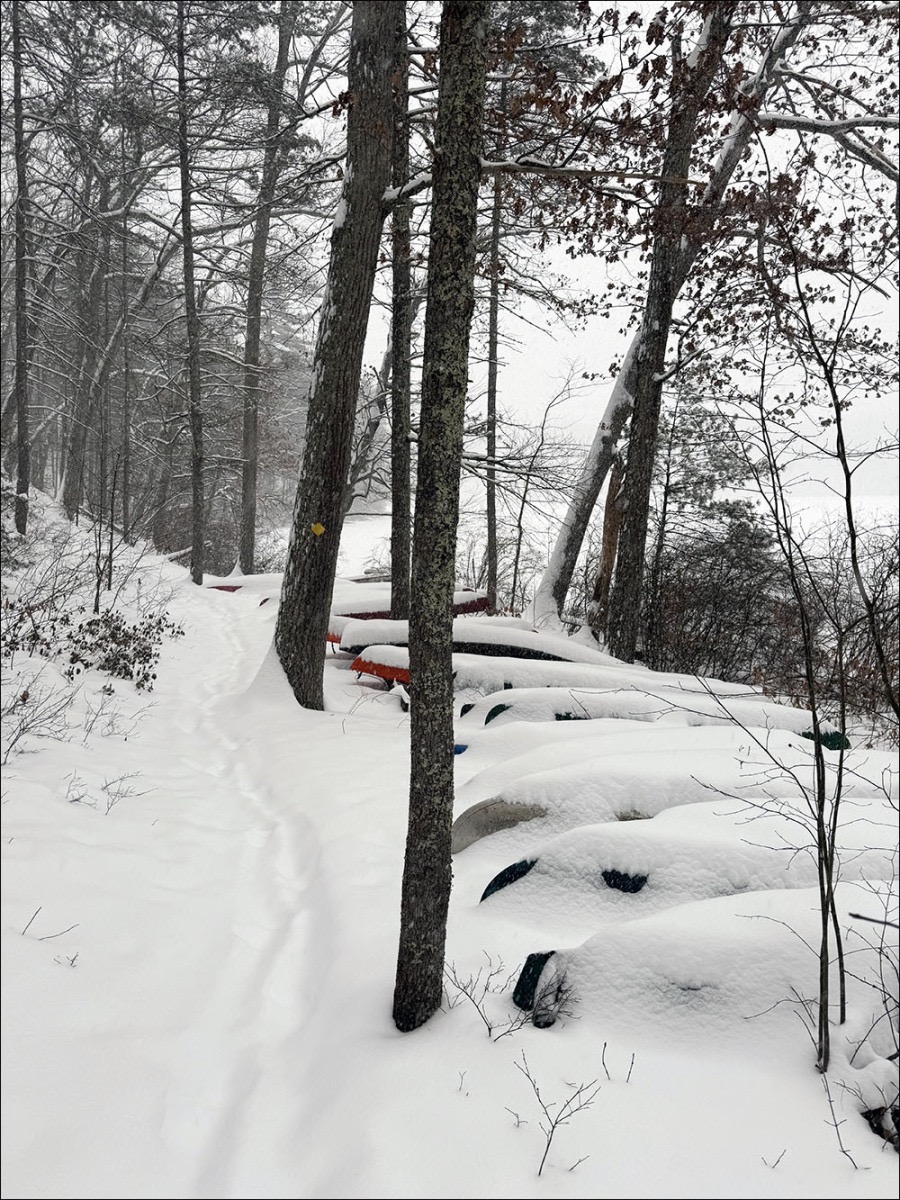
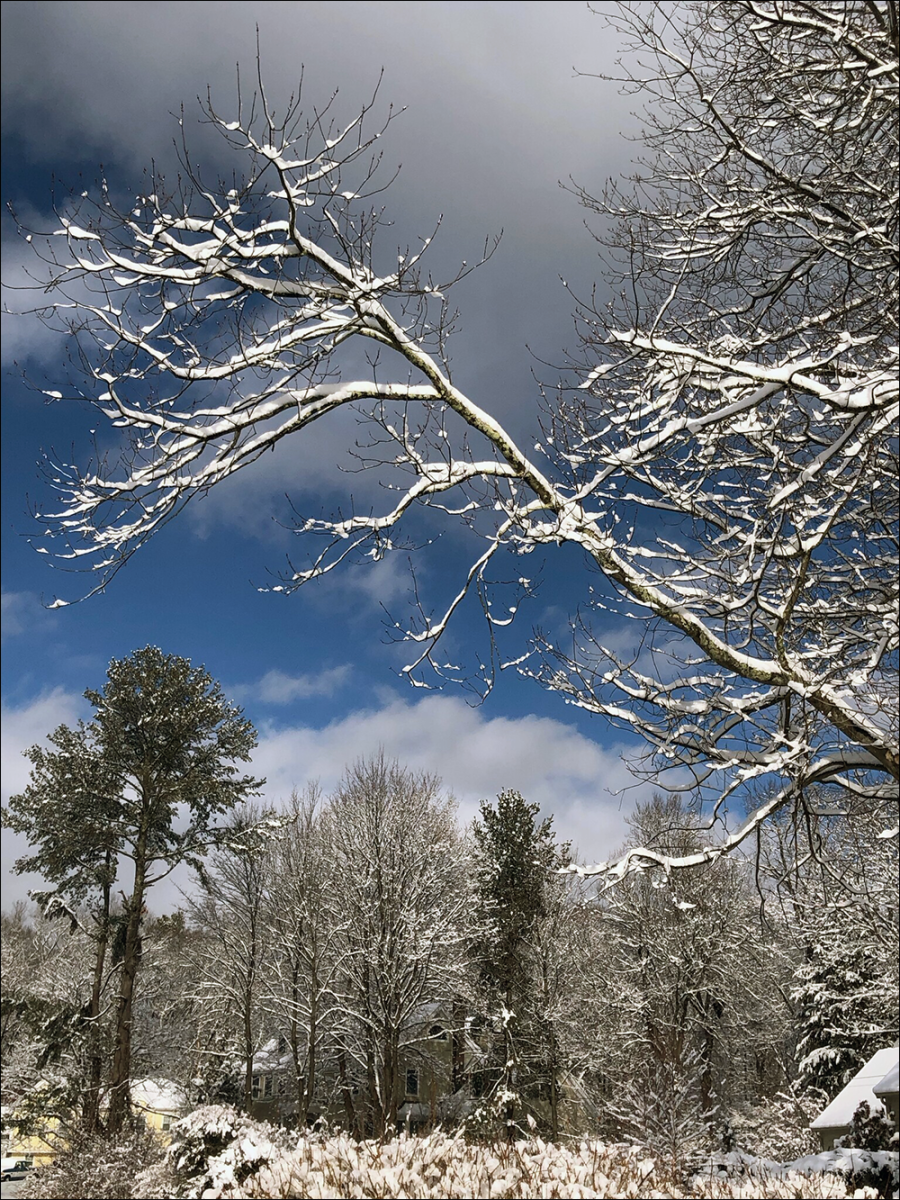
Readers who have been longing nostalgically for the “real winters” of long ago are happy. The last month has given us nearly two feet of snow and bitter cold, below zero on some nights, with many days when the temperature did not climb above freezing. People all over town have been dealing with ice dams.When this column reaches your in-box, more snow is on the way. According to various sources, we have not experienced this depth and length of cold for over twenty years.The resulting slow melting means that roadside walls of snow created by snow plows are just sitting there, getting dirty. One concern is that when the banks of snow finally melt they will take road salt into freshwater streams and ponds, with negative impact on freshwater organisms. Quoting from an article in the Feb. 15, 2026 Boston Globe, “There is, however, one environmental benefit to heavy snowfall. (Julie) Wood said slow, gradual snowmelt allows water to recharge groundwater supplies, something intense rainstorms often fail to accomplish. Still, the sight of blackened snowbanks offer a powerful visual reminder. “Snow is just revealing to our eyes the pollution that’s always there year-round,” Wood said. “That black stuff we see on the snow is not only there in the winter, it’s just only visible in the winter.” We are lucky, here in Lincoln, to have beautiful vistas of (mostly) clean white snow lying on the fields.

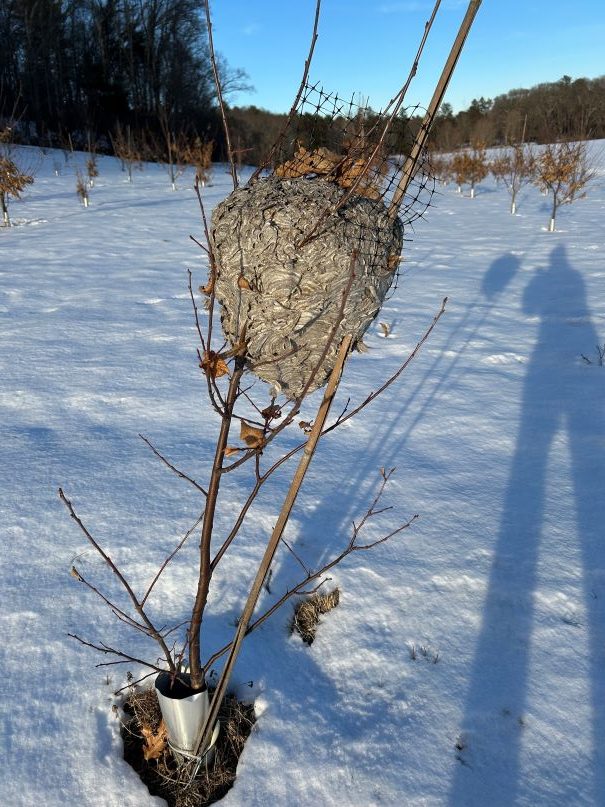
The plant world is just waiting, ready to respond as temperatures rise and the sun is higher in the sky. The snow is actually providing good insulation from the cold. I cut forsythia twigs and brought them inside to provide spring on the kitchen counter. Before the snow, a walk in Flint Fields provided views of the American Chestnut Foundation orchard on the slope, as well as an empty bald-faced hornet nest on one of the young trees. Snowdrops were already blooming, as they do each year, at the east-facing corner of my house but they are deep under snow now. Sugaring season is around the corner: daytime temperatures close to forty degrees and nighttime temperatures below freezing will get the process moving in the sugar maples.
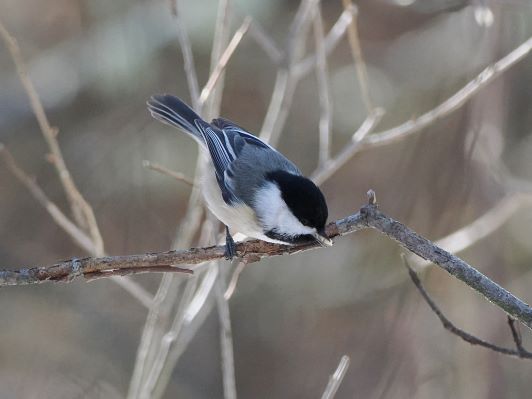
Lengthening hours of daylight signal that spring is actually on the way, and birds are responding with more singing. I have heard black-capped chickadees giving their fee-bee call, and house finches are twittering. Woodpeckers increase their drumming in February to communicate courtship, claim territories, and bond with mates, although they will not lay eggs until May. Robins which are over-wintering have to forget about earthworms, changing their diet to berries, such as those found on staghorn sumac or my holly bushes. Not all berries are equal, nutritionally. Native shrubs tend to be best, both for the birds and for pollinators. There are many resources available listing the best plants for the backyard gardener to plant with the goal of supporting wildlife.
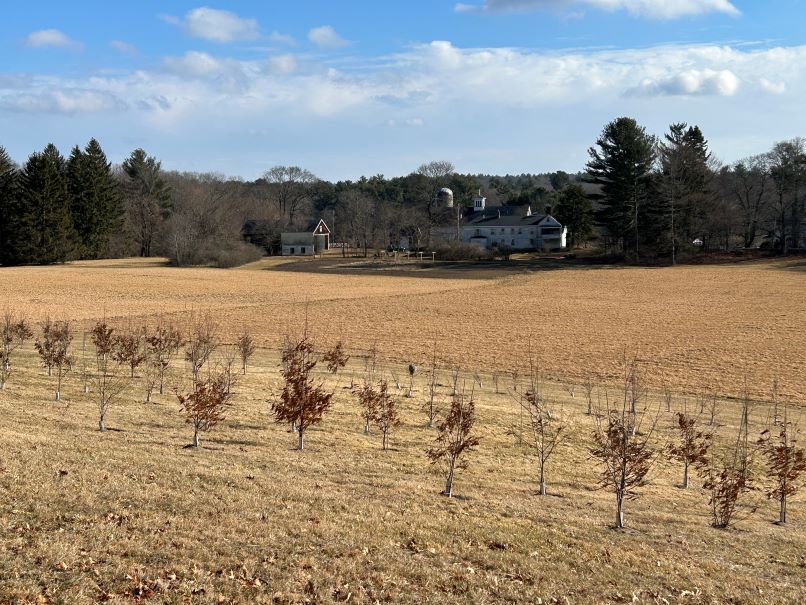
Birds have been flocking to feeders throughout the cold and snow. The Winchells, on Concord Rd. were surprised to see a leucistic American goldfinch for several days, “all white except the wings with a yellow blush on the head and throat – quite dramatic!” Leucism in birds is a genetic mutation meaning loss of pigment in feathers, but the eyes and legs remain dark, unlike in albinism. Eastern bluebirds are frequenting many feeders, eating mealworms, suet, and even hulled sunflower seeds. They look gorgeous against the snow. A Baker Bridge Rd. resident was surprised to find a bluebird staring at him when he opened the woodstove door to lay the fire. Luckily, the wood stove was cold and the bluebird was caught gently and released, without injury But why and how did it come down the stove pipe? A few grackles turned up below my feeders recently, and before the end of February we can expect to hear the conk-a-ree call of red-winged blackbirds, annual harbingers of spring.

Great-horned owls are already nesting, usually occupying old nests made by larger birds such as red-tailed hawks. Eastern screech owls are courting at this time, making “ a variety of sounds, including barks, hoots, squeals and an occasional screech, but the most common calls of both male and female screech-owls are an even-pitched trill, or tremolo, and a shrill, descending whinny,” as Mary Holland explains in her blog. Owls have a hard time hunting for rodents in deep snow.

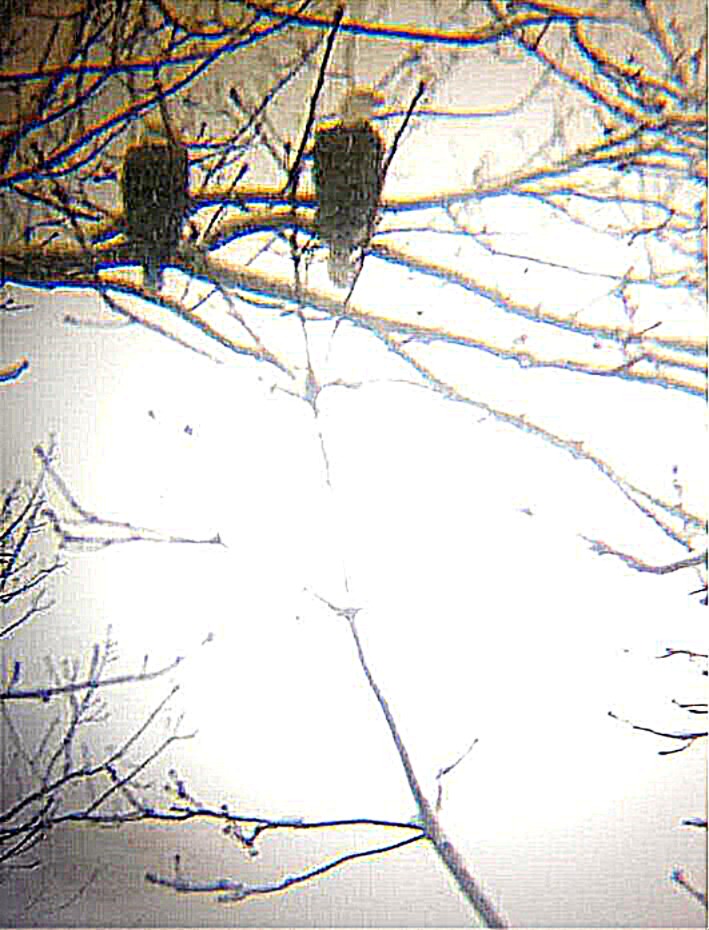
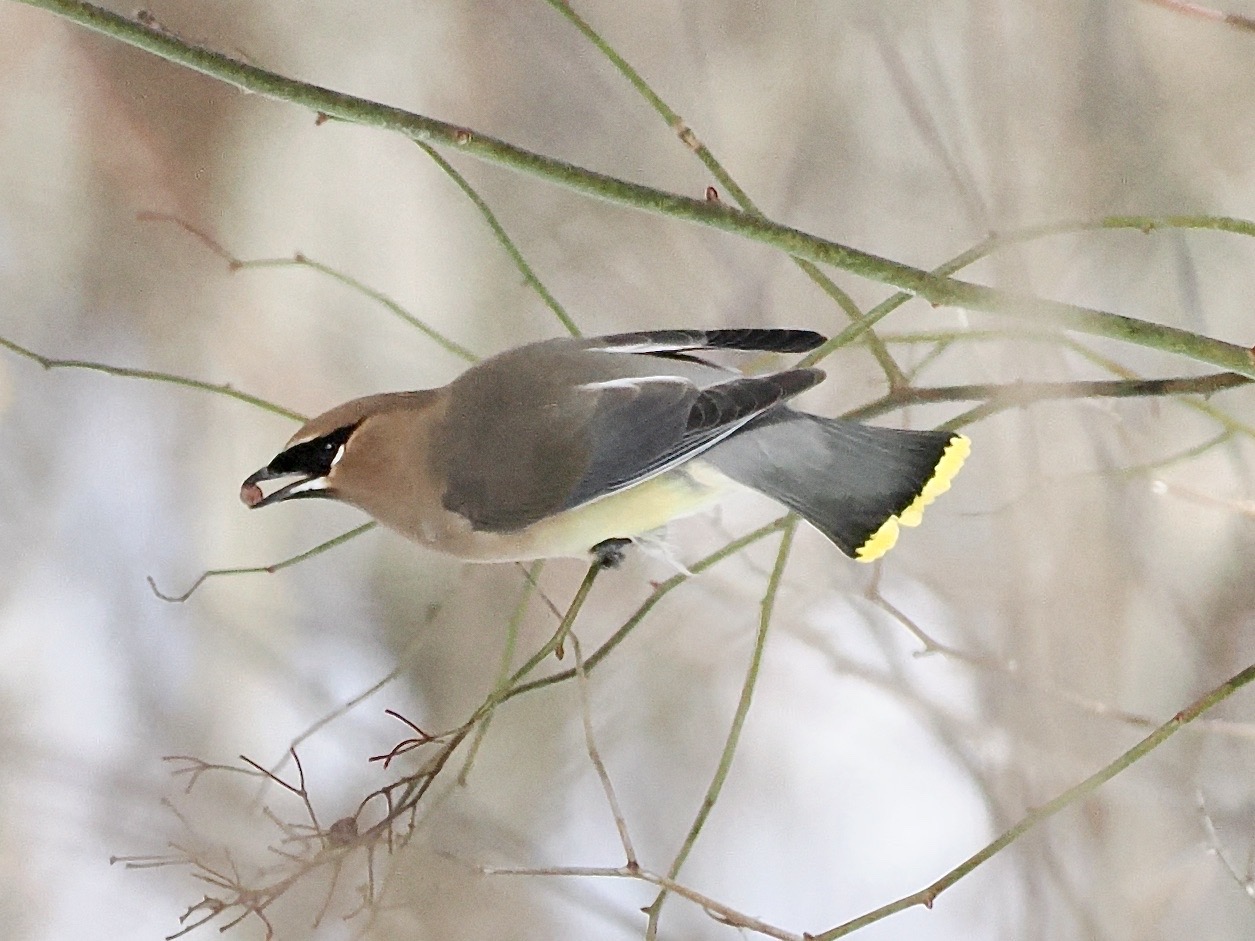
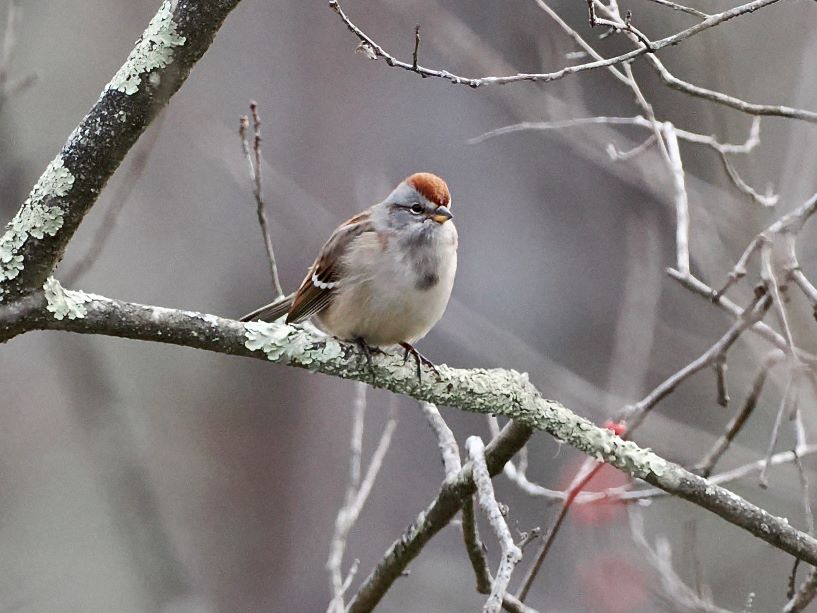
Other avian sightings of interest include flocks of horned larks and snow buntings near Hanscom, a solitary turkey vulture circling above the transfer station, and cedar waxwings. Purple finches, a few yellow-bellied sapsuckers, savannah sparrows, brown-headed cowbirds, and American tree sparrows have been spotted at Drumlin Farm. Will Leona led a walk in the snowstorm for a group of hardy walkers and snapped a photo of a pair of bald eagles in the snow in a tree near Farrar Pond. Carol Roede observes life in the swamp behind her house and found over thirty mallards and at least three black ducks “in a row” in a narrow channel of open water.

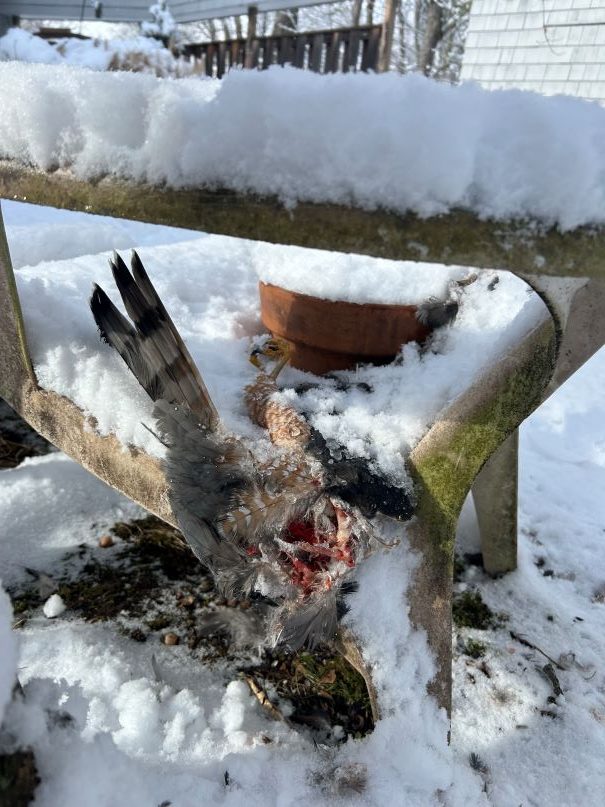
Common ravens, are indeed more common than years ago and have been heard, giving their deep croaks, in several parts of town; Susan Packard watched twelve ravens “playing with one an another” as they flew over Boyce field. An uncommon event was to see a Cooper’s Hawk attacked and killed by another raptor, probably a red-tailed hawk, behind a Lincoln Woods residence. Red-shouldered hawks are calling more noticeably now, preparing to nest.
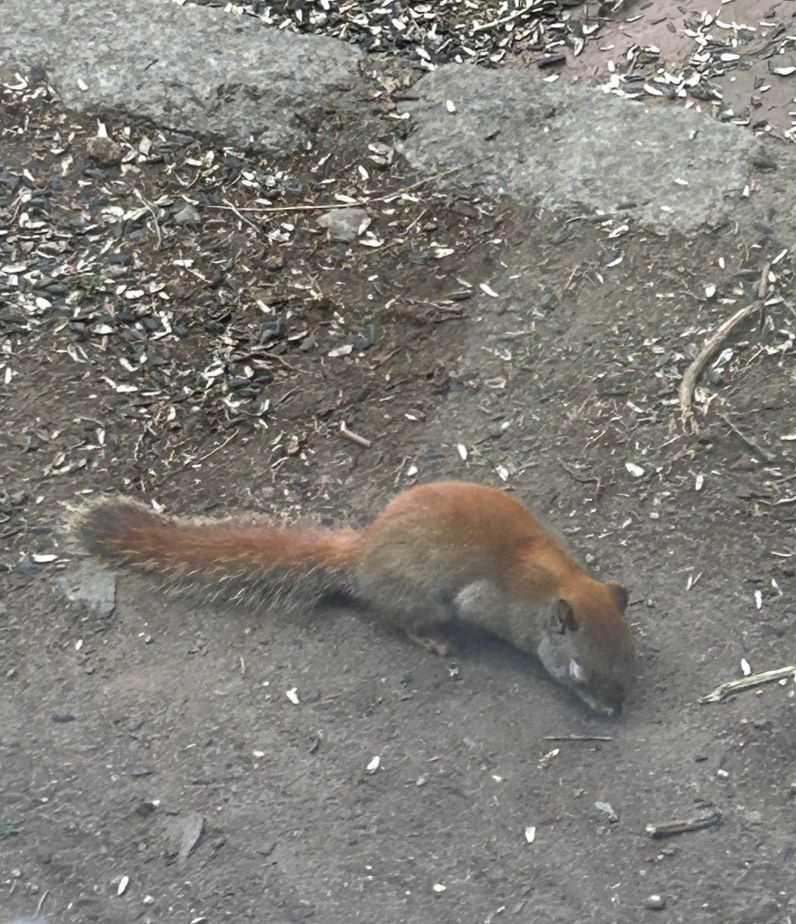
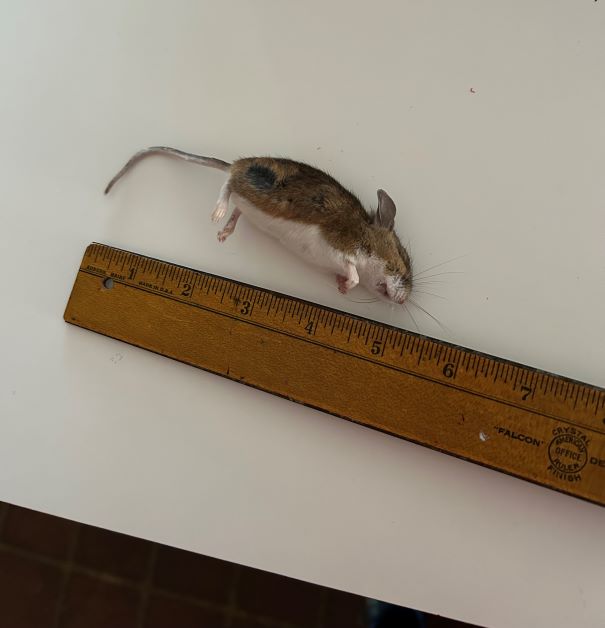
Our small mammals, such as voles and shrews,  deal with the deep snow by making subnivian tunnels, which provide protection from both the cold and from predators. A couple of white-footed mice made their way into my house and met their demise when my cat considered them new toys. Numerous gray squirrels keep busy eating seed under my bird feeders, and red squirrels have created tunnels where they take seeds for snacks.  This is breeding season for raccoons, beavers, bobcats, and coyotes, with coyotes howling a lot now as they seek mates. North American river otters give birth at this time after a ten-month gestation due to delayed implantation. Quoting Mary Holland, “The young are born fully furred, but their eyes are closed and they lack teeth. In a little over a month they are fully active, in two months they are foraging with their mother, and by the next winter they have dispersed and established their own territories.”  

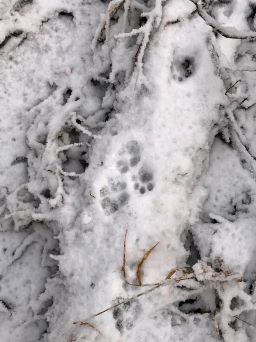
A snowy winter, such as this one, provides excellent opportunities to identify and follow animal tracks, which tell complex stories of “who, what, why, and where” . Ranger Will Leona writes, “The depth of the snow has made it hard to get good pictures of track definition.  But so many tracks and proof of active wildlife have still been seen around Lincoln.  Foxes, coyote, deer, mice, voles, ermines, long-tailed weasels, red squirrels, gray squirrels and more have been leaving evidence of their trails and meals behind in the snow.” 

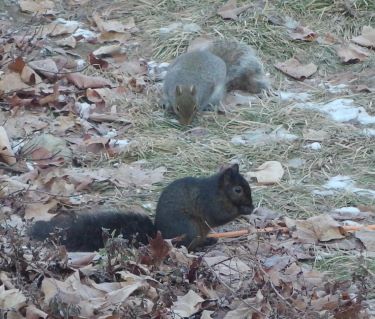
Two months ago I invited readers to report sightings of black-morph gray squirrels. I now have more, including at 235 Concord Rd., also in Concord by White Pond, near Spy Pond in Arlington and Lexington Center. A Concord reader wrote, “A friend who lived in Battle Creek, Michigan said the town had a lot of them as Mr. Kellogg, of cereal fame, saw them when he was in England, liked them, brought some back, and released them in Battle Creek area.” I think I am finished with my un-scientific survey, but am happy to have readers email me directly if they have more to say on the subject!

Looking out at our snowy scene makes it hard to imagine that the annual amphibian migration may only be weeks away. The first night in March or April when it is warm (38℉ or above), raining, and dark may find spotted salamanders and wood frogs making their way to their natal pools. More in the next column.
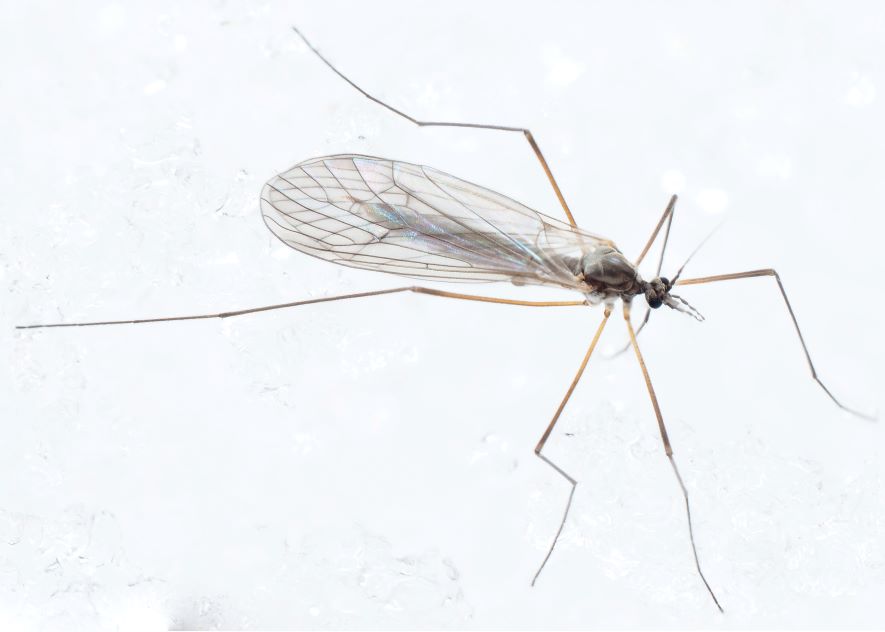
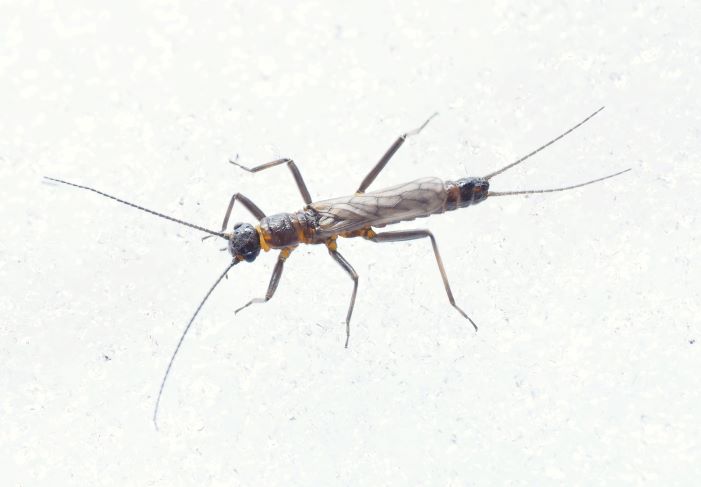
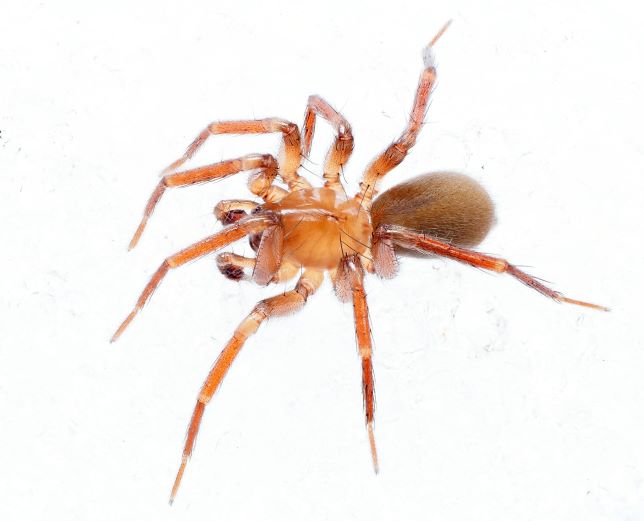
Most insects survive the winter in diapause, as pupae, eggs, or hiding as adults under bark or in other protected places. Birds know where to find them! A few insects are active, however, even in the cold. Norm Levey snowshoed in the riparian habitat at Tanner’s Brook and found winter stone flies, winter crane flies (very small: 7-9mm) and tiny non-biting midges, even smaller (4-5mm) recently emerged from the stream as adults looking for mates. Norm also photographed a  spider, “Genus Cicurina, a sheet web weaver. The spider is six millimeters or 3/16 body length (Legs make it much longer.) This is a male and likely a young one. The spiders are hungry and emerge from the subnivean leaf litter to hunt springtails and small arthropods. Their bodies avoid freezing by producing cryoprotectant chemicals.”
In closing, I urge readers to check out neighboring Weston’s new digital newspaper, which includes interesting nature notes by Michael Pappone, the “Backyard Naturalist’. See link.

Links

To See Carol Roede’s Trail Cam Footage of Mallard and Black Ducks

https://drive.google.com/file/d/1nGG-dRoZT_VxKFj55rYc_HbK3ktSSj3_/view?usp=sharing

To read about winter wildlife survival adaptations

https://www.massaudubon.org/news/latest/wicked-winter-survival-adaptations

To read about sugar maple trees and the sap flow

https://www.massmaple.org/about-maple-syrup/how-sugar-maple-trees-work/

To read about insects in diapause

https://www.schlitzaudubon.org/2020/11/16/how-insects-survive-the-winter-diapause/

To read “The Backyard Naturalist” in the Weston Observer
https://westonobserver.org

January 2026 Wildlife Column 

Nature Survives the Cold

Written by Gwyn Loud for the Lincoln Land Conservation Trust. She welcomes your sightings and questions at 781-259-8690 or gwynloud555@gmail.com. 

COLD. That basically sums it up for much of the past month, until a warming trend (I.e. it got to a high of 33℉) began on January 6. December was the second coldest December in the past twenty-five years for Boston, with arctic blasts and bitter wind chills. Paradoxically, global warming may be the cause, making changes in the polar vortex and jet stream. See link to read more. Here in Lincoln, ponds were frozen well before Christmas and a few small snow storms, starting with 4 inches on Dec. 27, allowed intrepid sledders and cross-country skiers to have some fun, even though the snow was not deep. As of this writing, we are in a January thaw, which has contributed to very icy driveways, paths, and trails, caused by daytime melting and overnight re-freezing. Roads appear clear, due to large amounts of brine. Drivers are happy, but I wonder about the effect on roadside trees. Dog walkers are wary of salt on dogs’ paws. We are all heartened by the gradual lengthening of daylight hours.

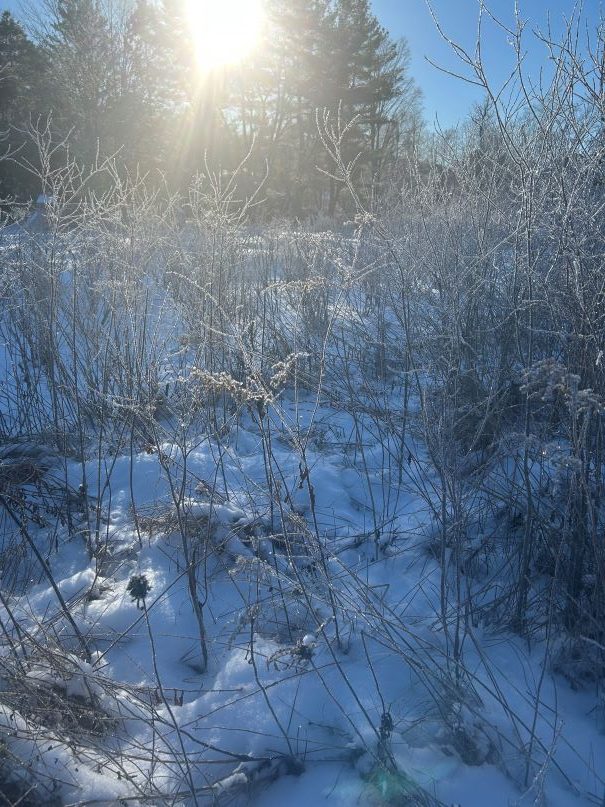
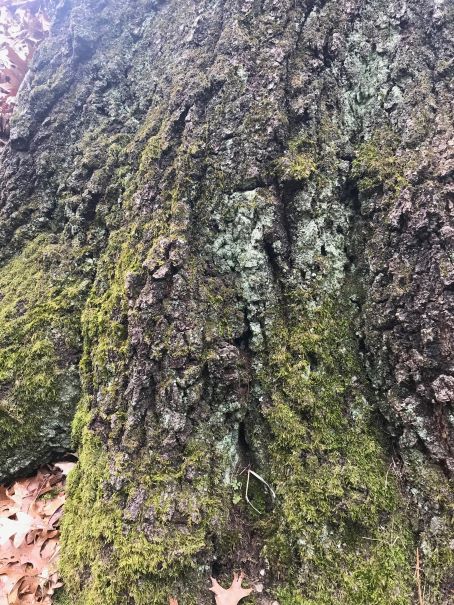
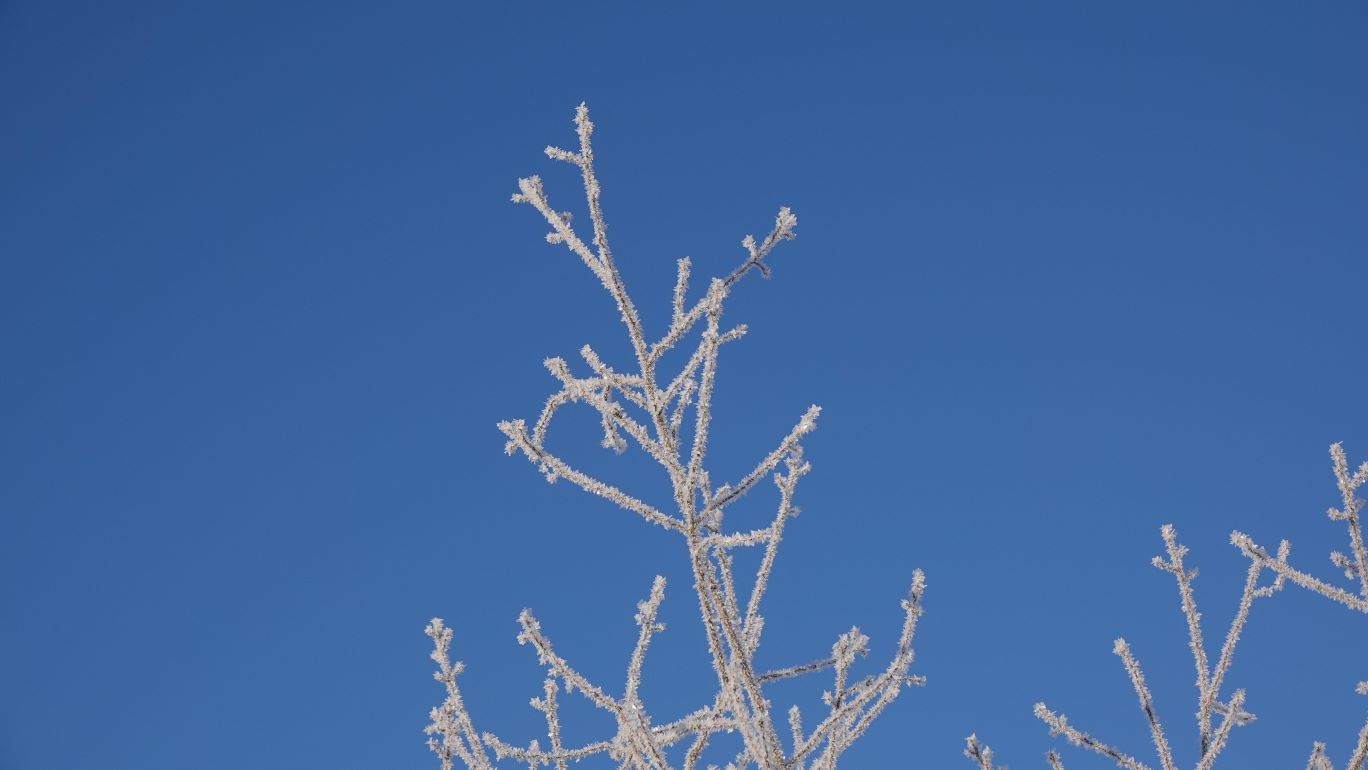
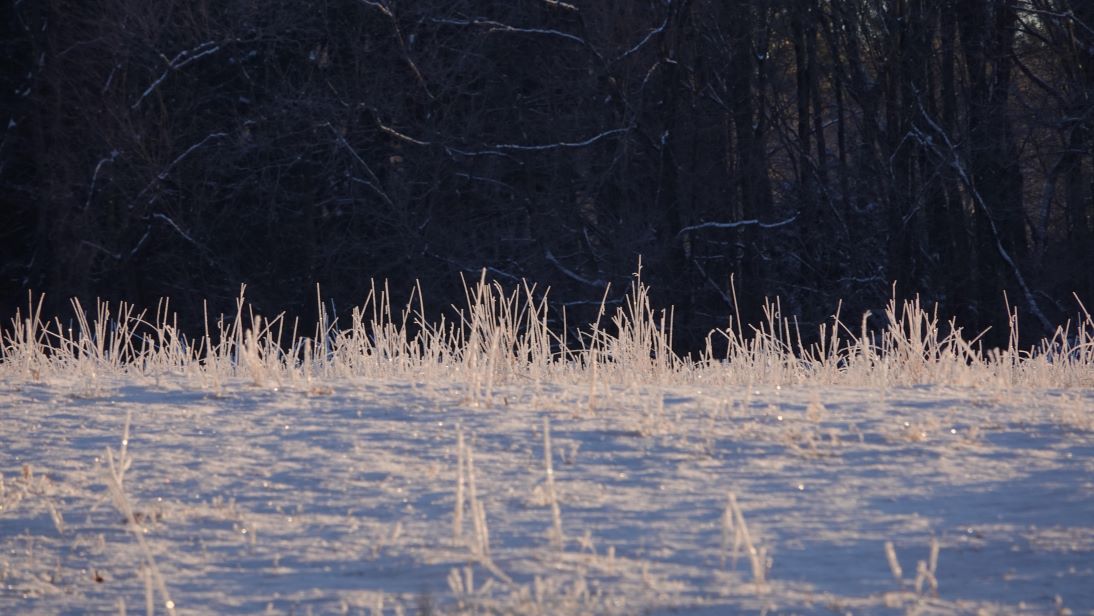
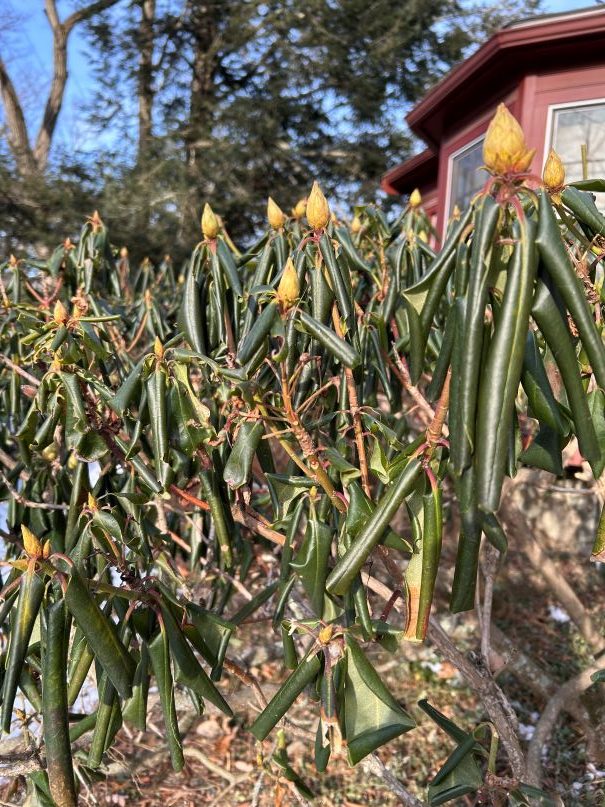
The snow gave the landscape white beauty, while frost and hoarfrost bejeweled many plants. Hoarfrost forms on clear windless nights when water vapor freezes directly to ice crystals in light feathery patters. This cold season invites us to observe shapes and colors of winter weeds, tree bark, lichens, mosses, and evergreen plants. Tree buds are there, just resting and waiting. Rhododendron leaves reveal the temperature, curling up tight the colder it gets. Why do some some vascular plants stay green all winter but others die? It’s all about evolution and genetics. Frost-hardy plants have various chemical adaptations which prevent ice freezing inside their cells and then rupturing cell walls when the ice expands. Garlic mustard, for example, is looking green and happy in temperatures well below freezing, Gardeners know to pay attention to the USDA Plant Hardiness Zones when selecting perennials, trees, and shrubs; zones have shifted due to a warming climate.


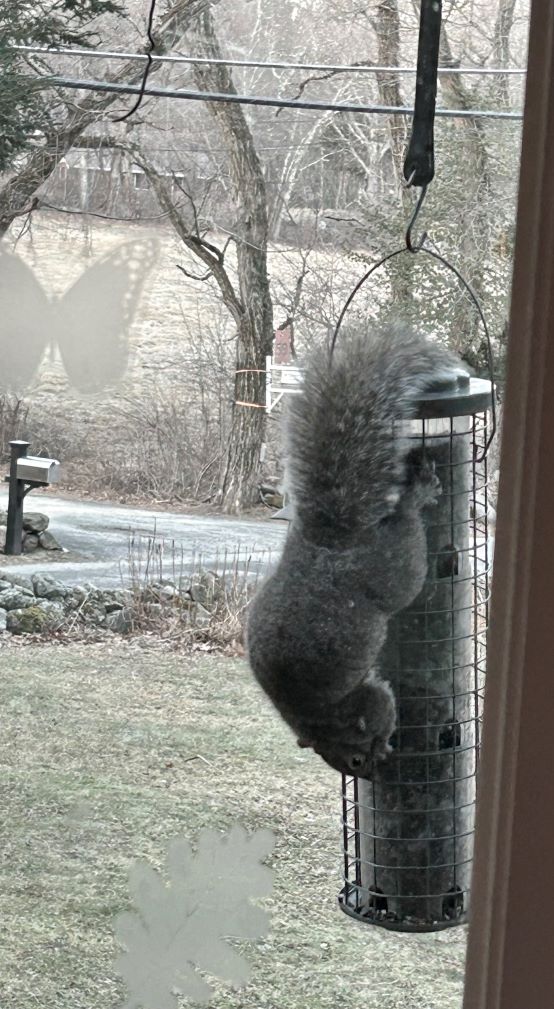
Birds were especially mobbing feeders during recent snowfalls. I also seem to be feeding ten (yes, ten) gray squirrels and four red squirrels, mostly on the ground, but the grays do all sorts of acrobatics, trying to access the hanging feeders. An annual citizen-science opportunity, the Great Backyard Bird Count is coming up on February 13-16 in which you count birds at your feeders and enter the results on-line. It’s easy, and contributes to understanding bird populations across the US. See link to learn how.

Any day now we will hear the first two-syllable fee-bee call of the black-capped chickadee, a sign of courtship beginning. This call is triggered by lengthening hours of daylight rather than weather. Click link below to learn what many chickadee calls mean.

Frozen ponds by mid-December meant no chance of seeing ducks and swans on the Christmas Bird Count, The Cambridge Reservoir (which is outside our Count Circle), had a small bit of unfrozen water on the Waltham side. Norman Levey described the scene: “This doesn’t happen every year but when there is a small patch of open water on the reservoir it concentrates the ducks wonderfully along with dozens of goofy mute swans. A passing flock tried to join the party and made two go-arounds but could not find enough open water for a landing without crashing on the backs of the ring-necked duck raft. It was at once fascinating and comical and like Times Square on New Year’s eve. About twenty mute swans came in for a landing but air traffic tower control called them off for a go-around but on second approach there was no runway space with the dense rafts of waterfowl and the flock left. One clumsy individual managed a comical touch and go head plant on the snow/ice.”

As for the Christmas Bird Count (CBC), Norman Levey, who coordinated the whole Concord Circle, wrote,“The winter bird count held on December 28 was notable for, well, how unremarkable it was. Abundance and diversity were typical for mid January. The birds seen and heard were our common winter roster. The morning dawned at a frigid two degrees but by early afternoon it warmed to the mid thirties and our field volunteers shed layers as if it were a spring day in early March.

We did achieve one record high: pileated woodpecker with a tally circle-wide of 90, a dramatic uptick after flat numbers for several years averaging 53. Perhaps we had a good hatch year. This was a rare New England bird in the 19th Century after extensive land clearing for farmland but a few decades into the 1900s this woodpecker made a slow and steady population climb as cropland and pastures were abandoned and reforested. Our present day mature woodlands provide abundant nesting and overnight roosting opportunities in large dead and decaying trees that also harbor their favorite food, carpenter ants, and beetle larvae a distant second. Watch this large woodpecker scale bark and excavate in search of ants and grubs in my video (see link). I had to go to Vermont to see a pileated as a kid birdwatcher.”

As always, warmly dressed volunteers tromped through fields and woods to count on the CBC, and others tallied birds at their feeders. Many thanks to all who helped the Lincoln count: Pam Boardman, Jenifer and Dennis Burckett-Picker, Mathias Bitter, Larry and Kim Buell, Patti Cable, Mary Capkanis, Rob DeNormandie,  Marjorie Durand and Greg Stathis,  Jason Forbes, Deborah Gerstein, Sam Harris, Rakesh Karmacharya, Allison Lu, Jacqueline Kluft, Norman Levey, Gwyn Loud,  Ron McAdow, Nancy Nicholson, Barbara Peskin, Grayson Shannon, Lucy Sprayregen, Betsy Stokey,  Barbara Peskin, David Peterson, Jocelyn Pyne,  Lucy Sprayregen, Betsy Stokey, Anne Sobol, Joan Stoner, Vanessa Vallée and Robin Wilkerson.

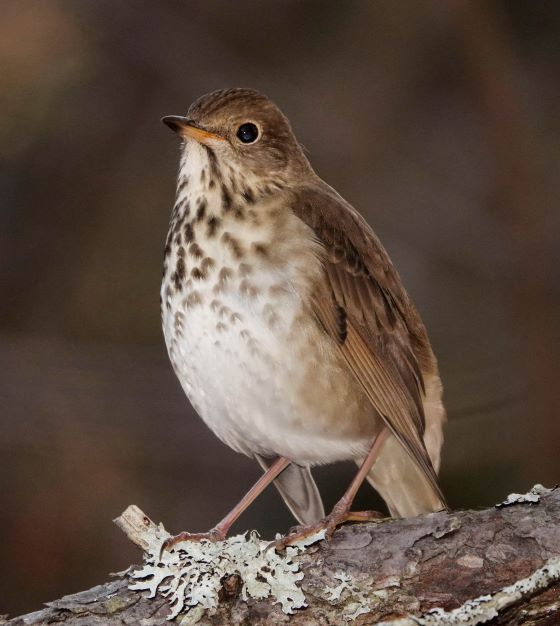
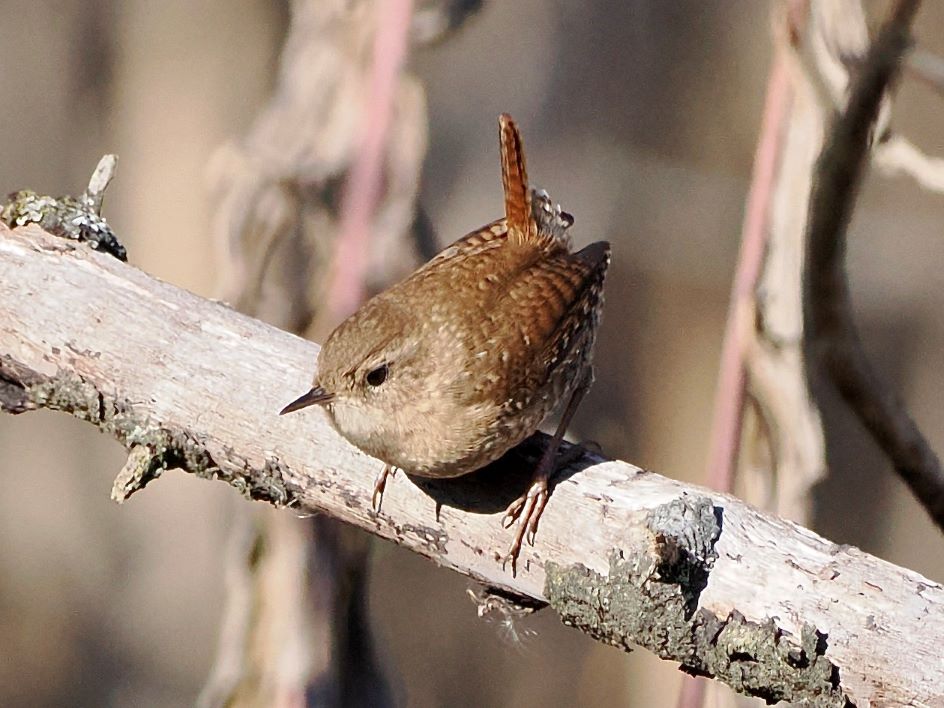
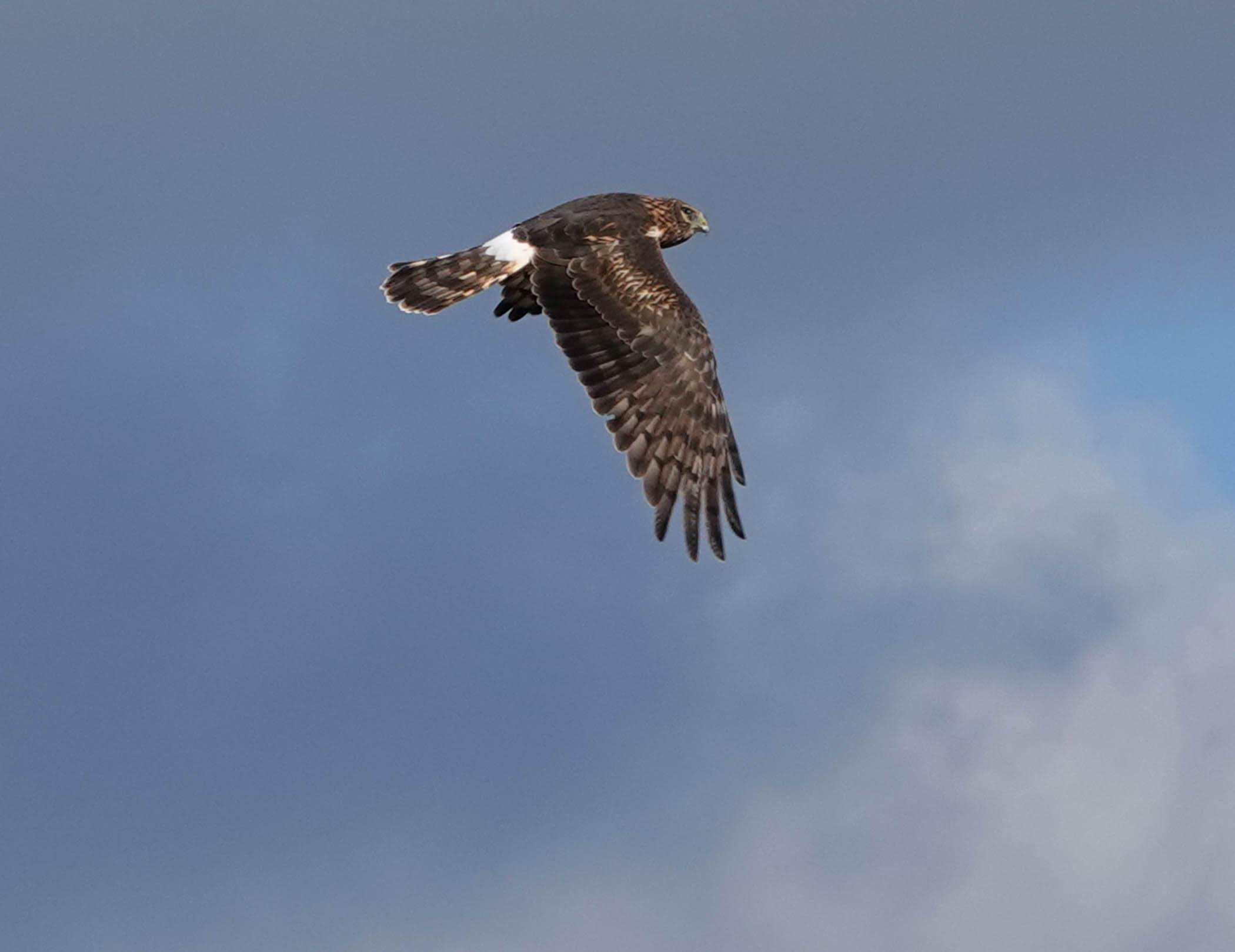
Other interesting recent bird sightings include a rough-legged hawk,  a northern harrier which continues at Drumlin Farm, a few lingering swamp sparrows and savannah sparrows, and snow buntings in Boyce Field. While American robin counts were generally low on the CBC, on Jan. 4 a flock of 92 turned up at Drumlin. My neighbor had a dozen red-winged blackbirds on Jan. 9. Are they early spring arrivals? I doubt it- probably just rugged over-winterers. The “best birds”  from my field team on the CBC were a winter wren, hermit thrush, and yellow-rumped warbler, all seen near Valley Pond.

Some of our local mammals take naps during the bitter cold and wake up to feed during mild spells. Last night I heard noises outside near the birdseed cans and when I flicked on the outside light, three very fat raccoons, waddled off, disappointed. Another day I noticed something dart past the front door and saw it was an agile long-tailed weasel, poking around a big flower tub and running along the foundation. It stays brown all year, unlike its relative, the short-tailed weasel, which turns white in the winter, then called an ermine. Meadow voles are numerous, but we often do not see them until their tunnels become obvious in the snow. Carole Roede wrote, ‘Some days the meadow voles seem quite active out in the swamp – I hear them gnawing and squeaking inside clumps of reeds and occasionally see them zooming between tunnel entrances.” Carol also spotted two fishers following each other, perhaps thinking about breeding season, which peaks in March. Her trail cam picks up many sightings, including mink. John Nolan, on Codman Road, took videos of a bobcat, and an opossum (see below for videos). I think of opossums as slow-movers, but not this one! Rob DeNormandie was excited to see four flying squirrels at his feeders. They are nocturnal; more of us might see them if we shown a light on our feeders  (briefly) at night. I have had four more responses to my black-morph gray squirrel survey: one from Concord Rd. near St. Anne’s, one from 3 Old Concord Rd., another from 52 Bedford Rd. and one from a reader in Cambridge who sees them at Danehy Park. Fresh snow is a great time to look for animal tracks, telling the story of the the animals which live around us. Michele Grzenda reminds us of resources on tracking offered by the Mass. Division of Fisheries and Wildlife. See link.

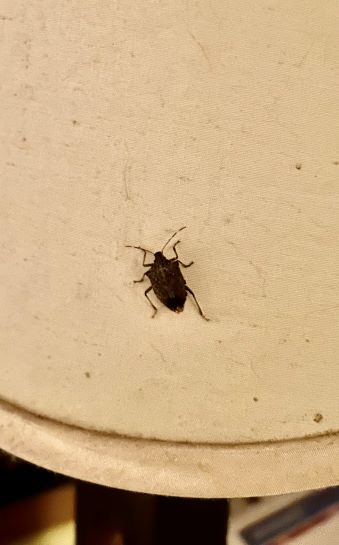
Finally, what about insects? We do not see them outdoors, but birds know where they are. Insects are in diapause, literally pausing in their development during the harsh season of winter. They are resting in the form of eggs, larvae, pupae, or adults in protected places such as under logs or bark. These insects provide food for birds such as woodpeckers, who know where to find them. A few insects seek the warmth of our houses in the winter. For example, I have found several brown marmorated stink bugs in my house; they are harmless indoors but can damage crops. They first appeared from Asia in Pennsylvania in the mid-1990s, probably arriving on a cargo container. which is how many non-native insects and seeds travel around the world.

Thanks to a new moon on January 18, the skies will be wonderfully dark on and near that date, making perfect constellation-watching conditions on a cloudless night. Bundle up and look up!

Links:

To read more about the polar vortex, the jet stream, and how global warming may be creating cold snaps

To see the USDA Plant Hardiness Zone Map

Learn how to join the Great Backyard Bird Count Feb. 13-16

To hear chickadee calls and their meanings

To see Norman Levey’s video of a pileated woodpecker

To learn more about identifying animal tracks

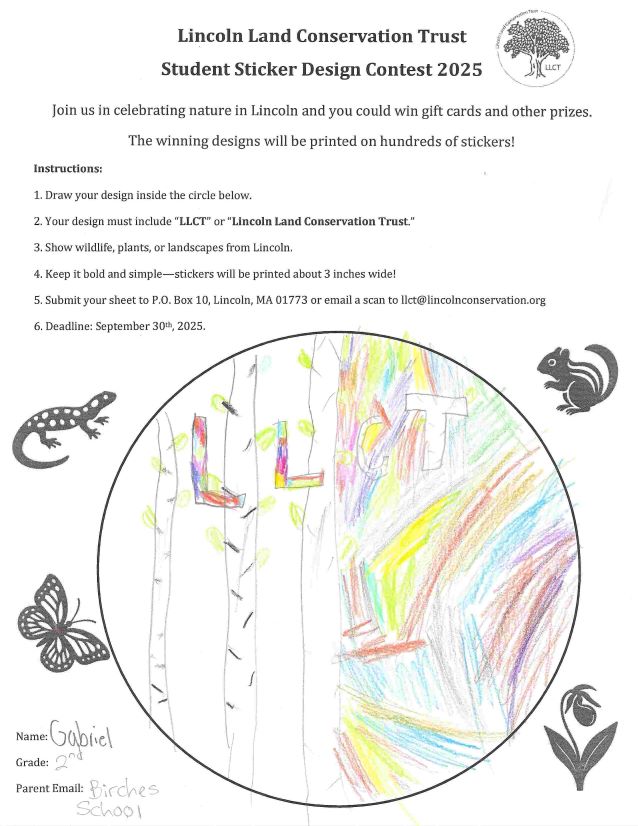
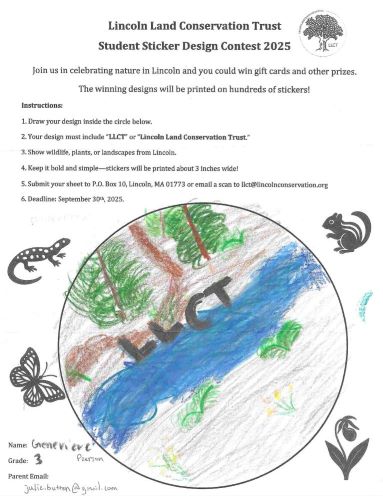
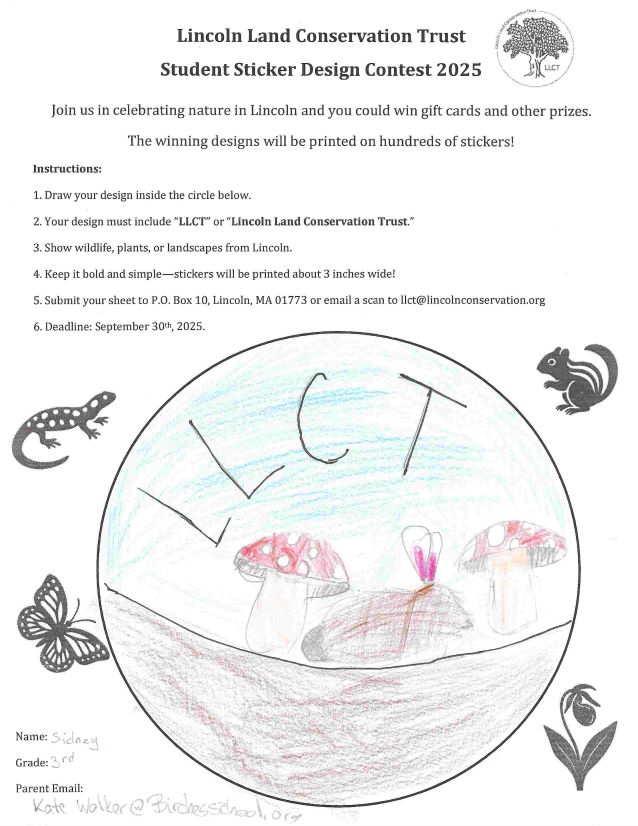
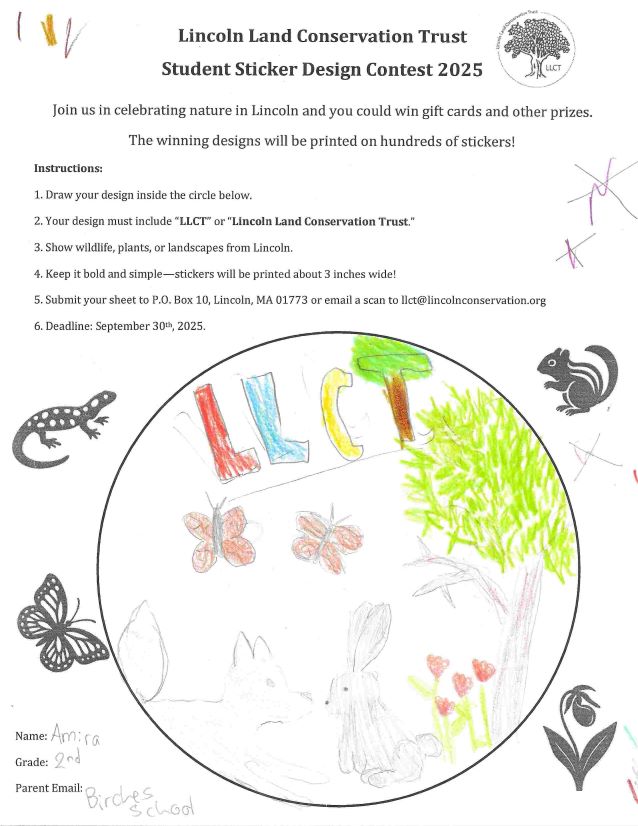
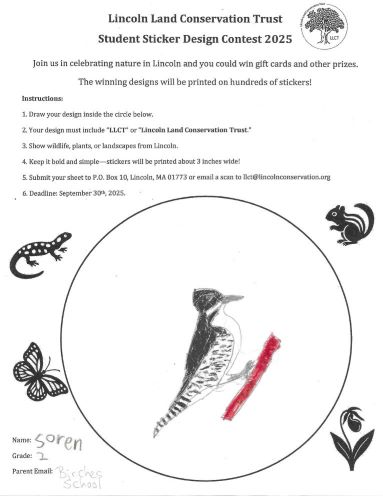
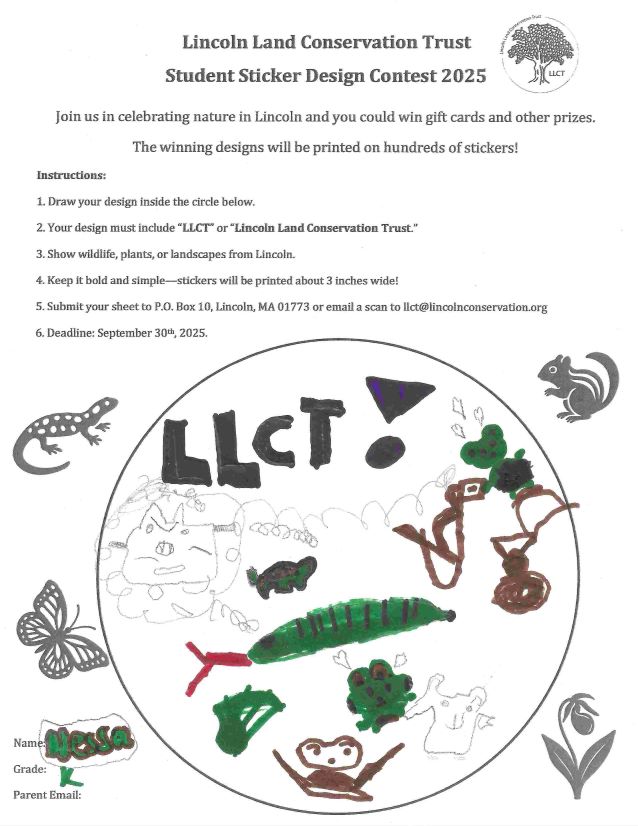
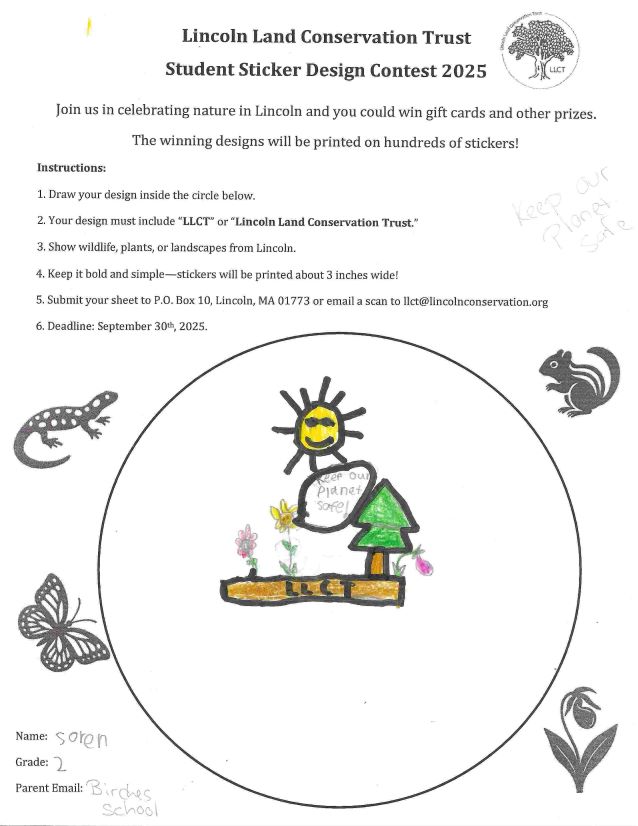
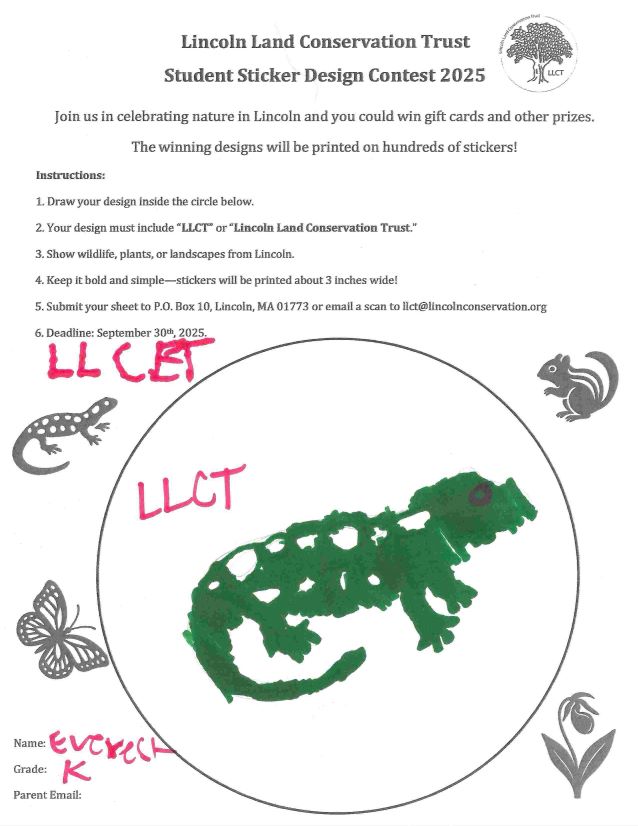
Student Sticker Design Contest Results 2026

LLCT Student Sticker Design Contest 2026

Celebrating Local Creativity and Wildlife

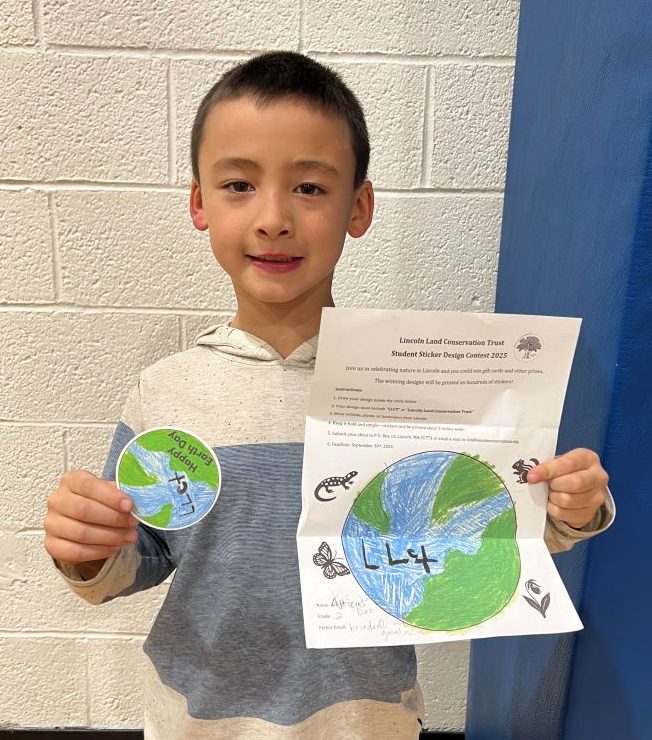
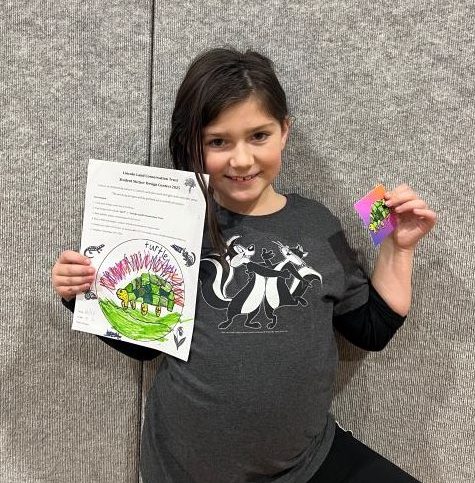
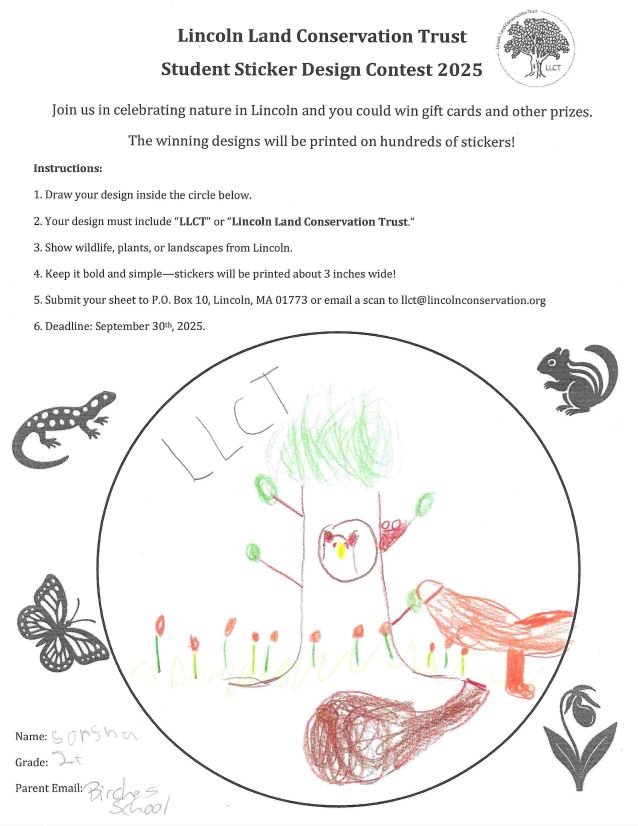
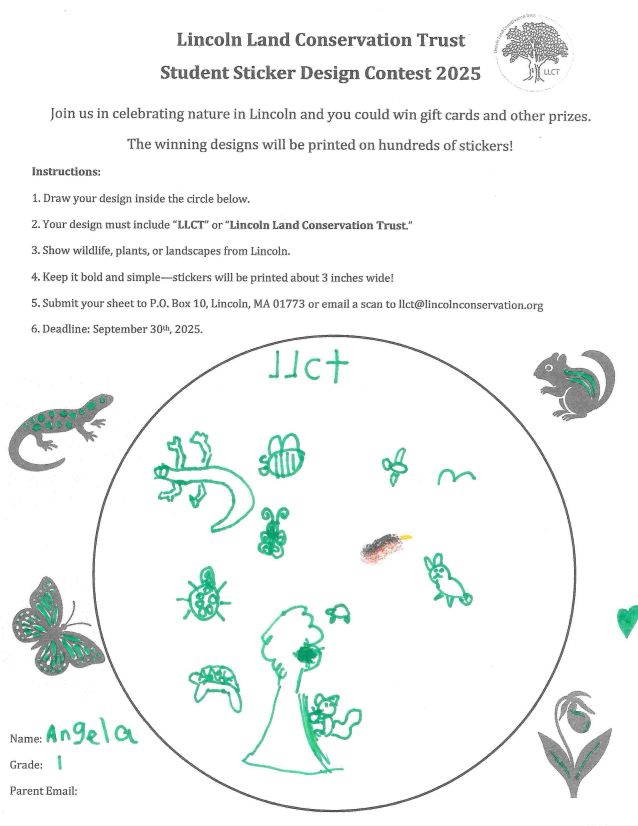
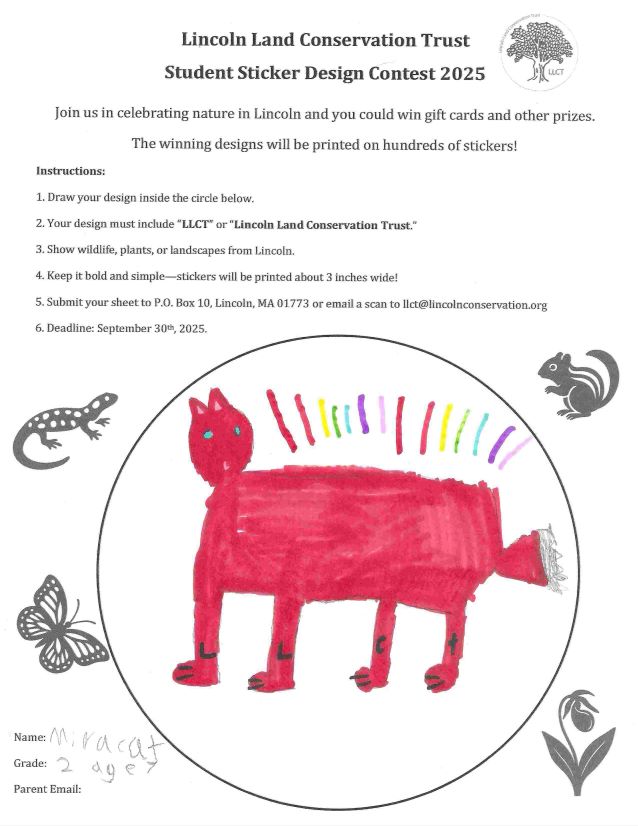
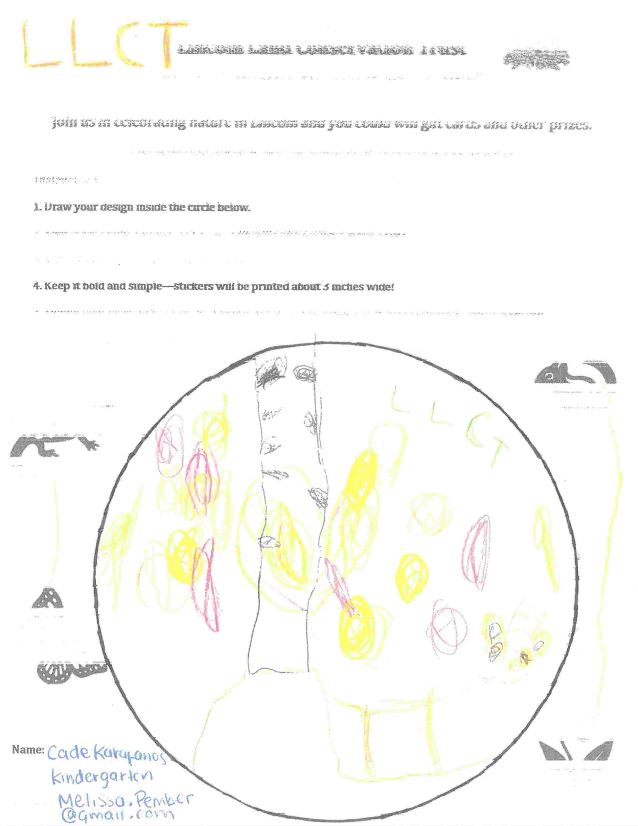
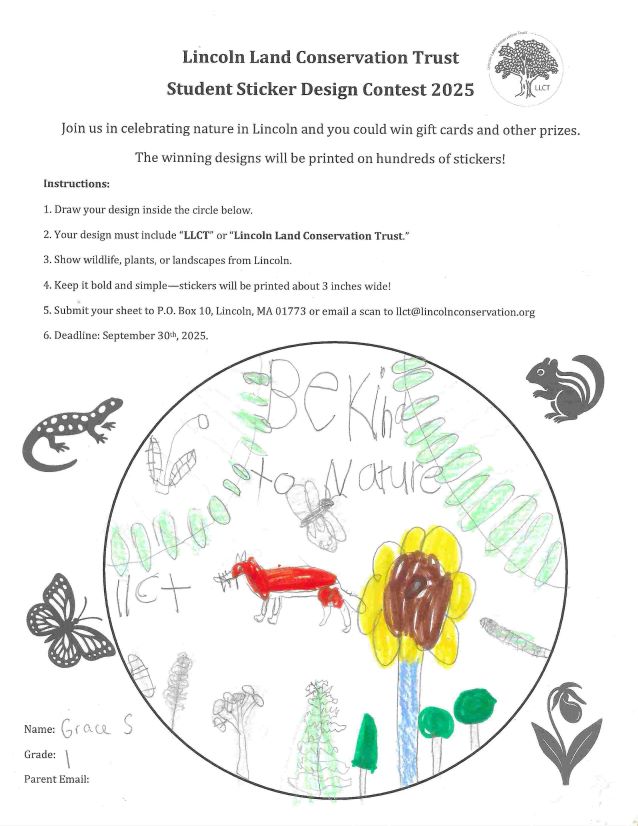
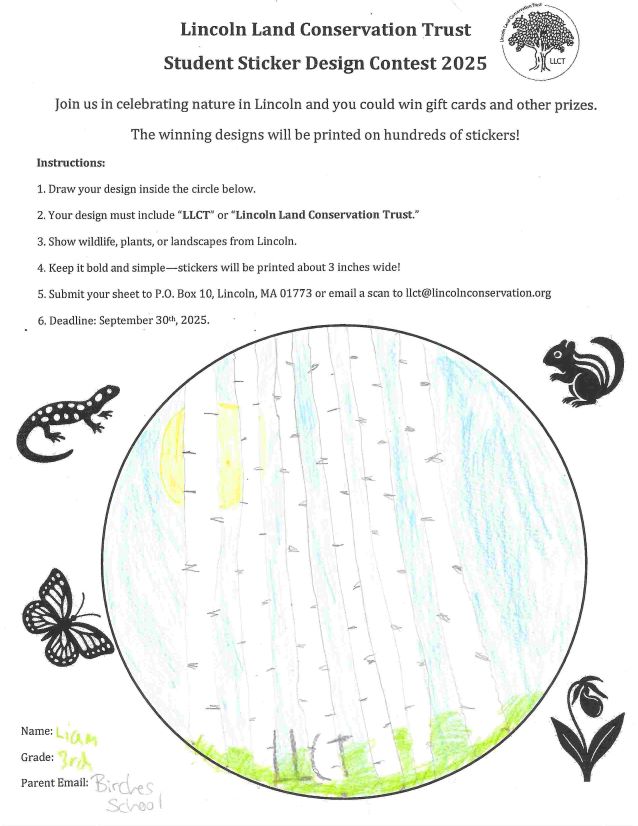
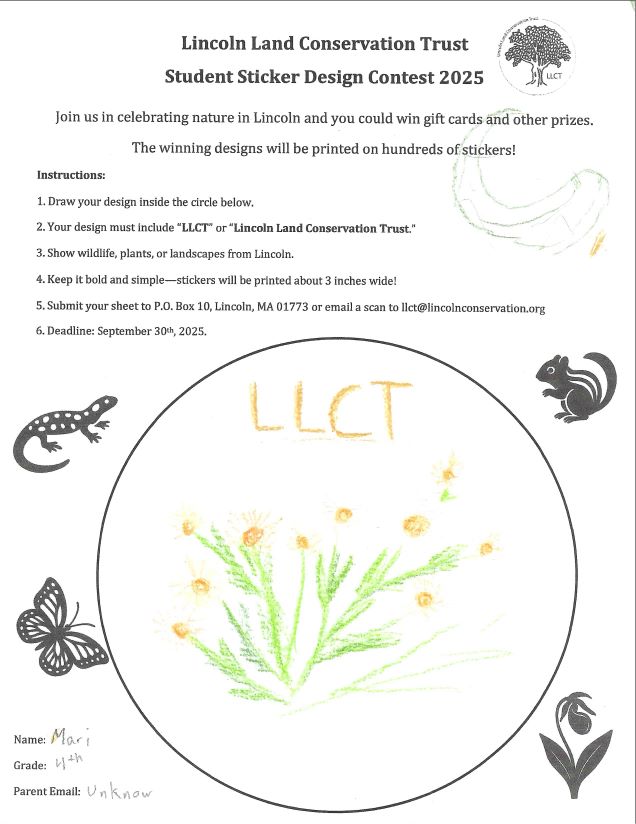
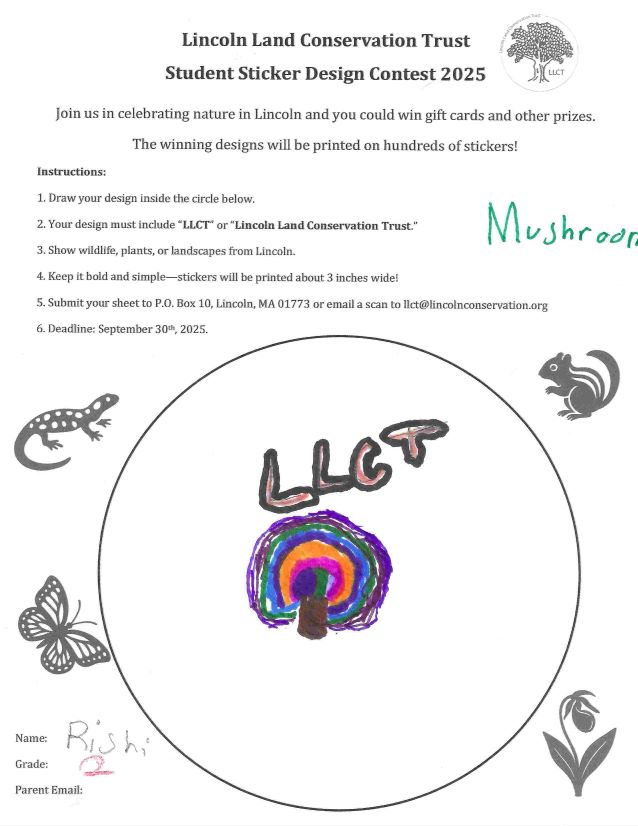
This past fall, the Lincoln Land Conservation Trust launched our first-ever Student Sticker Design Contest, inviting young artists in our community to celebrate the natural world through creative expression. The contest opened in early September 2025 and closed at the end of the month, giving students time to reflect on the places and wildlife they love in Lincoln.
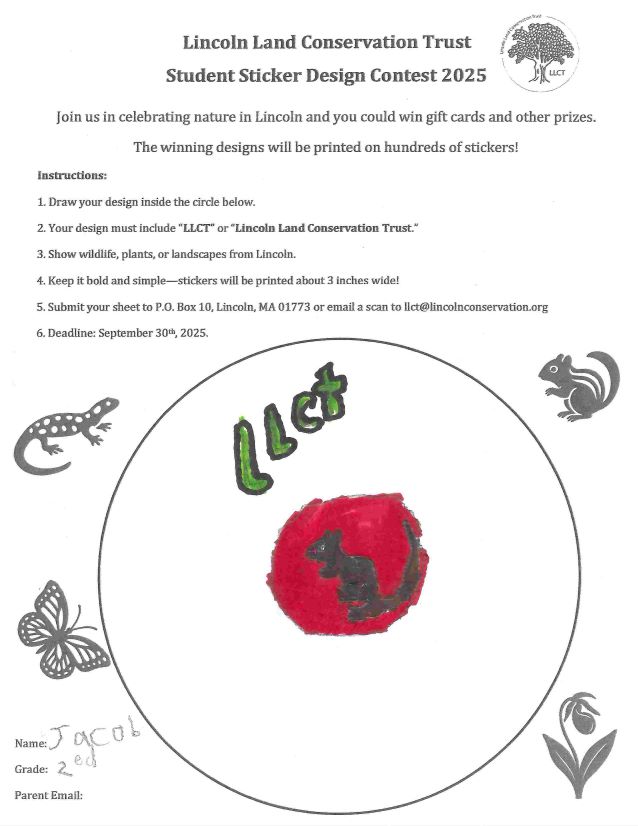

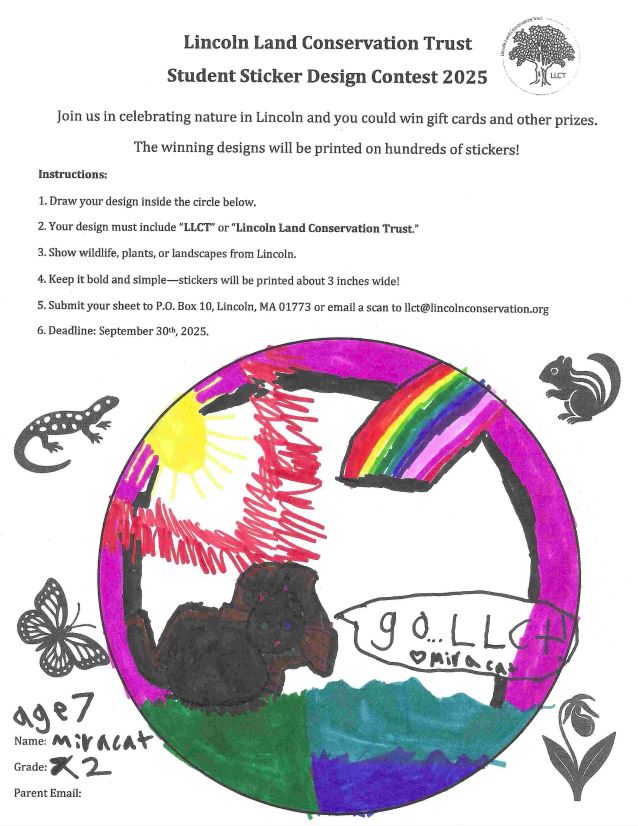
Participants were encouraged to design original artwork inspired by our conservation land—its plants, animals, seasons, and special landscapes. We were thrilled by the range of thoughtful and imaginative pieces submitted across grade levels, and we’re excited to make this contest an annual tradition.

LLCT staff carefully reviewed all submissions and selected several standout designs to be produced as limited-edition stickers. Winning students received printed copies of their stickers along with a small gift card prize. Their artwork will also be featured at upcoming LLCT programs and community events.

NEW: 2026 Student Sticker Pack Now Available

2026 Student Designed Sticker Pack

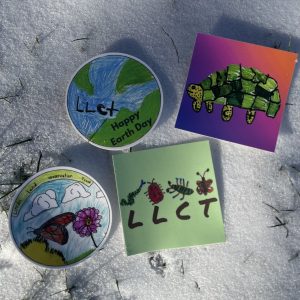
We’re excited to offer a special 2026 Sticker Pack featuring the 4 winning designs from this year’s contest!
These limited-edition stickers were created by local students and celebrate Lincoln’s wildlife and natural spaces through their unique artistic perspectives.

Sticker packs are now available for purchase in the LLCT Online Store.
Shipping is free and all proceeds support LLCT’s education and community engagement programming.

Meet the Winners

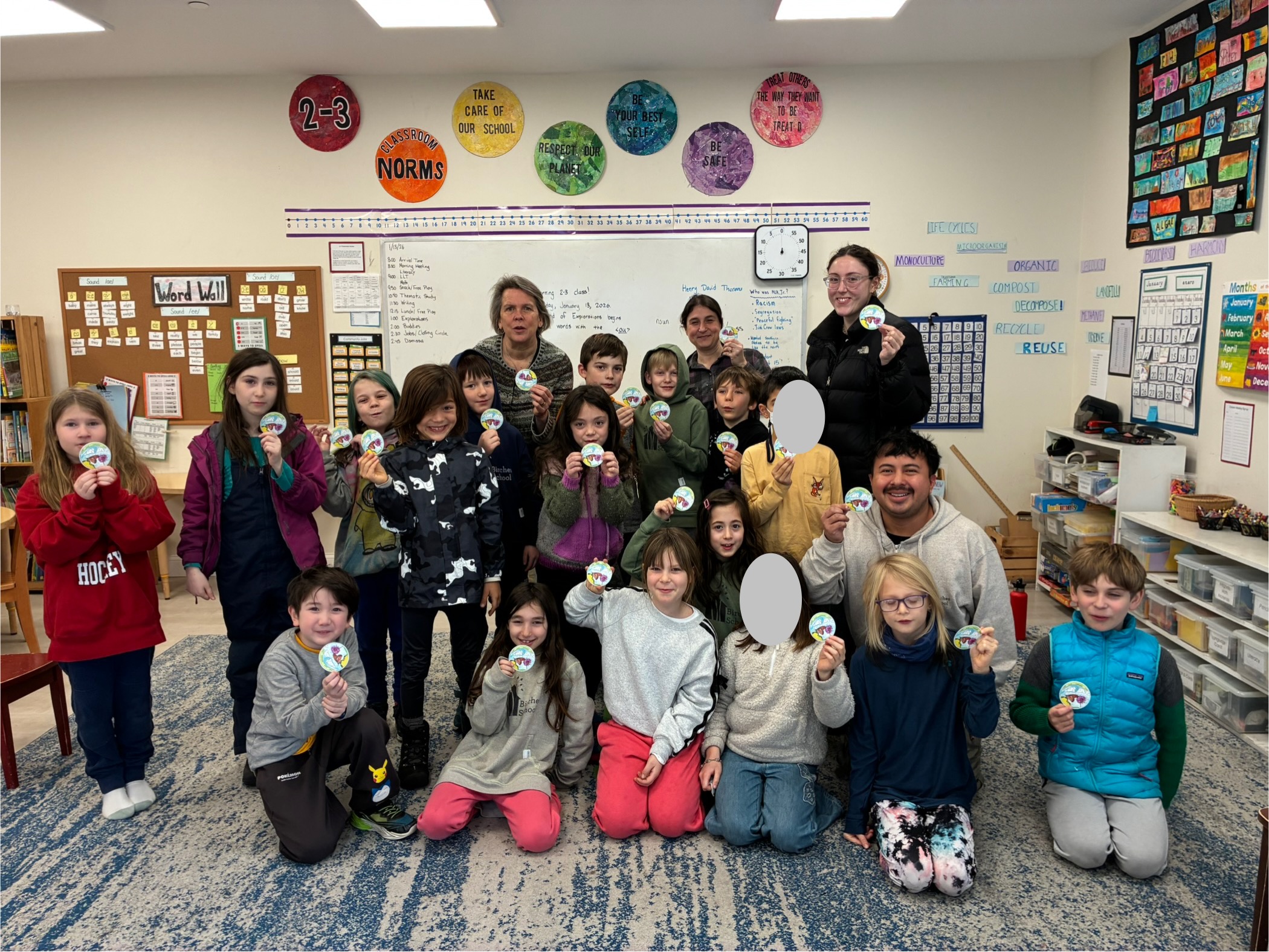
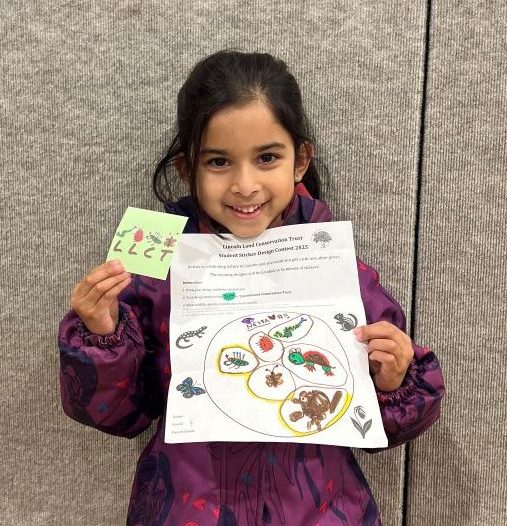
To celebrate the winning artists, Danielle, LLCT’s Outreach Coordinator,  visited each student to deliver their prizes and their finished stickers in person. It was wonderful to see the students’ excitement as they held their original designs alongside the final sticker version!
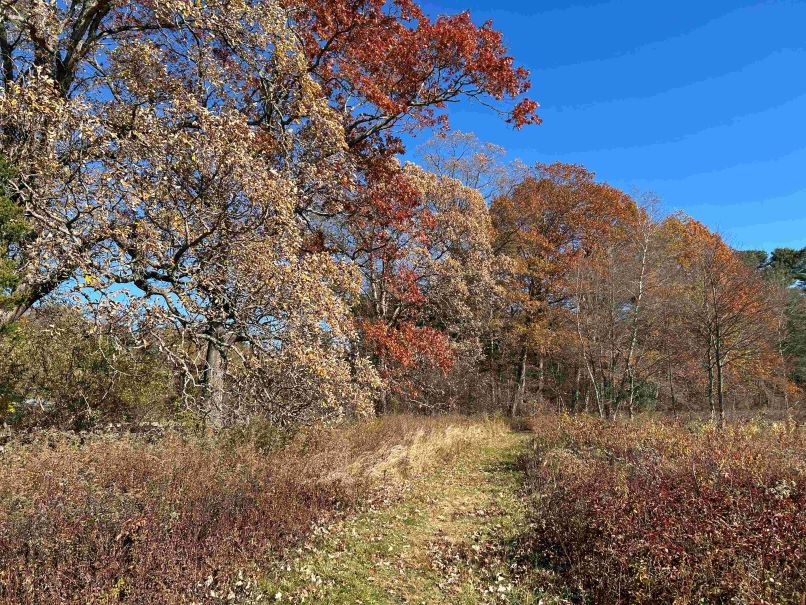
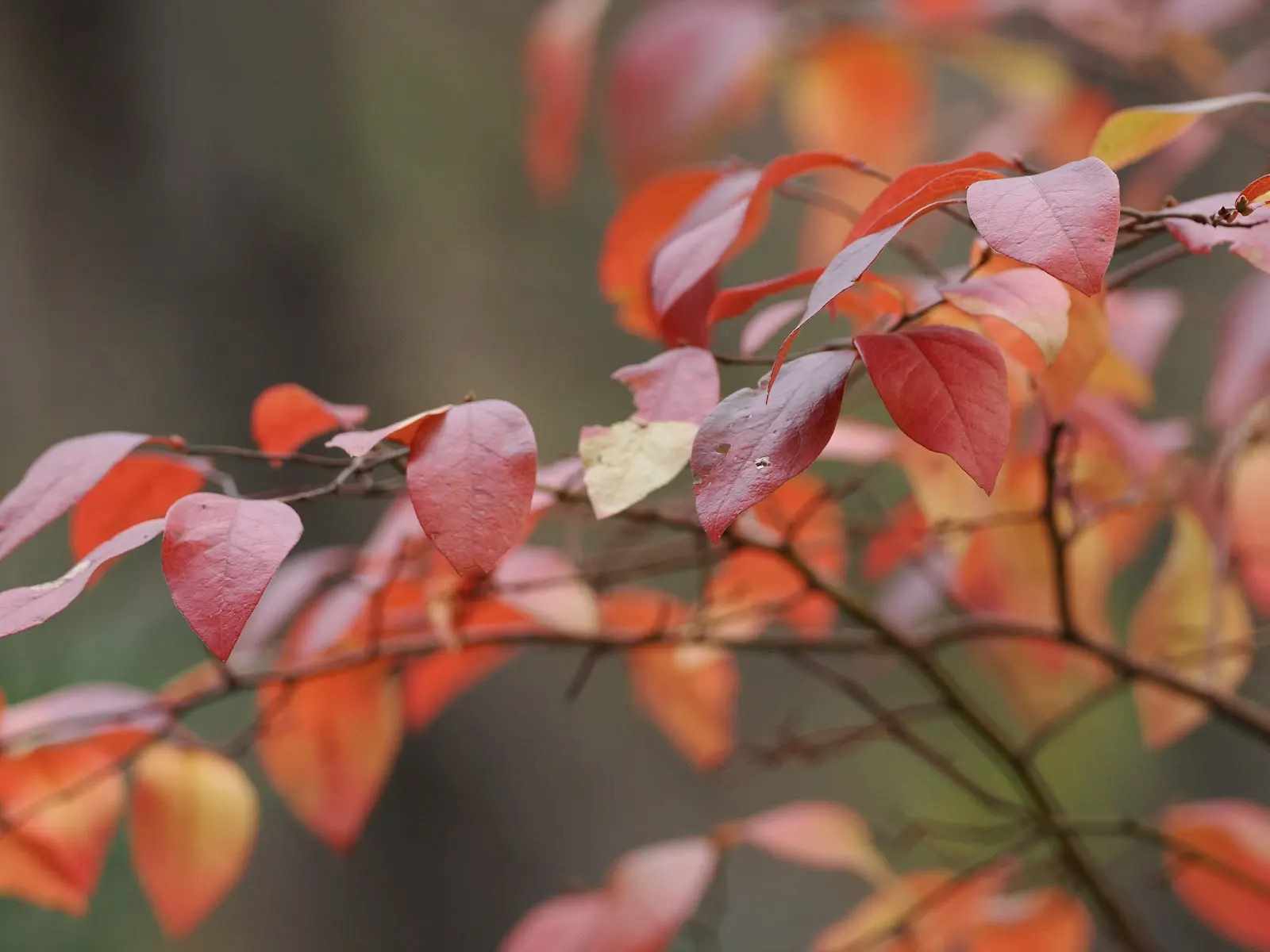
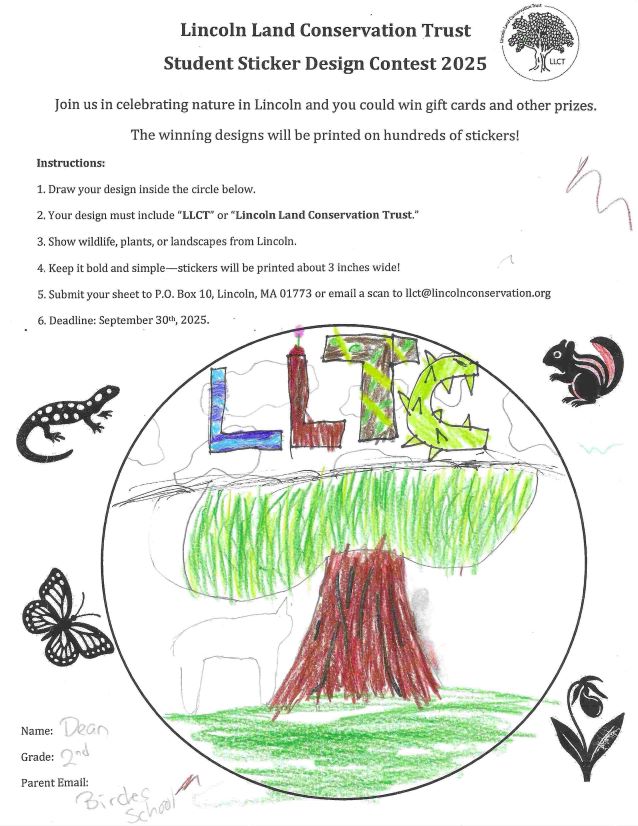
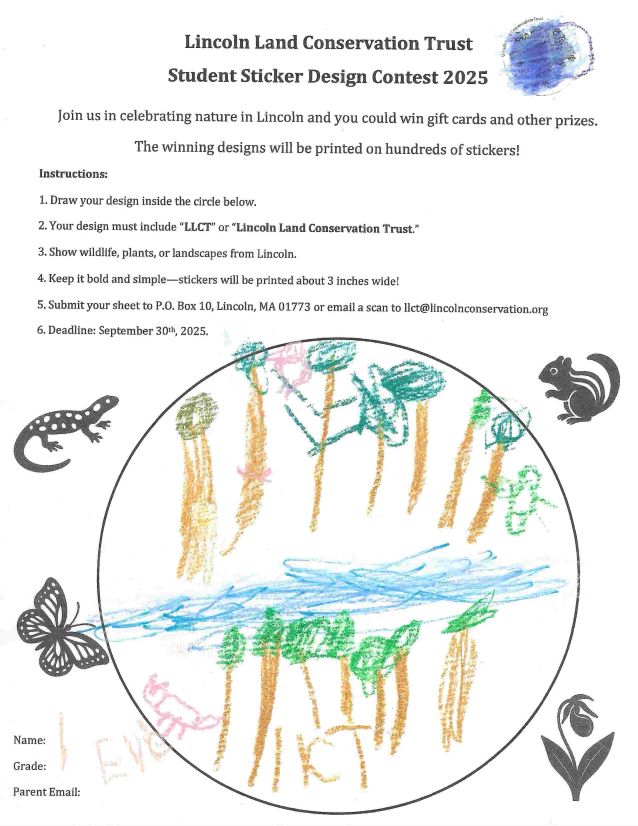
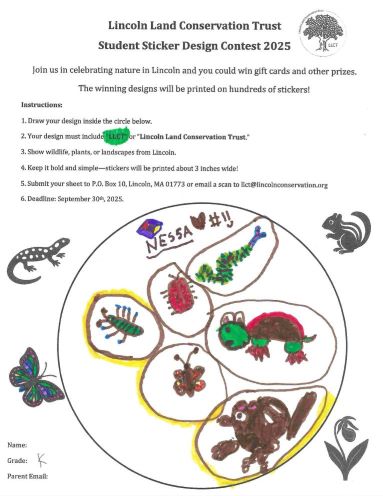
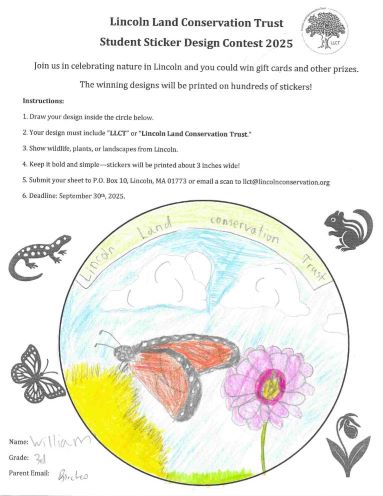
Student Artwork Gallery

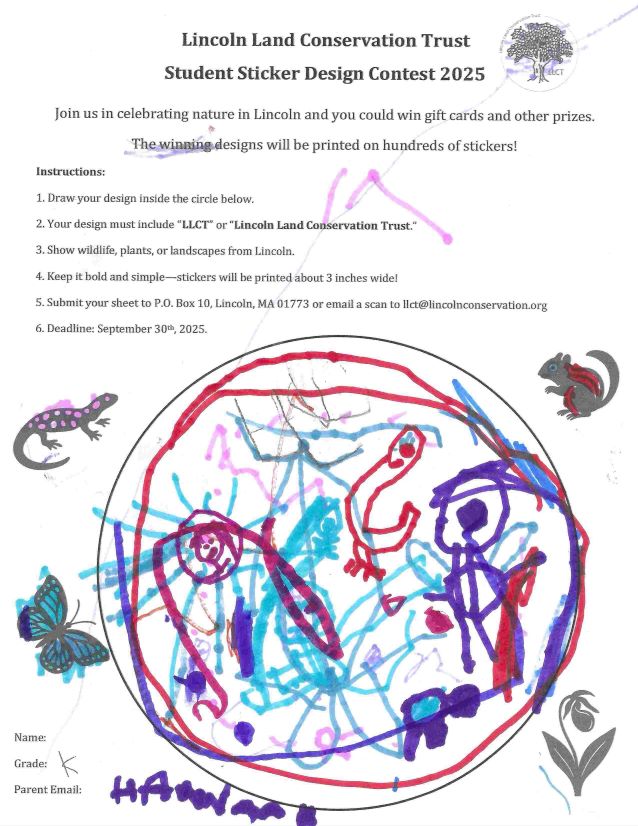
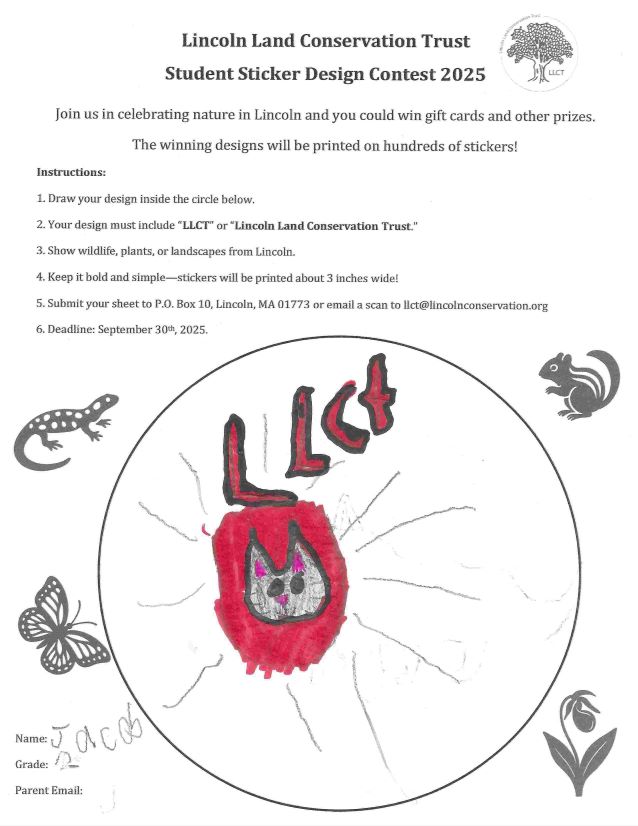
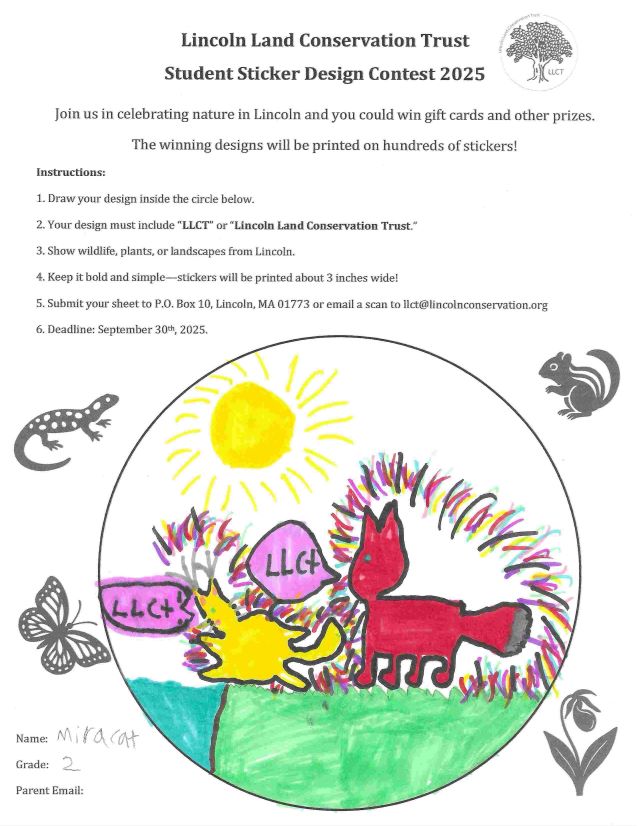
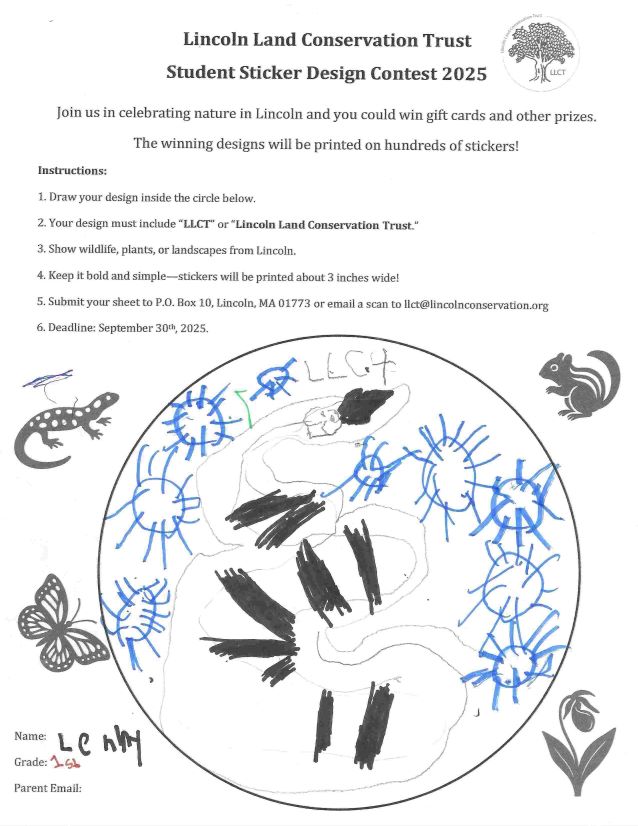
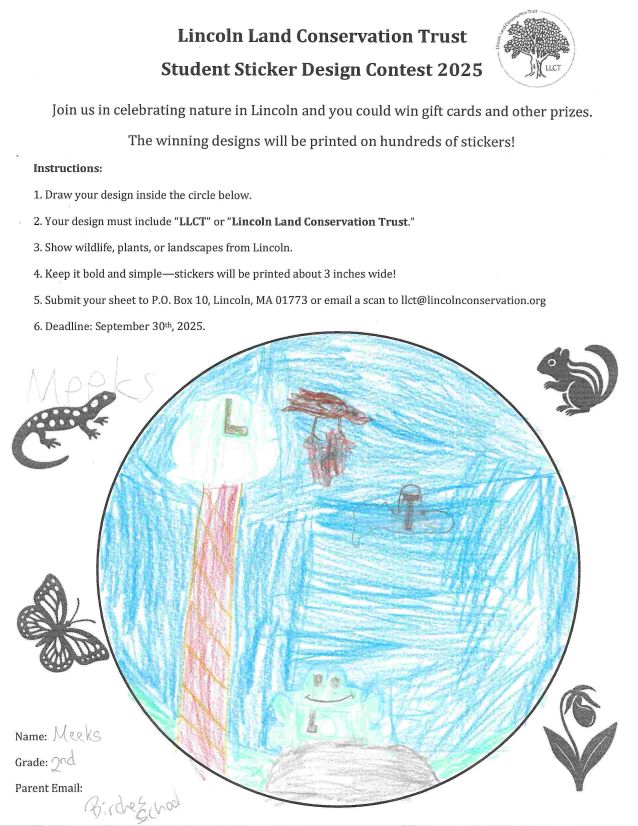
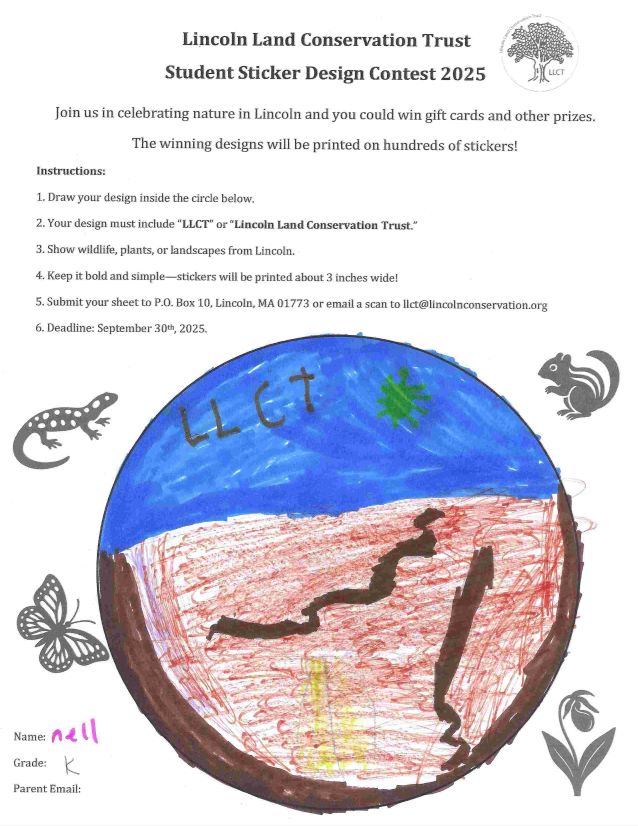
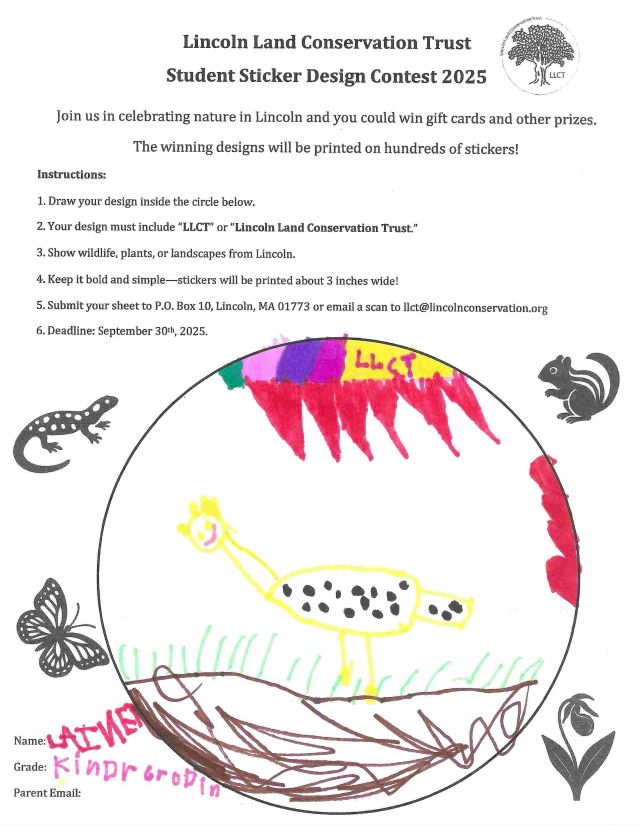
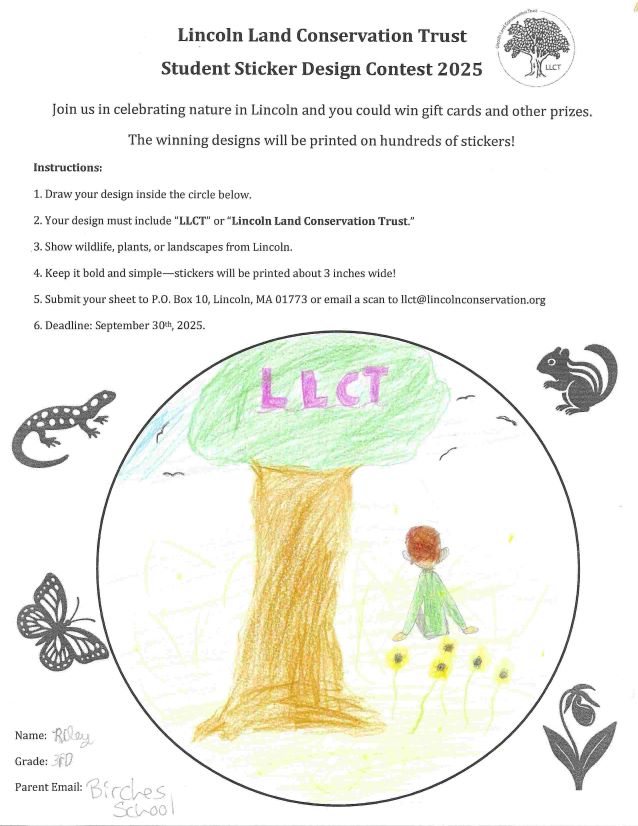
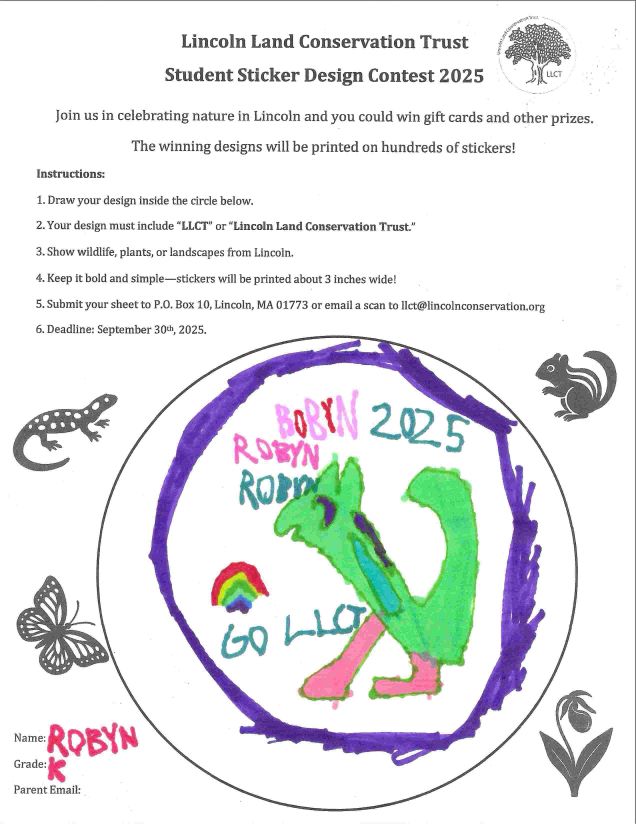
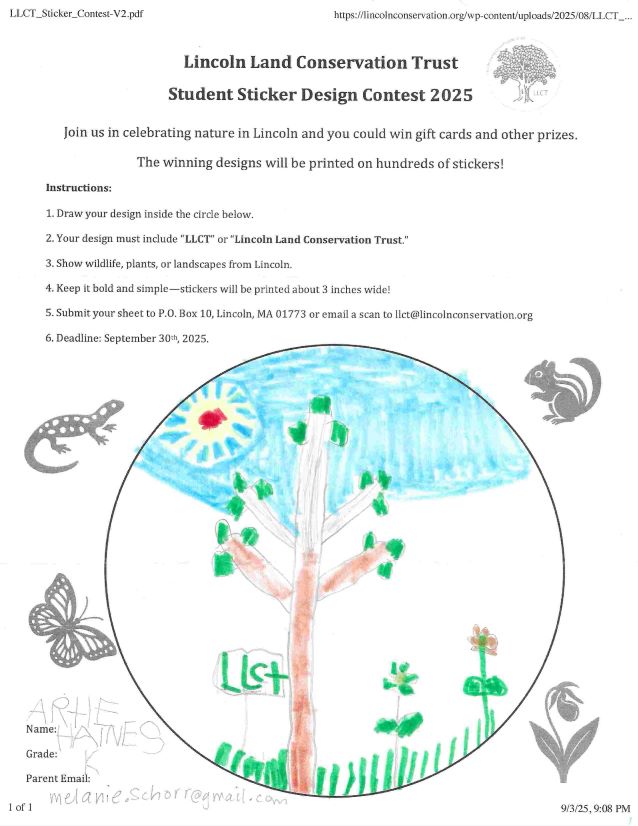
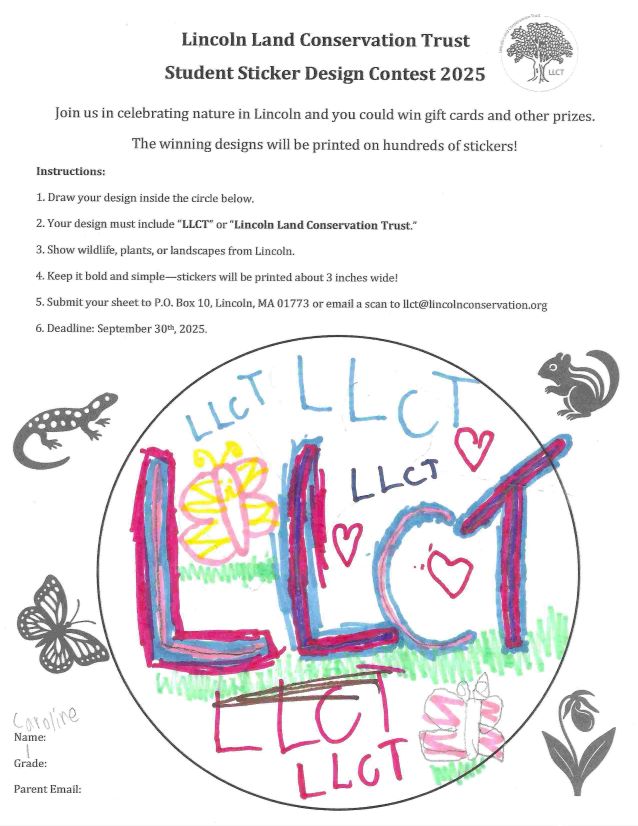
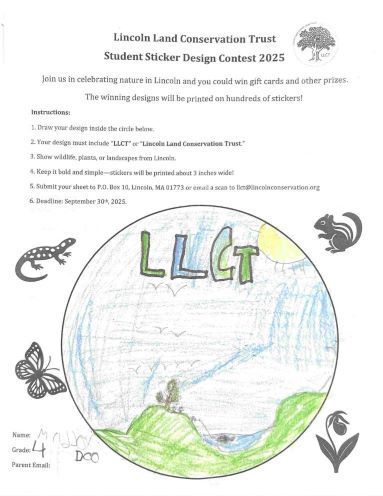
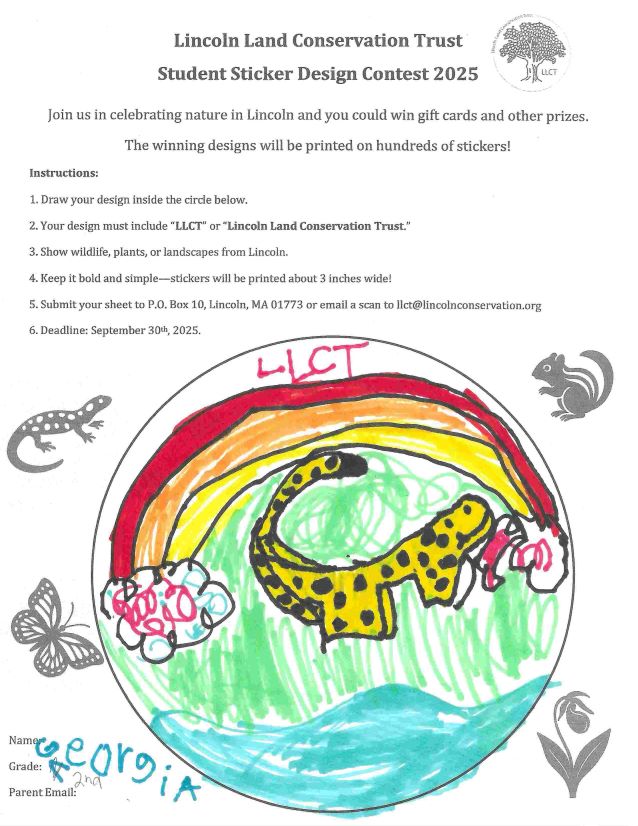
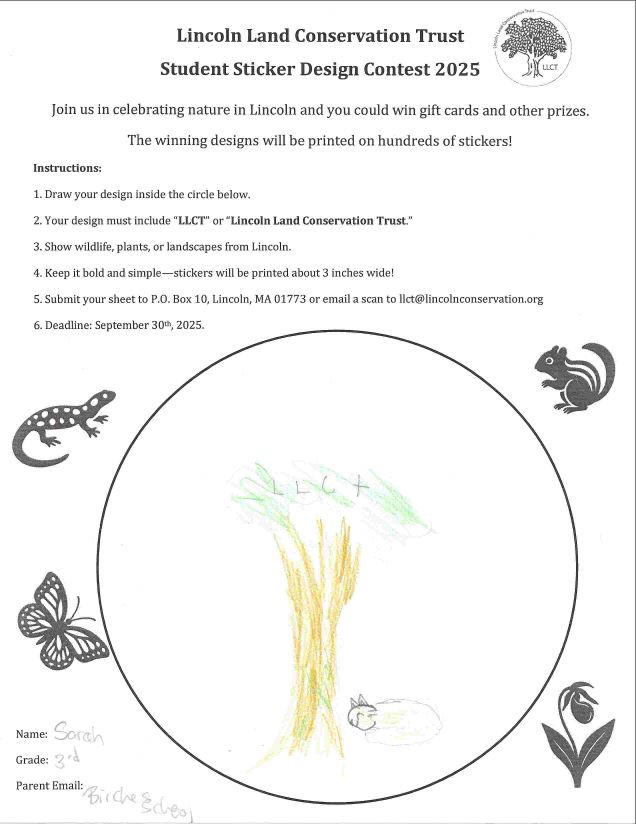
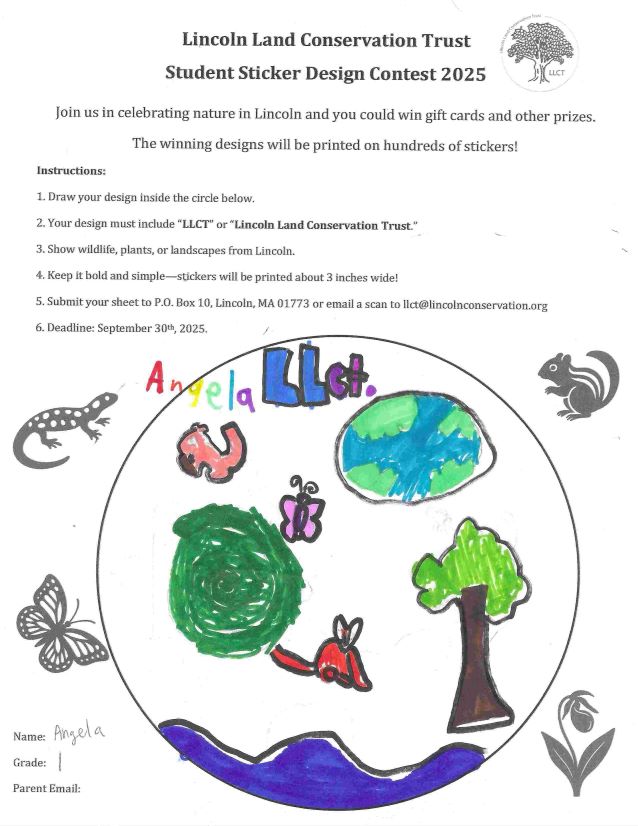
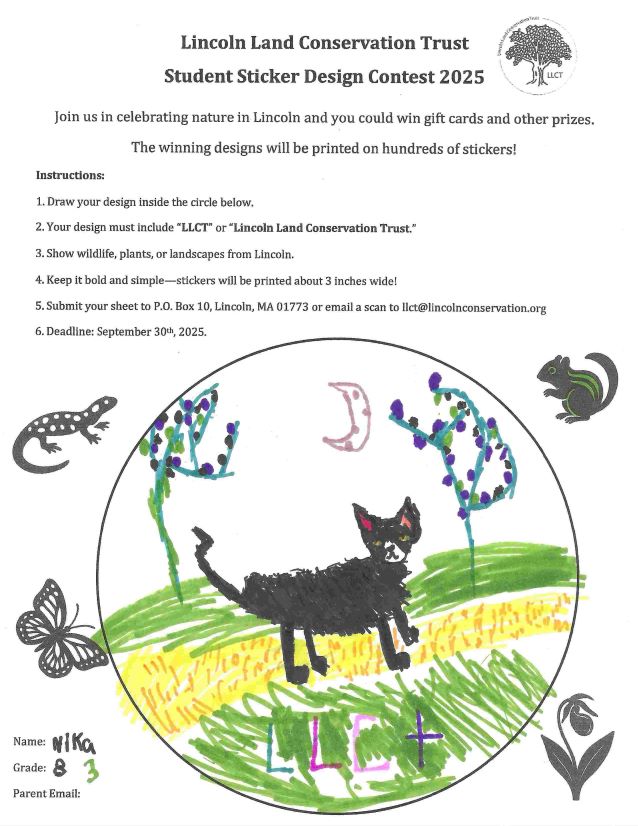
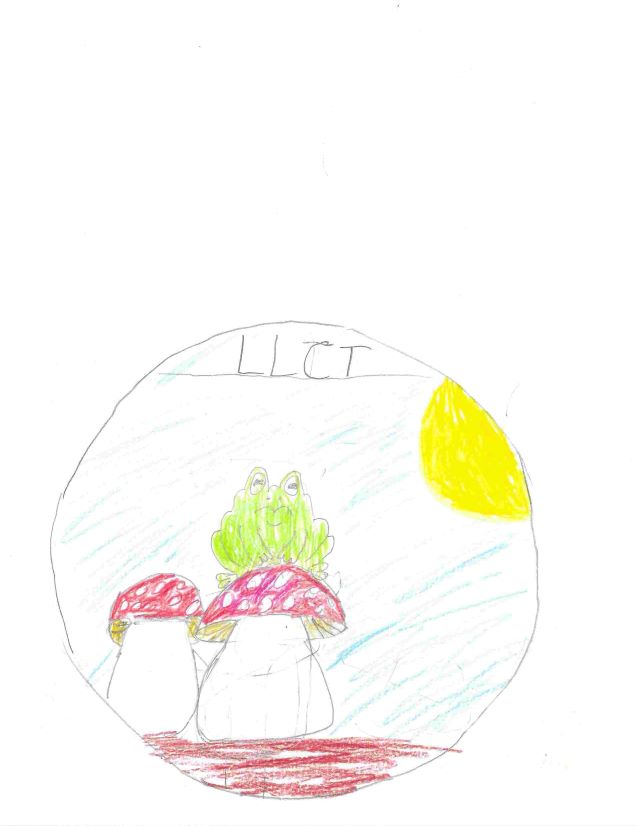
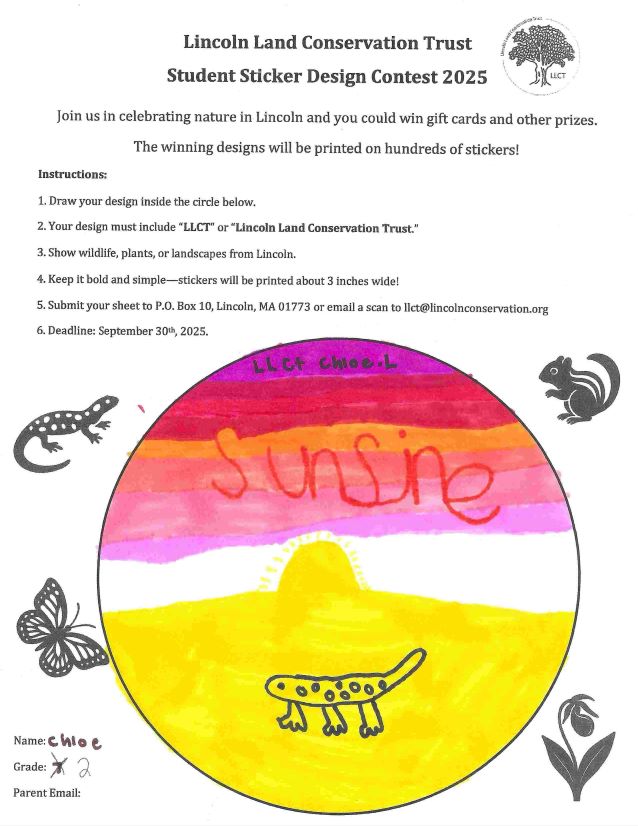
Below is a collection of scanned submissions from this year’s contest. We are grateful to every student who shared their creativity and enthusiasm for Lincoln’s natural spaces.
 

December 2025 Wildlife Column 

The Long Winter Watch 

Written by Gwyn Loud for the Lincoln Land Conservation Trust. She welcomes your sightings and questions at 781-259-8690 or gwynloud555@gmail.com. 

Winter officially arrives on December 21, the solstice, but recent biting cold and winds have made it feel as if the new season is already with us. Single- digit temperatures overnight led to partially frozen streams and ice on the ponds. On Dec. 12/13 people were sailing ice boats on Farrar Pond and skating on Cemetery Pond. The winter solstice marks the shortest day of the year in the Northern hemisphere; thereafter the hours of daylight gradually lengthen. The Climate Prediction Center predicts a warmer than normal winter for most of the east coast; “Here in Boston, our average high temperature is 46° in early December, bottoms out near 36° in mid January, and climbs back toward the low 40s by late February. Above normal trends could mean fewer prolonged cold snaps and more “mild” stretches breaking up the cold air. Precipitation for New England is forecast to be “near normal.” This “doesn’t mean a snow-free winter, though. On average, Boston picks up about 7.6 inches of snow in December, 12.3 inches in January, and 12.8 inches in February. Even with above-average temperatures, we can still see impactful snow events, they are just more difficult to achieve. They will have to align with overnight colder temperatures or a system comes in during a cold snap.” We’ll find out in March what happened.

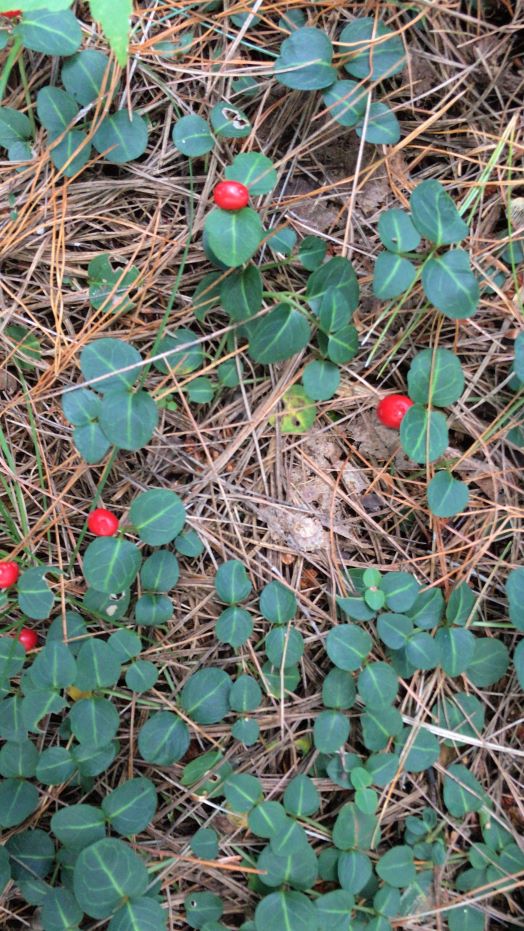
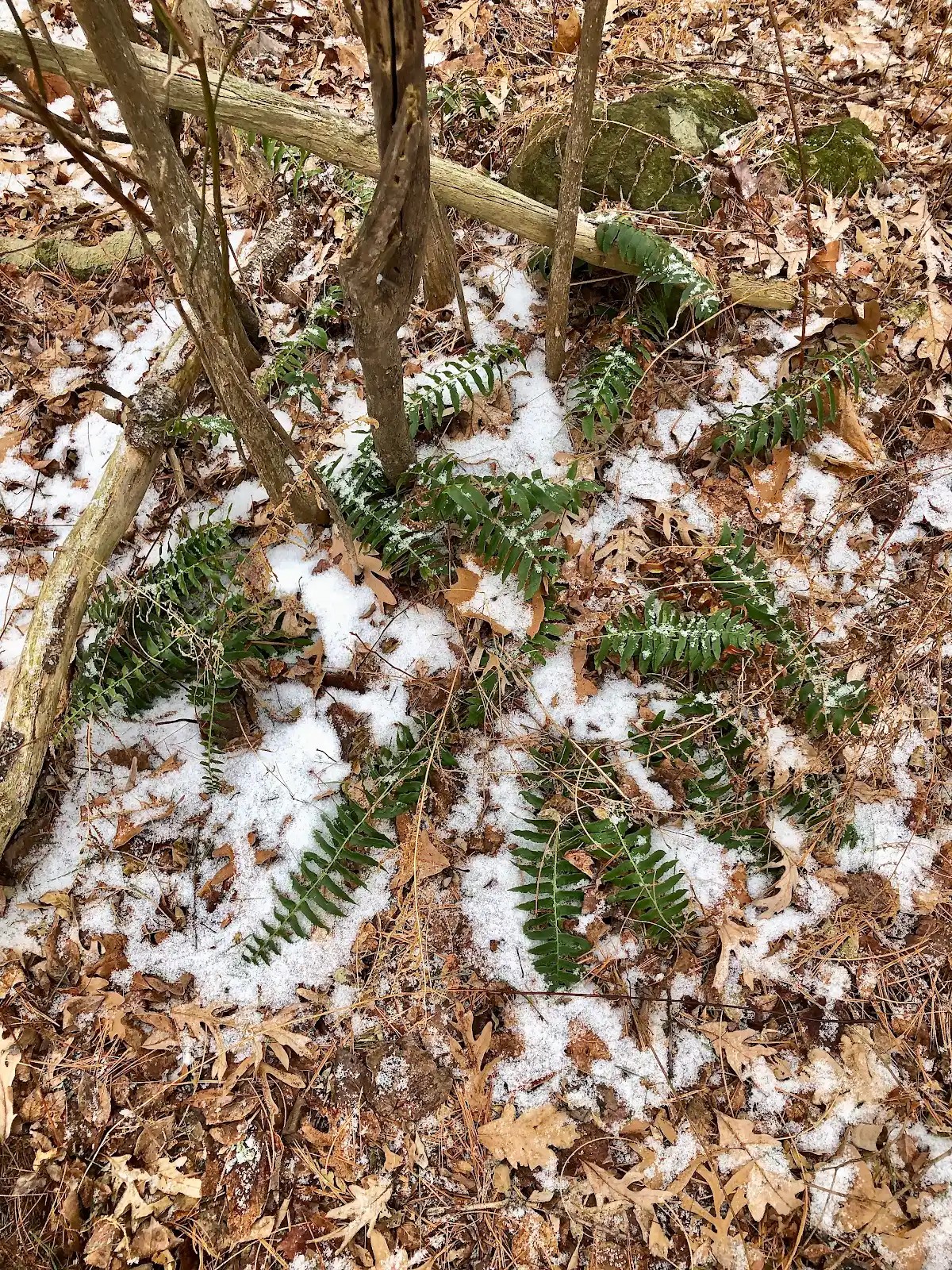
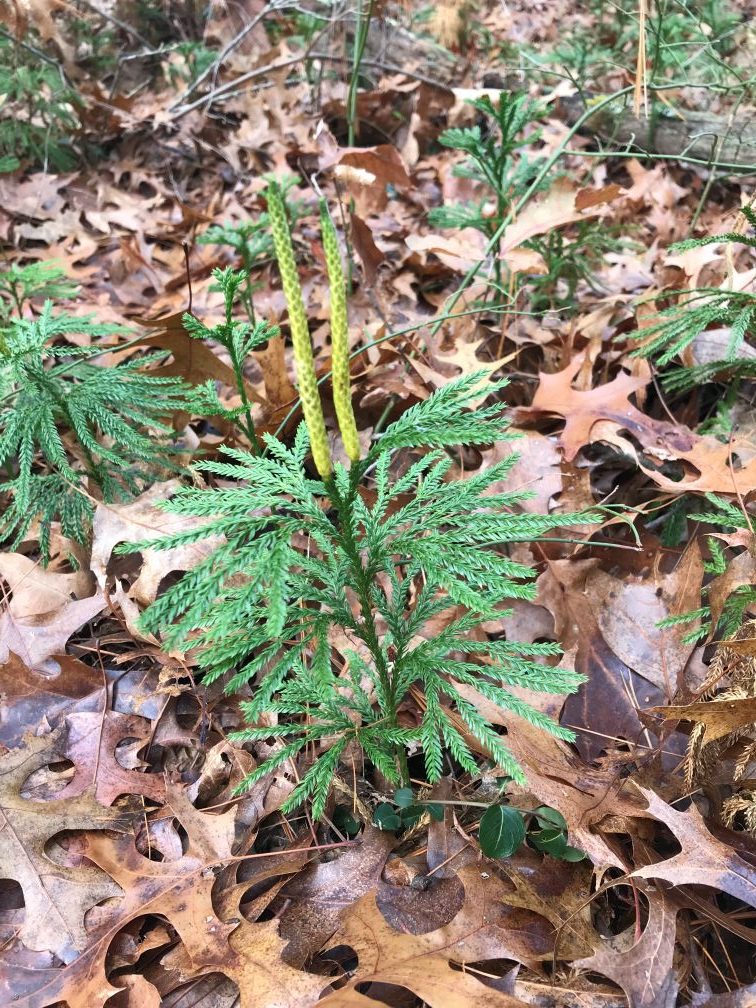
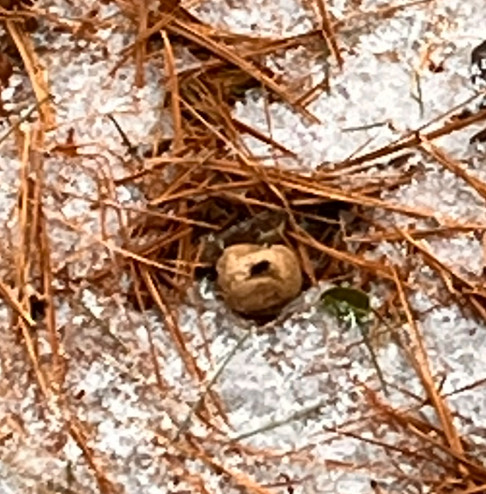
Winter walks are opportunities to observe and appreciate the less showy aspects of flora, the variety of subdued colors, shapes, and textures. Weeds display their seeds, which are important wildlife food, along with berries from holly, multiflora rose, and other shrubs. The woodland floor retains greenery in plants such as Christmas ferns, club mosses, and partridgeberry. Participants on a walk led by Ranger Will Leona came across what looked very similar to an oak apple gall, but no, it was a lonely pear-shaped puffball (they are usually seen in clusters), with the common name of wolf fart mushroom. As Will explains, thanks to AI, “Pear-shaped puffball” (Apioperdon pyriforme, formerly Lycoperdon pyriforme) is a common mushroom named for its shape, but also nicknamed the “wolf fart mushroom” because its scientific name Lycoperdon combines Greek words for “wolf” (lycos) and “breaking wind” (perdon), referring to the powdery spores released like gas from mature fungi. These small, edible (when young and pure white inside) mushrooms grow in clusters on decaying wood, releasing clouds of spores when mature, and are a fun find for foragers and nature lovers.’

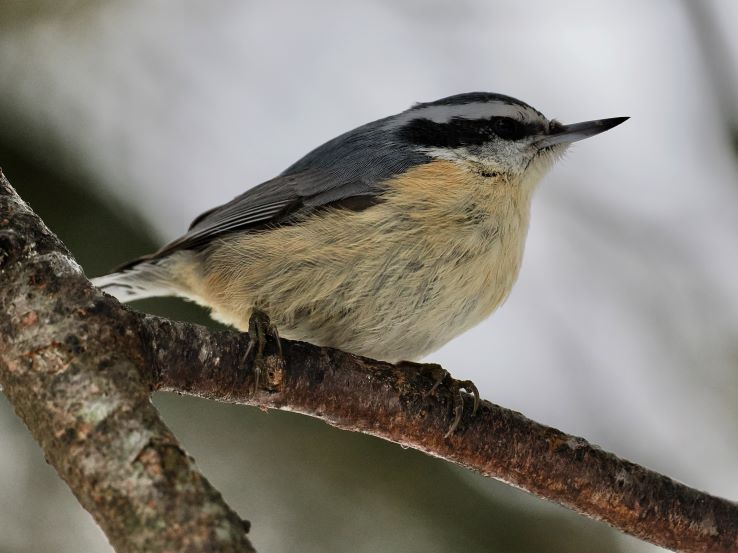
Birds are dining on all sorts of wild food, and flocking to bird feeders. They need water year-round and seem to be grateful for the open water in my birdbath, thanks to a heater. A dusting of snow on December 14 brought even more ground-feeding birds such as white-throated sparrows and dark-eyed juncos to the seed I scattered. Supposedly this will be a good winter to see irruptive species from Canada; so far only one red-breasted nuthatch has turned up at my feeder but they, as well as pine siskins have been reported from Drumlin Farm, where a single red-crossbill and evening grosbeak were also seen. Tree sparrows are winter residents here, and a few swamp sparrows and savannah sparrows have still not migrated south. Robins and bluebirds are examples of birds which have two populations, one staying with us through the winter but another heading south to warmer climes. They usually turn up in moderate numbers on the Christmas Bird Count, which will be held on Dec. 28 this year. Lincoln is included in the “Concord Circle,” which Norman Levey coordinates. We have birding teams lined up to go out in the field but we could use more counters at feeders; please contact me if you are interested in participating. The Count is run by National Audubon and encompasses all of North America, with thousands of circles, each fifteen miles in diameter. The counts, which are always held in a two-week window around Christmas, are a huge citizen-science project and the data collected provides important information on bird populations.
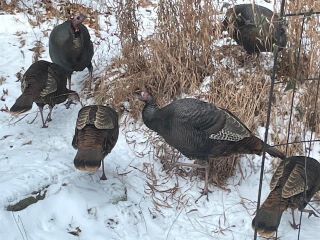
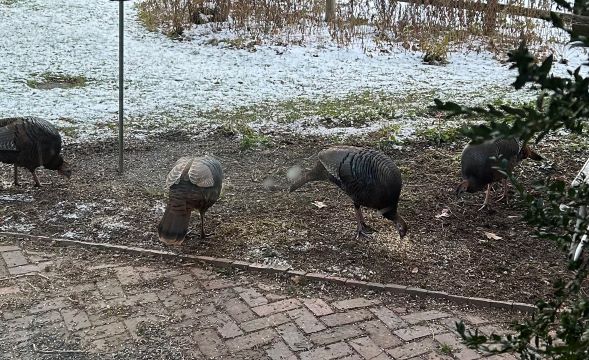
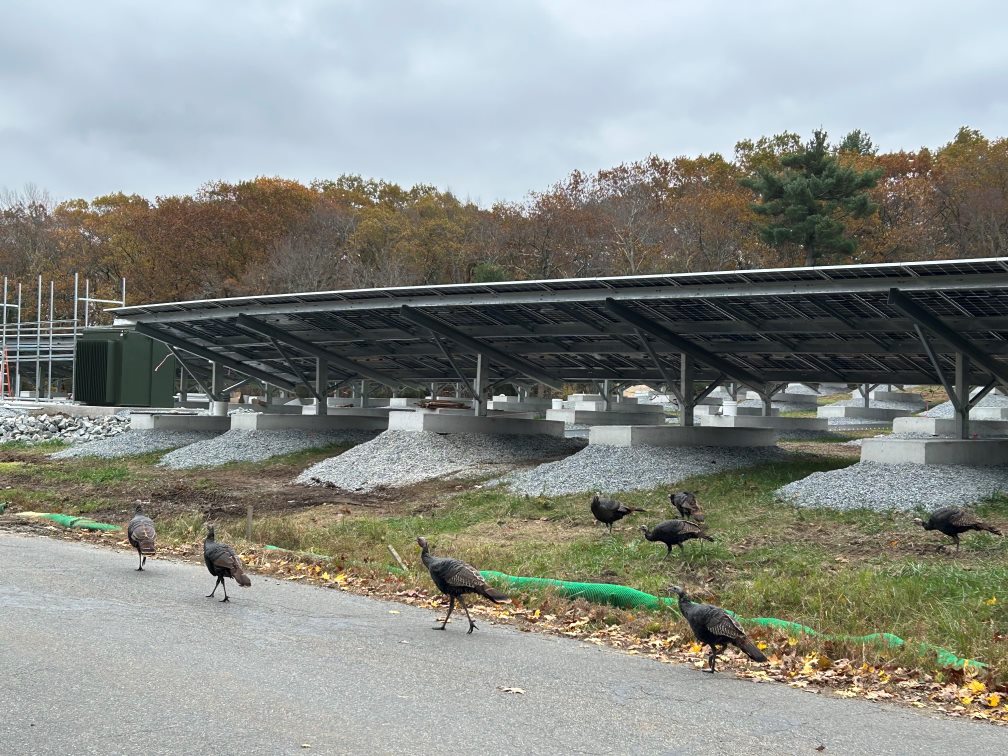
A small flock of wild turkeys appeared under my bird feeders last week, to my surprise. They were all hens, and cleaned out the scattered bird seed in a short time. So far they have not returned, to my relief. The winter flocks separated by sex, comprise large flocks of hens and small flocks of toms. I was amused back in November to witness turkeys exploring the new solar panel installation at the transfer station.

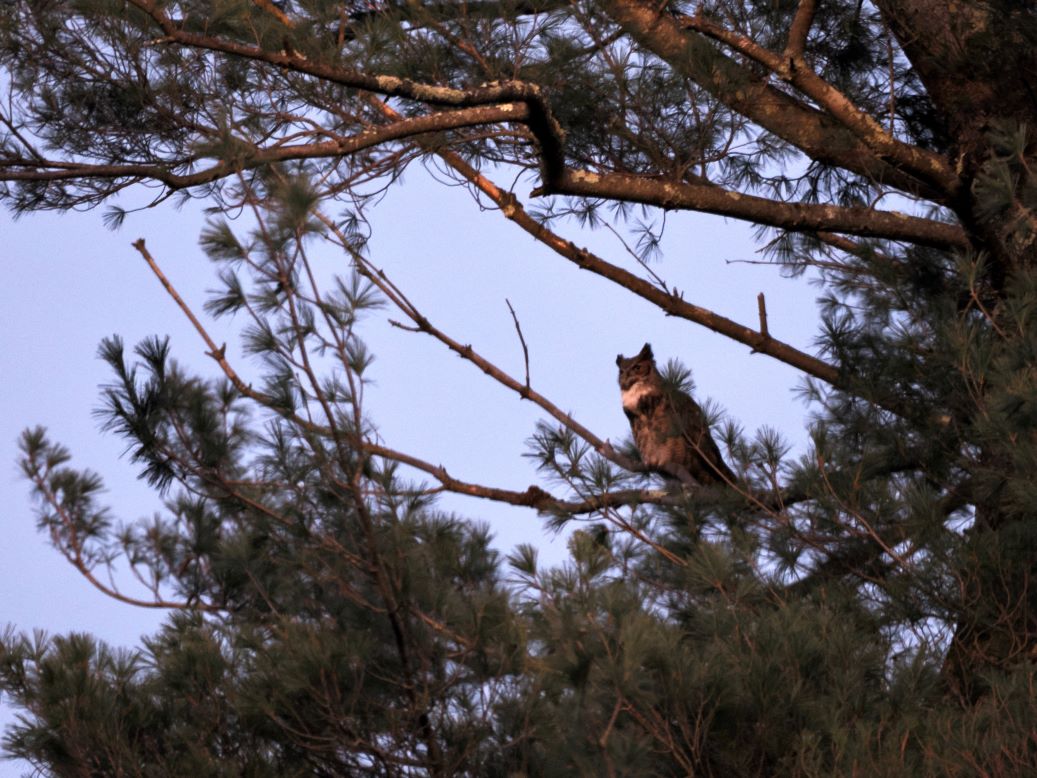
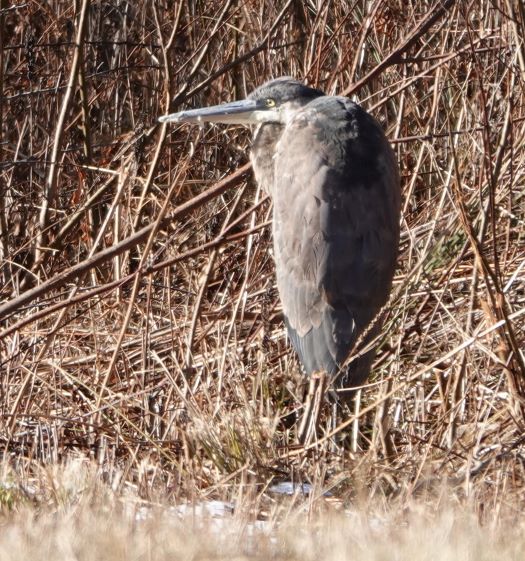
Other recent notable bird sightings include winter wrens, cedar waxwings, fox sparrows, and at Drumlin Farm, a “gray-ghost male northern harrier” which has been cruising over Boyce Field. Cooper’s hawks swoop through backyards with bird feeders, hoping to snatch a meal. In my November column I wrote about a possible bald eagle nest site on the Cambridge Reservoir. It turns out that the staff at the Reservoir have seen bald eagles nesting along the Reservoir for three years! The nest is not in Lincoln, but on the Waltham side, close to I-95. Great horned owls continue to hoot; I am thrilled when I can see an owl silhouetted on a moonlit night high in my neighbors’ Norway spruce. On December 6, before ponds iced over, Norm Levey spotted a ring-necked duck, common goldeneye, common mergansers (81), hooded mergansers, and a single common loon, and ring-billed gull on Flint’s Pond. A great blue heron looked cold in the wet meadow behind St. Anne’s Church. A few hardy great blue herons will stick around as long as they can find fish, even in small pools of unfrozen water. Will Leona saw two bald eagles by Flint’s Pond, and caught one on camera after it spooked ducks in the pond.

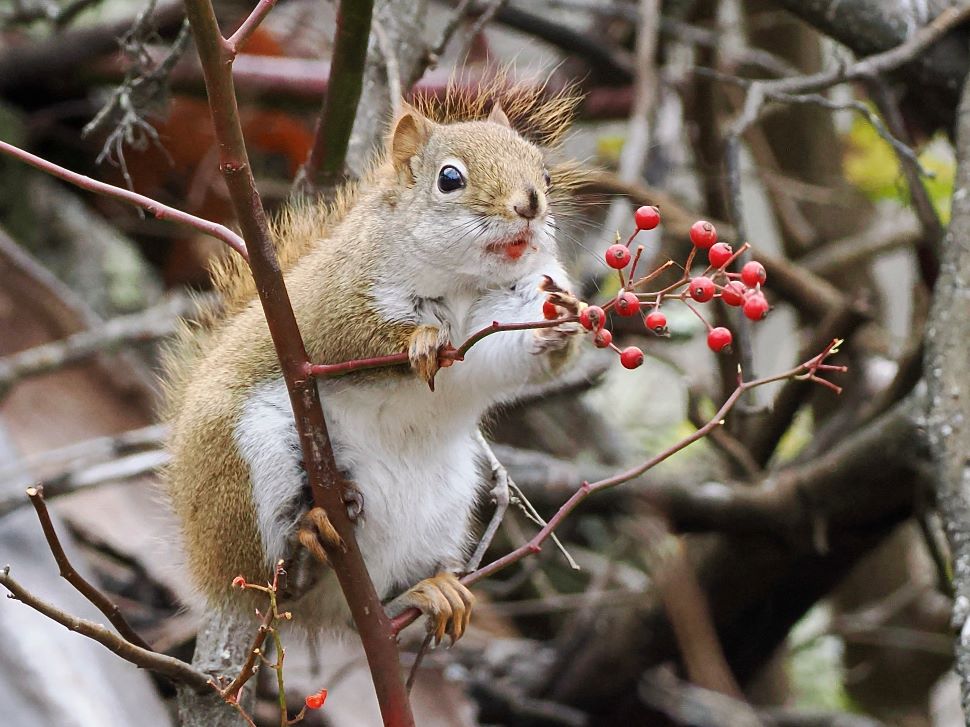
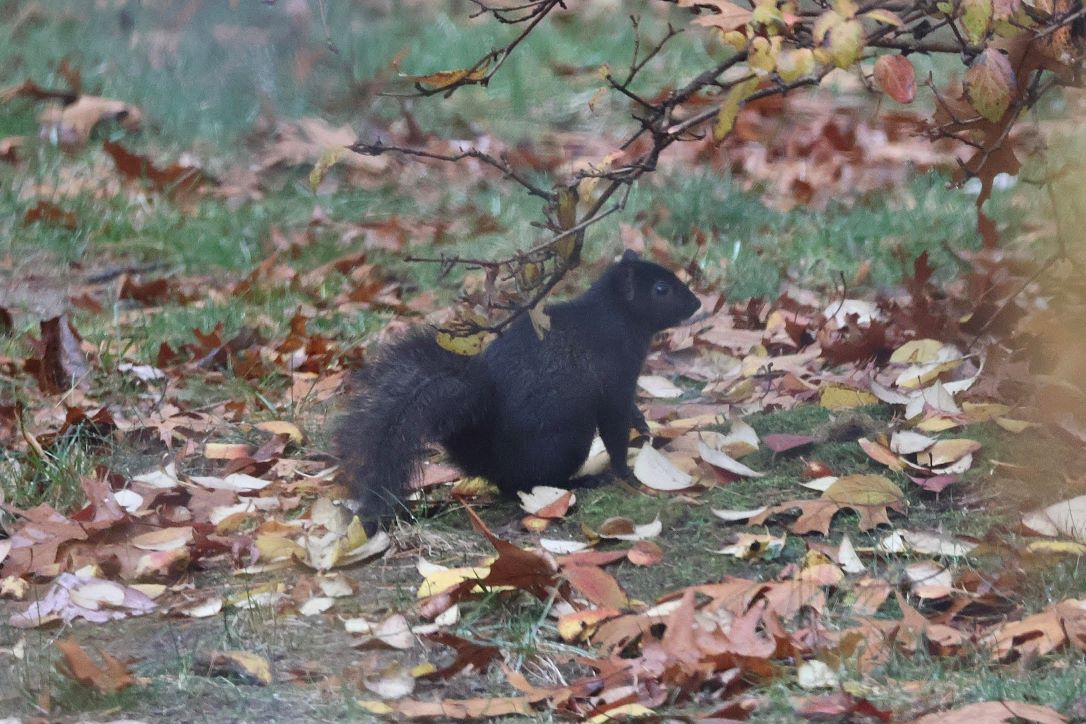
Last month I invited readers to tell me if they had seen black-morph gray squirrels. So far I have heard about sightings on Trapelo Rd. in Lincoln (near intersection with Lexington Rd.), three on Dugan Rd. in Concord, two at Drumlin Farm, and at least two along Oxbow and Farrar Roads on the Lincoln-Wayland line. Feel free to send me other sightings. Gray squirrels are active all winter, searching for food in the day and finding nighttime protection in tree cavities. I see nine squirrels regularly under my bird feeders, looking fat and happy. A lot of chasing is going on, with several males competing for a female, indicating this is the winter mating season. After a gestation period of about six weeks, up to six kits will be born in the tree cavity, with the females doing all the care of the young. Gray squirrels have a second mating season in May-June. Red squirrels are also active in the winter and one of their winter adaptations is to molt to a thicker winter cost, including ear tufts. There is a noticeable red band of fur down the back, which changes to a more grayish color when the summer fur molt occurs.

Several people have reported hearing coyotes howling, and Kathleen Lomatoski wrote, “Very late one recent cold night I walked to Pierce Park. As I was approaching the adjacent soccer field behind town hall, a lone coyote came racing down & across the park from Lincoln Rd. At first, due to its swiftness, I thought the creature had to be a deer, then noticing its stride and size more clearly, as it passed closer to me, I could see it was a long legged, dark colored coyote—with breath-taking speed and a smooth gait. Otherwise, during the cold stretches I have frequently seen voles emerge from fields or from beneath small leaf piles then running with impressive velocity—where they were heading, I was not ever sure. I am still finding deceased wildlife on trails, likely the victims of rodenticide. Usually I find chipmunks, mice, or red squirrels. I always bag the critters and put them in the trash. I hope Lincoln residents know there are now poisons with corn meal that impact only the creature who has died and not other creatures who may eat the carcass. Of course, it is ideally preferable not to kill wildlife at all.”

Save Lincoln Wildlife are a group of caring Lincoln residents who treasure Lincoln’s amazing wildlife. SLW hopes to educate the community on the harms of Anticoagulant Rodenticides (ARs), encourage the use non-toxic alternatives, and hopefully ban the use of ARs completely in Lincoln. Want to learn more about the impacts rodent poison is having on Lincoln’s predators and how you can help? Check out their website in the link below or contact info@savelincolnwildlife.org to get more involved.

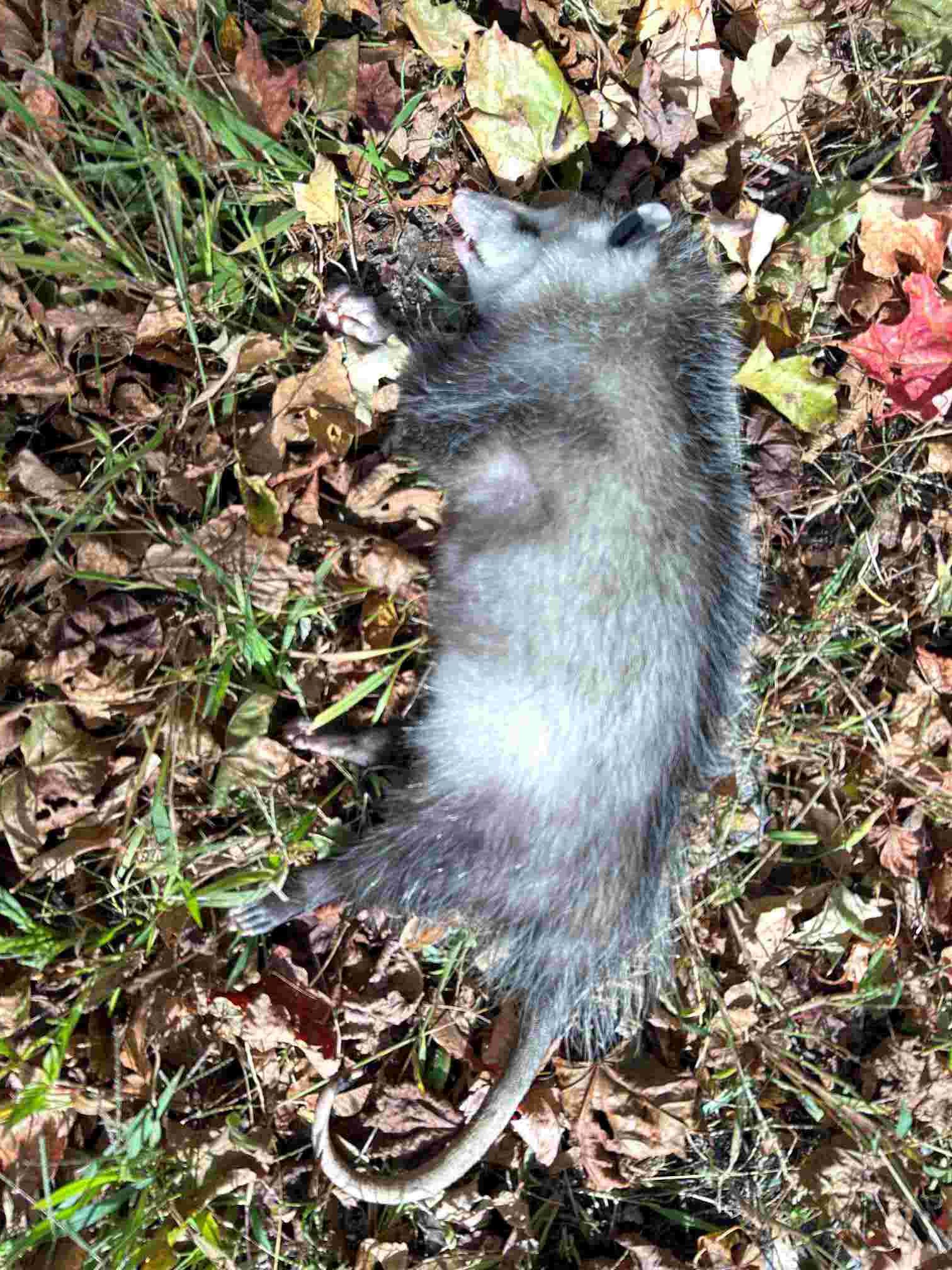
Kathleen also spotted an opossum crossing Weston Rd., almost exactly where I f found a dead one last month, just south of Pierce House. Opossums are active all winter but take shelter in burrows or other protected spots. Their ears and tails, without fur, are susceptible to frostbite. One of the many ways opossums benefit our ecosystem is by eating a lot of ticks.
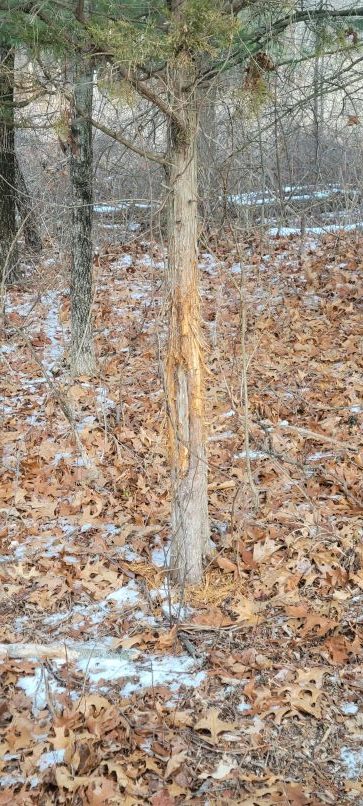
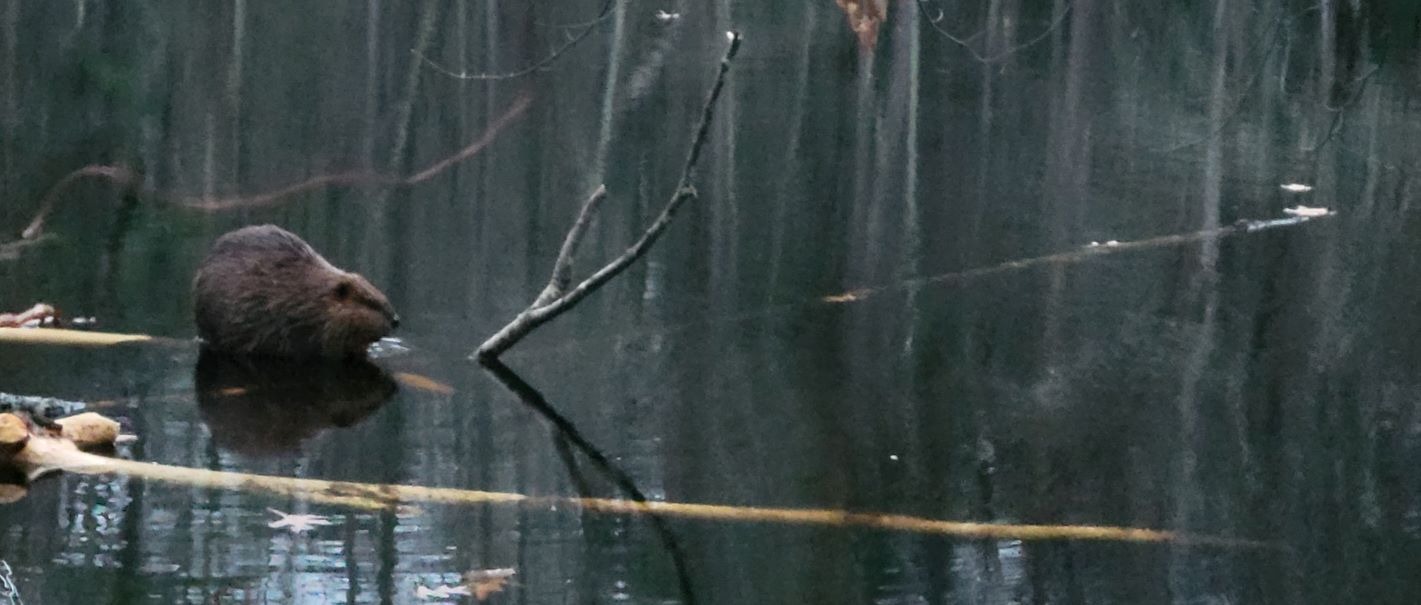
Bobcats have been reported from various parts of town and Will Leona wrote, “Beaver continued to prepare for the winter before the ice set in. They stocked their caches and fortified their lodges and now are ready to hunker down….. I have seen many deer browses and buck rubs lately.” Bucks rub their antlers on tree trunks, removing some of the bark, and then they rub their scent glands on the exposed wood. As Susan Morse, tracker and naturalist, writes, “Researchers have recognized that rubs serve as visual and olfactory “bulletin boards”, enabling the maker as well as other deer to communicate their social and sexual status”.

As this is my final wildlife column of 2025 I would like to take the opportunity to thank my “official team” of wildlife observers: Mathias Bitter, Ryan Brown, Stacy Carter, Vin Durso, Marcia Gagney, Michele Grzenda, Sue Klem, Jane Layton, Will Leona, Norman Levey, Kathleen Lomatoski, Ron McAdow, Ellen Meadors, Corey Flint, Tia Pinney, Carol Roede, Nancy Soulette, Pam Sowizral, Rob Todd, Fred Winchell, and Robin Wilkerson. I am also grateful for the calls and e-mails from other observant townspeople who appreciate the many forms of wildlife around us. Thanks go as well to Miranda Loud for proofreading and to Bryn Gingrich, who put the column and photos on the LLCT website, until Danielle Proulx took on the job in November.

I wish all readers a happy holiday season, with ongoing enjoyment of the natural wonders around us in 2026.

Links:

To learn more about harm done by Anticoagulant Rodenticides

Watch Will Leona’s video of a bald eagle flying over Flint’s Pond