Written by Gwyn Loud for the Lincoln Land Conservation Trust. She welcomes your sightings and questions at 781-259-8690 or gwynloud555@gmail.com
It felt like summer had returned the first week of November, with temperatures reaching the mid-seventies, leading us to pull out shorts and tee-shirts. We had nearly three weeks without rain but, thankfully, rain arrived on November 6- 8. My garden rain gauge measured 3.9 inches. The state drought map shows Middlesex county now without drought, although it will take a long time for ponds and reservoirs to fully recover from the dry summer and early fall months.The Cambridge Reservoir still looks low, as do local ponds. Farrar Pond looks low and Will Winchell explains why: “The Farrar Pond drawdown is controlled by the Farrar Pond Conservation Trust. It is done every three years to flush nutrients that accumulate to reduce plant overgrowth. It is also done to try and moderate lily pad growth, but this has been less successful with the warming winters. A valve is opened at the dam. The plan is to draw the water down 3.5 feet over the month of October to allow aquatic animals to migrate to deeper water before things freeze, and it will be closed once there is a deep freeze or if it appears that there will not be one.”
We are in the midst of a strong El Nino, and it looks like the winter in the Northeast may be wetter and warmer than usual, but individual storms may produce snow rather than rain. Time will tell! See link to read more.
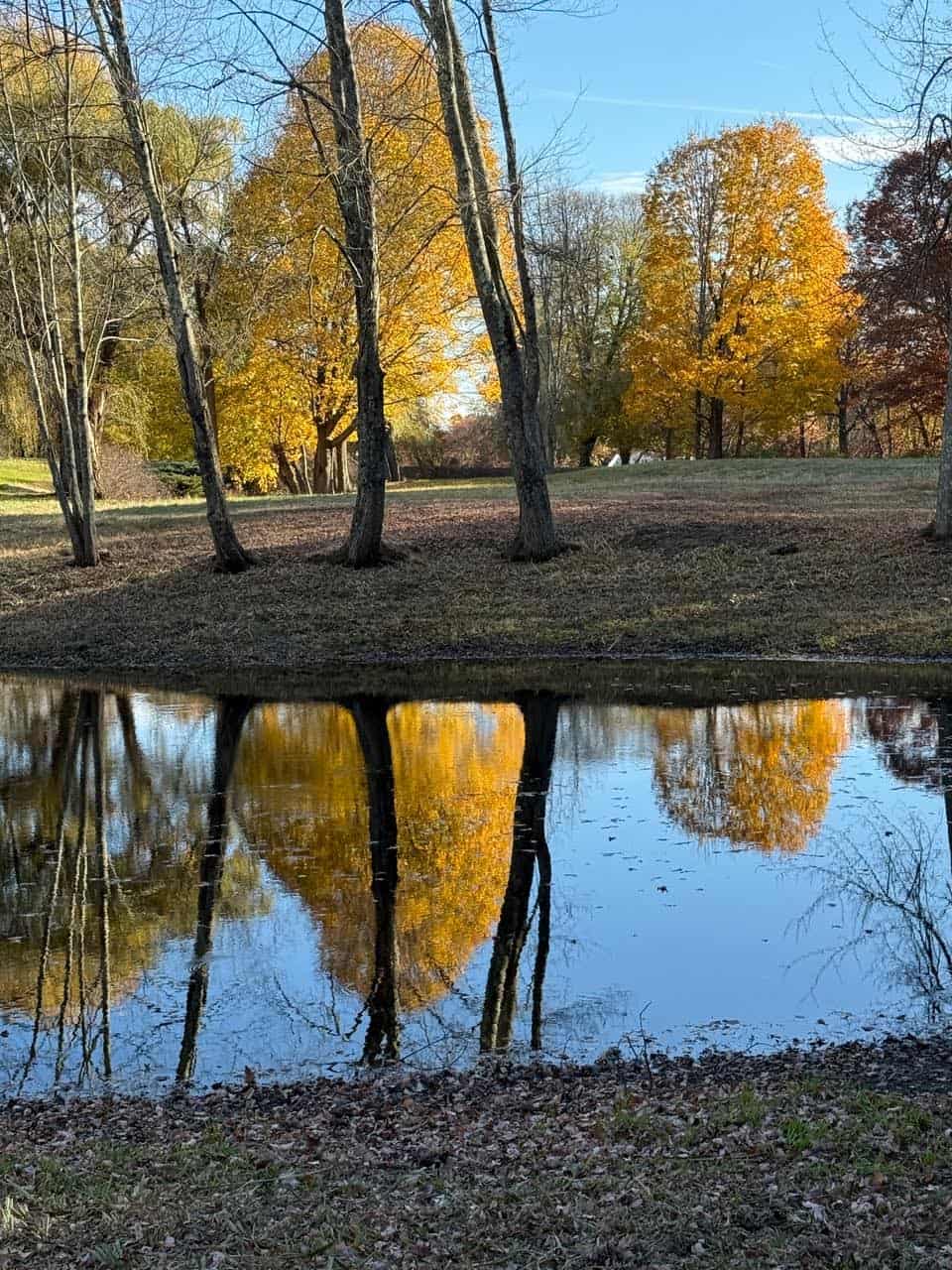
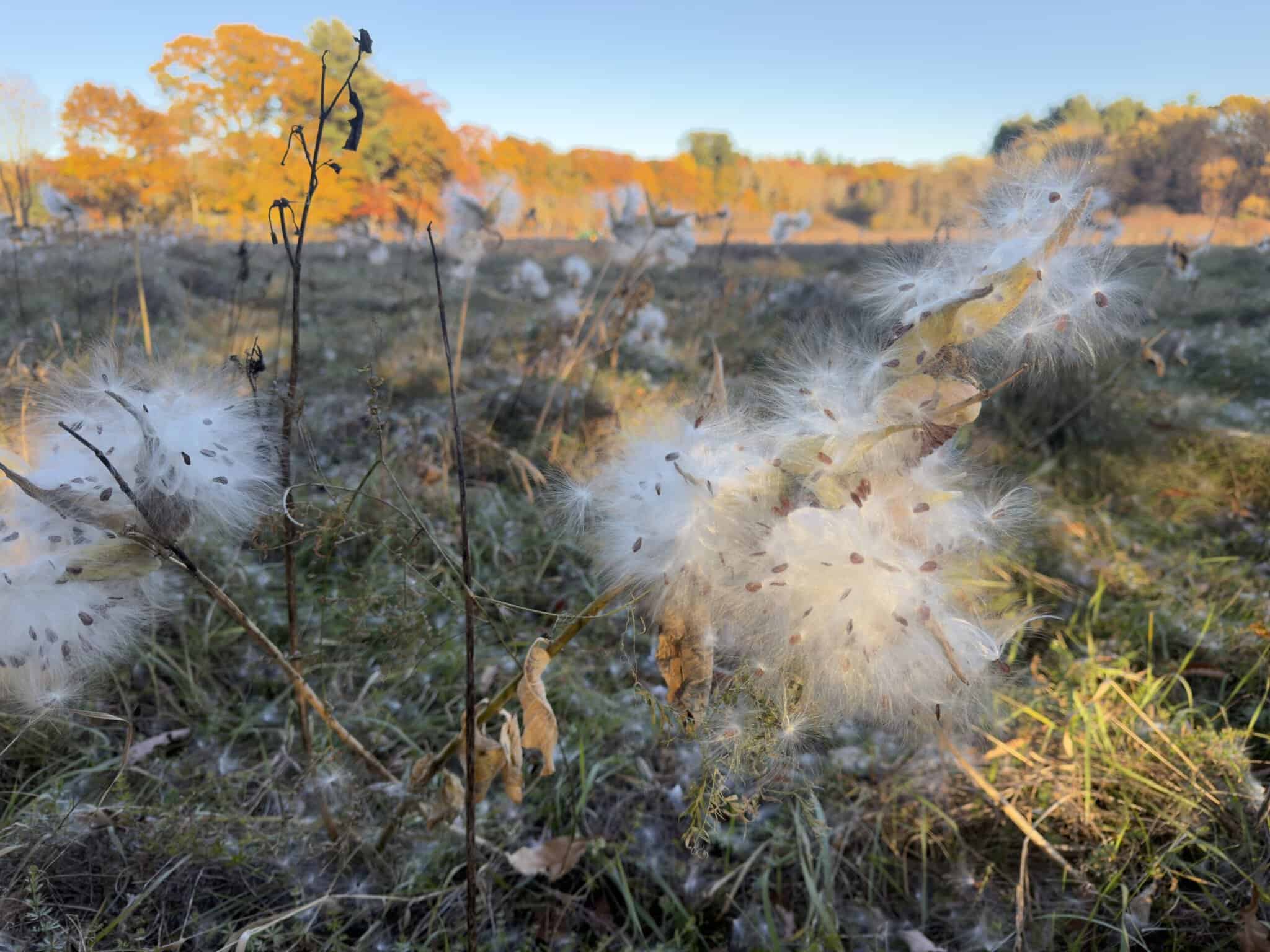
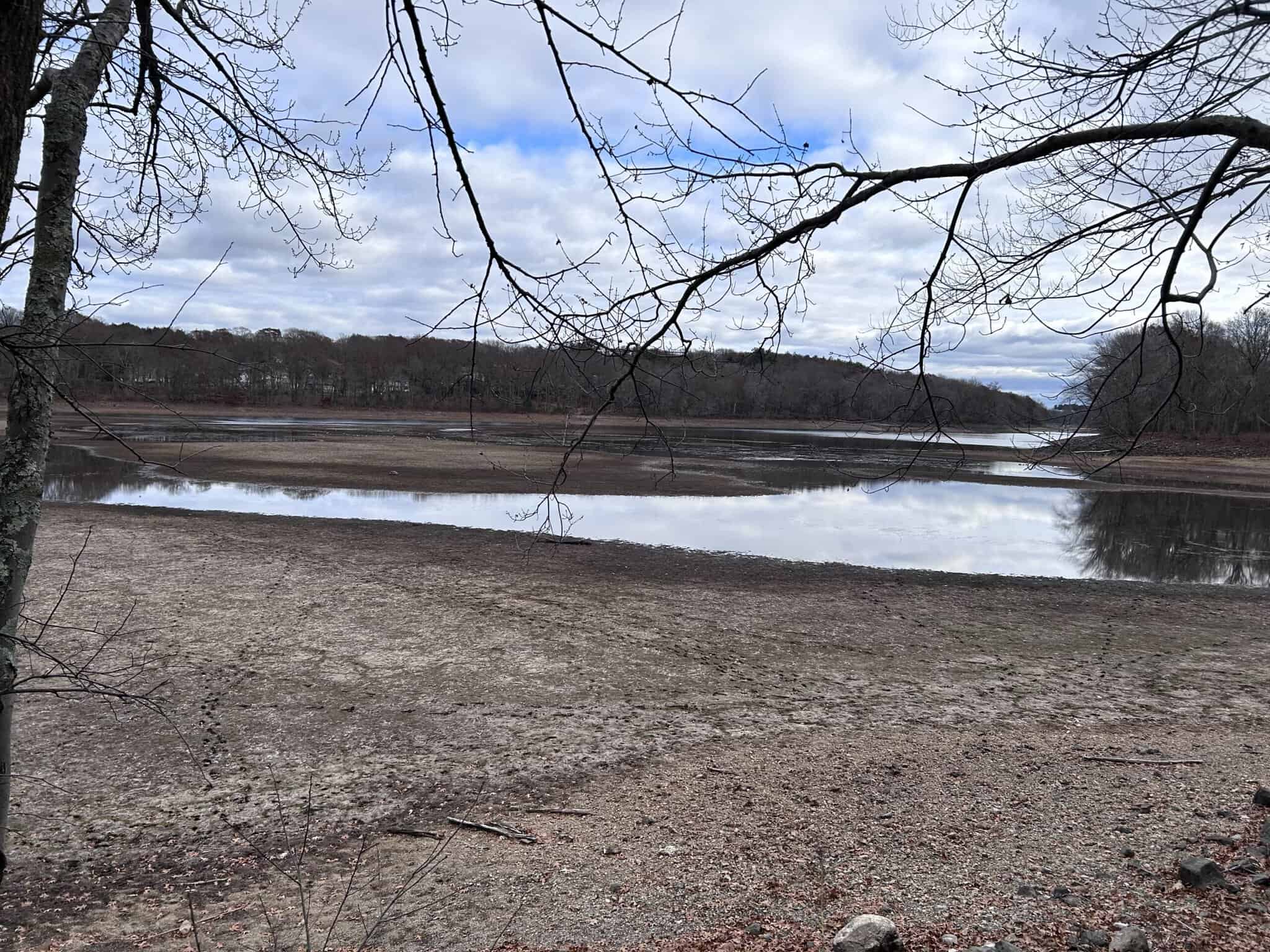
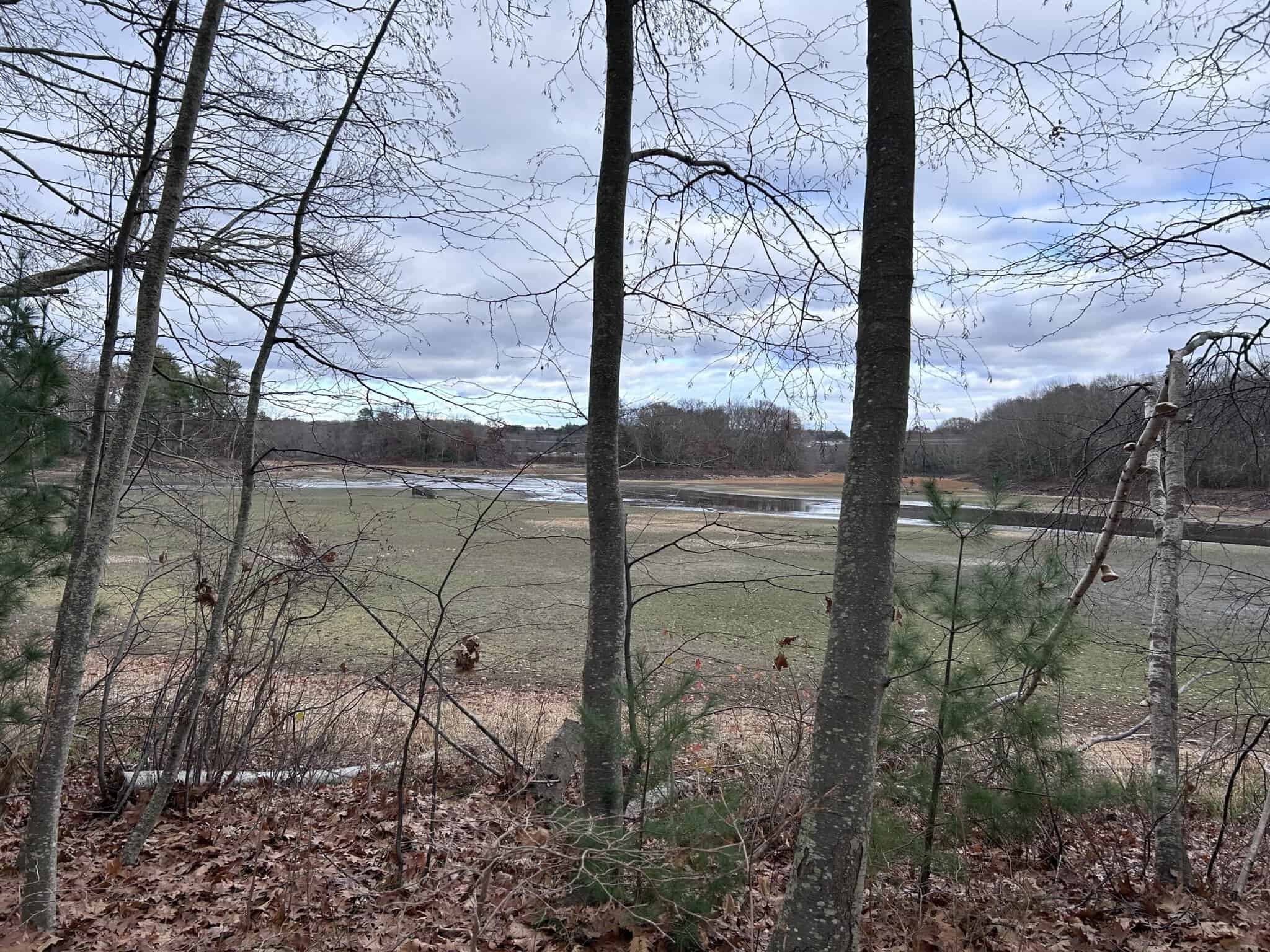
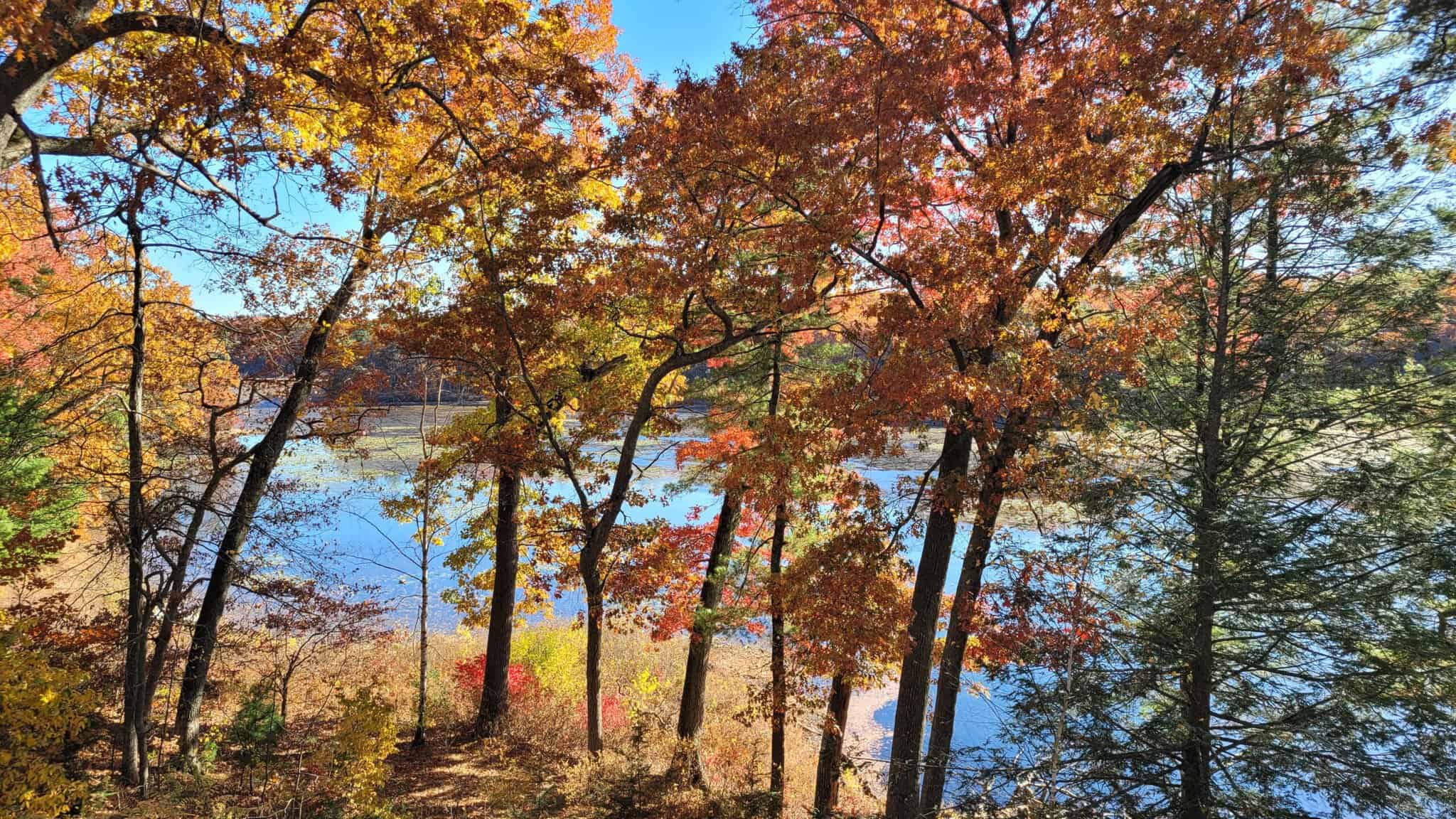
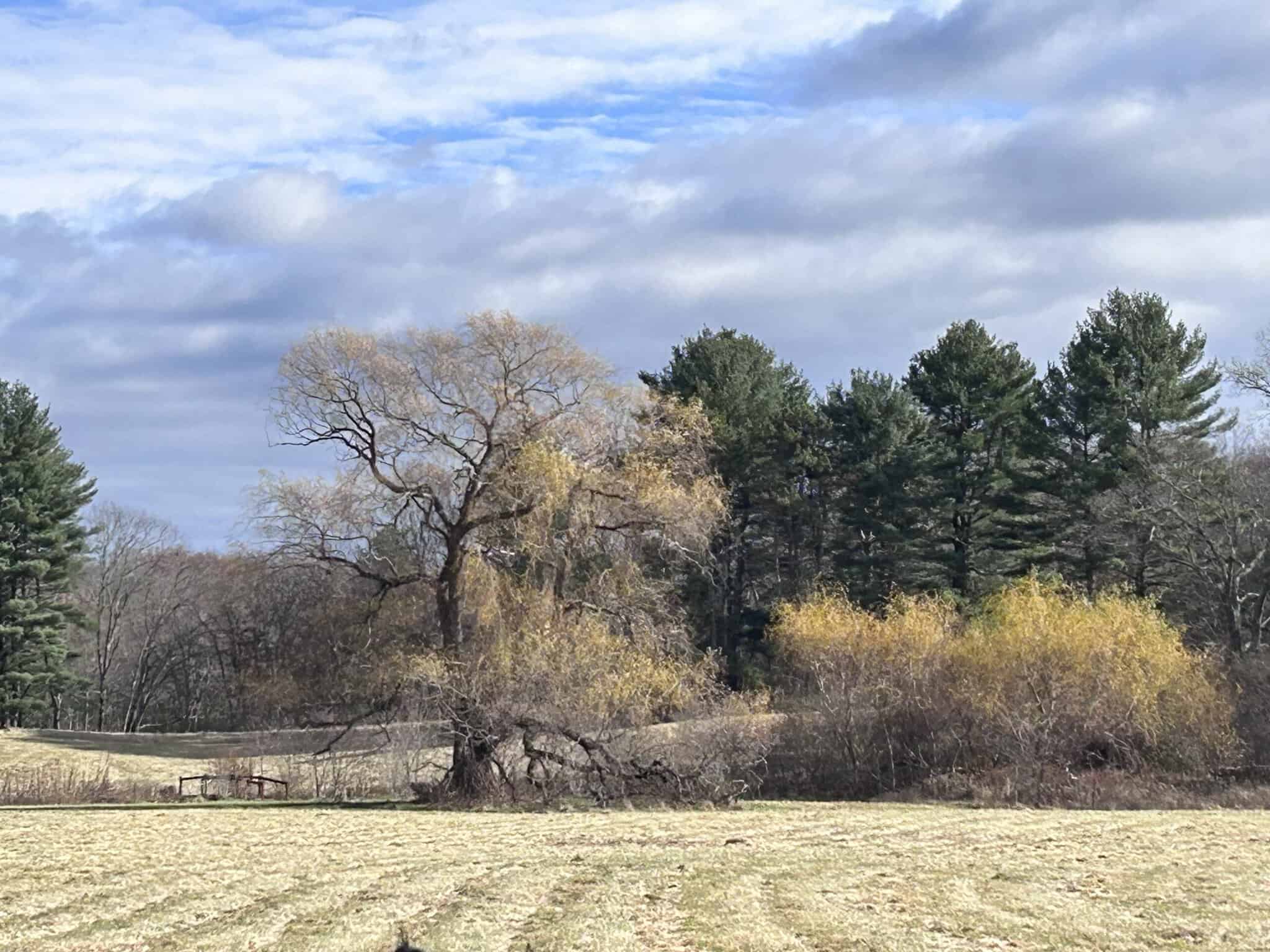
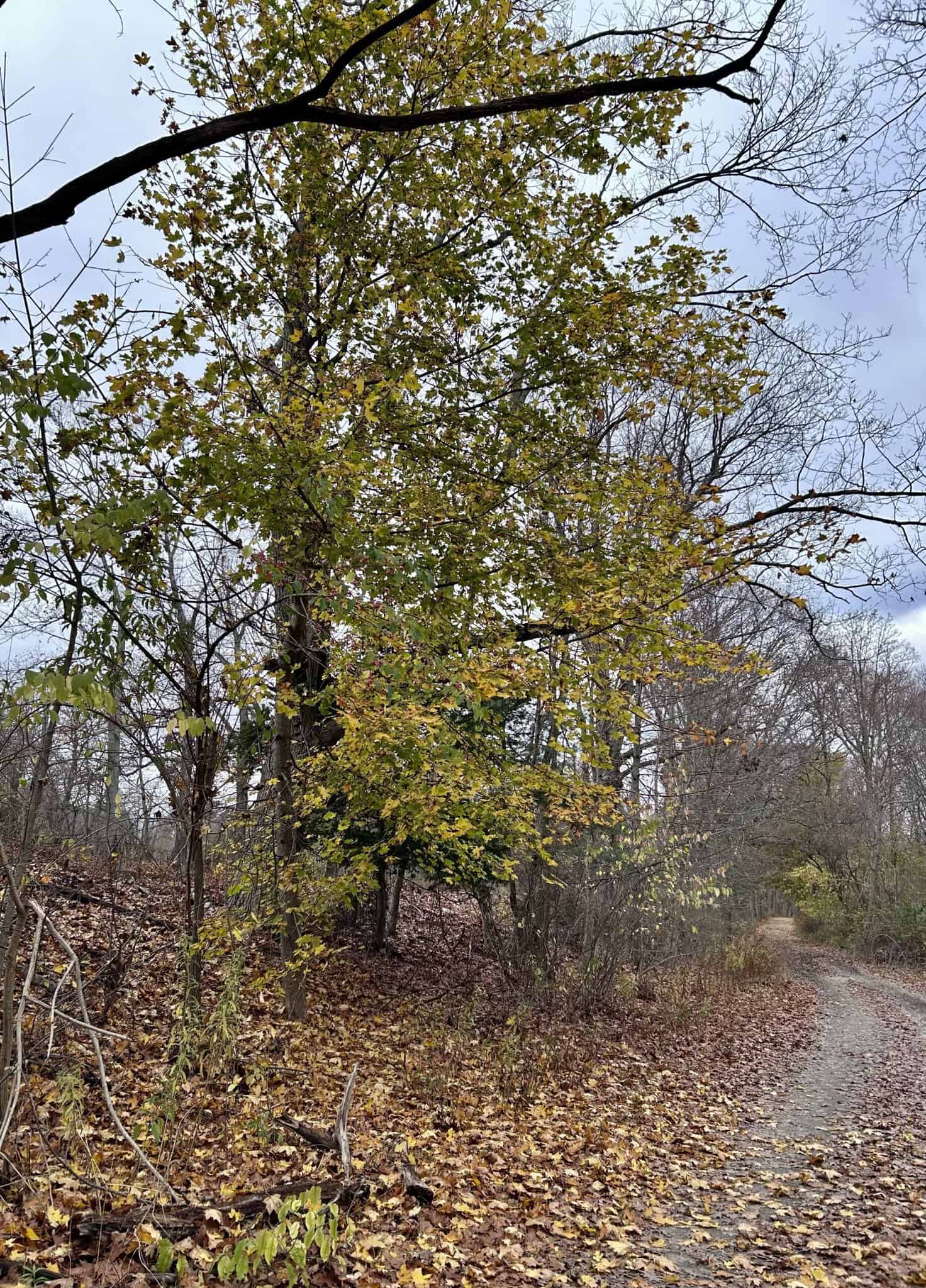
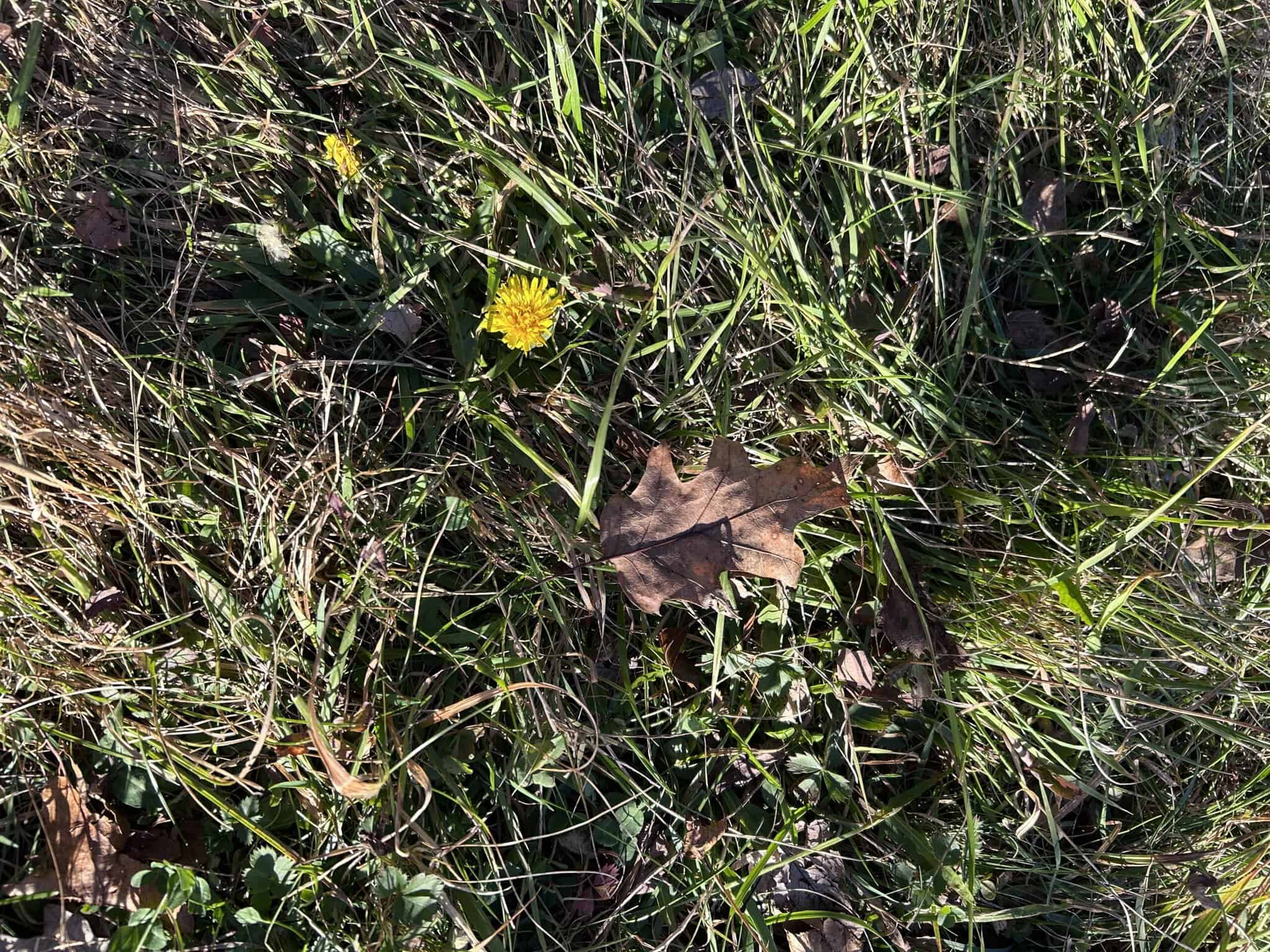
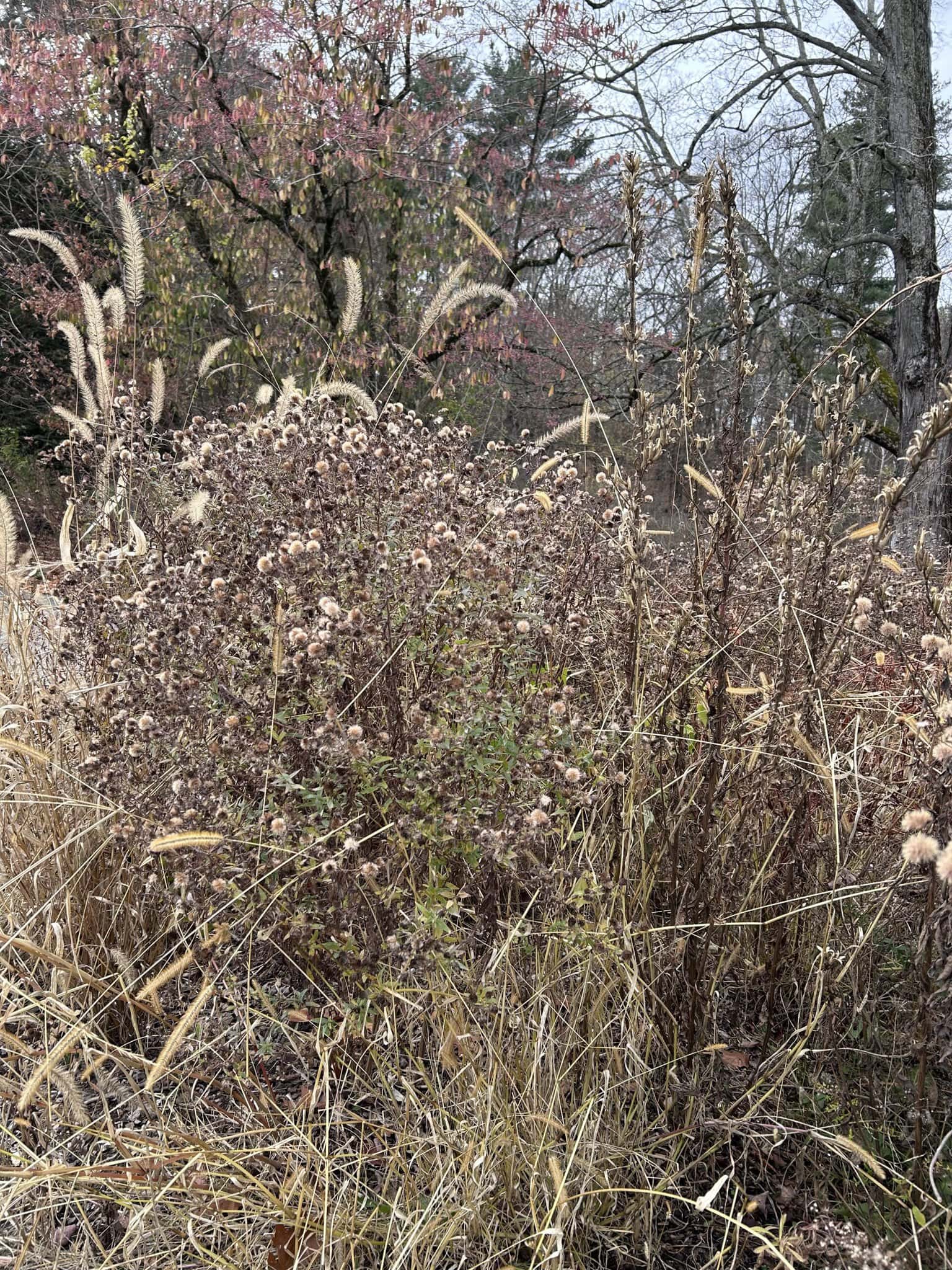
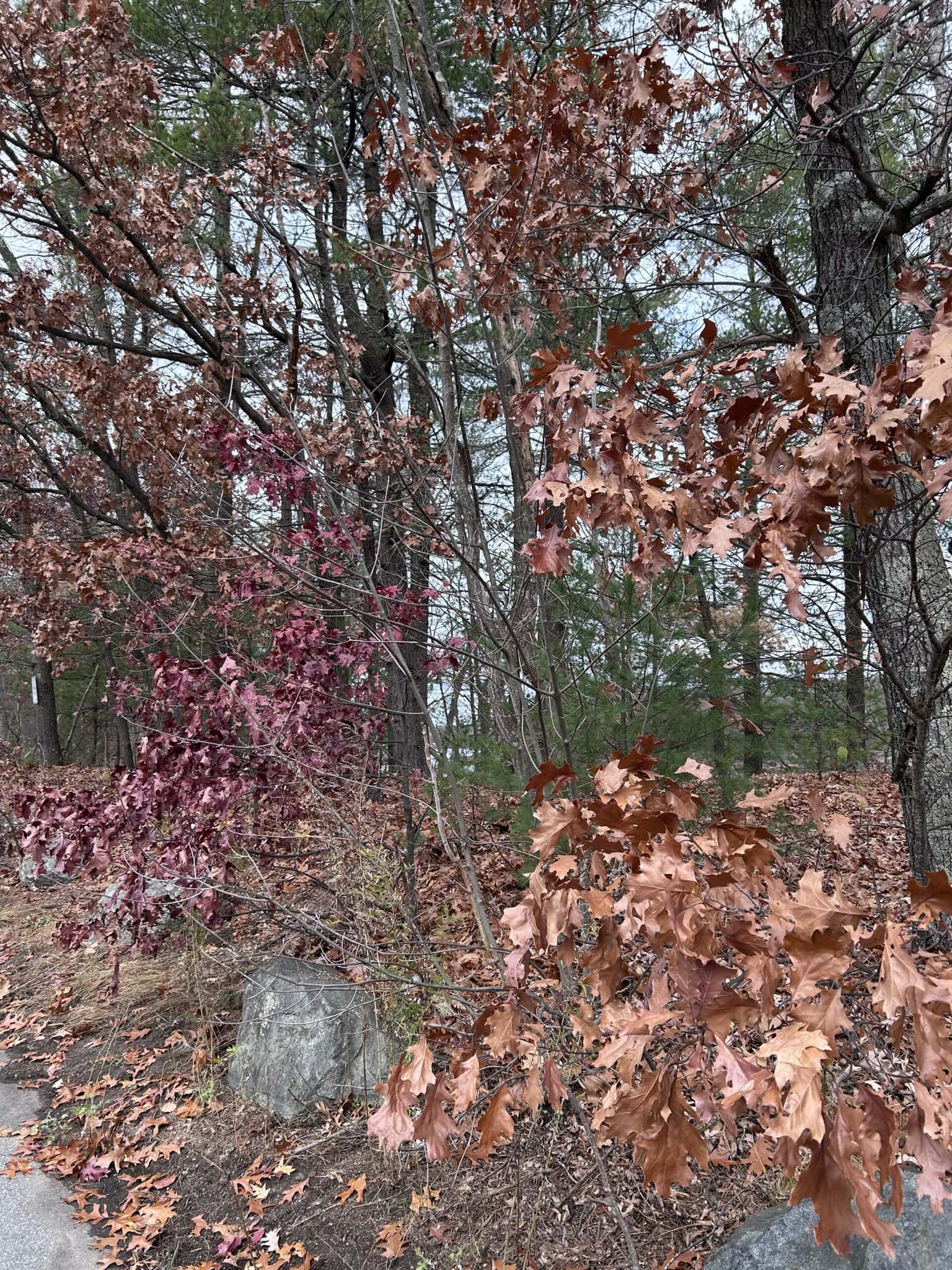
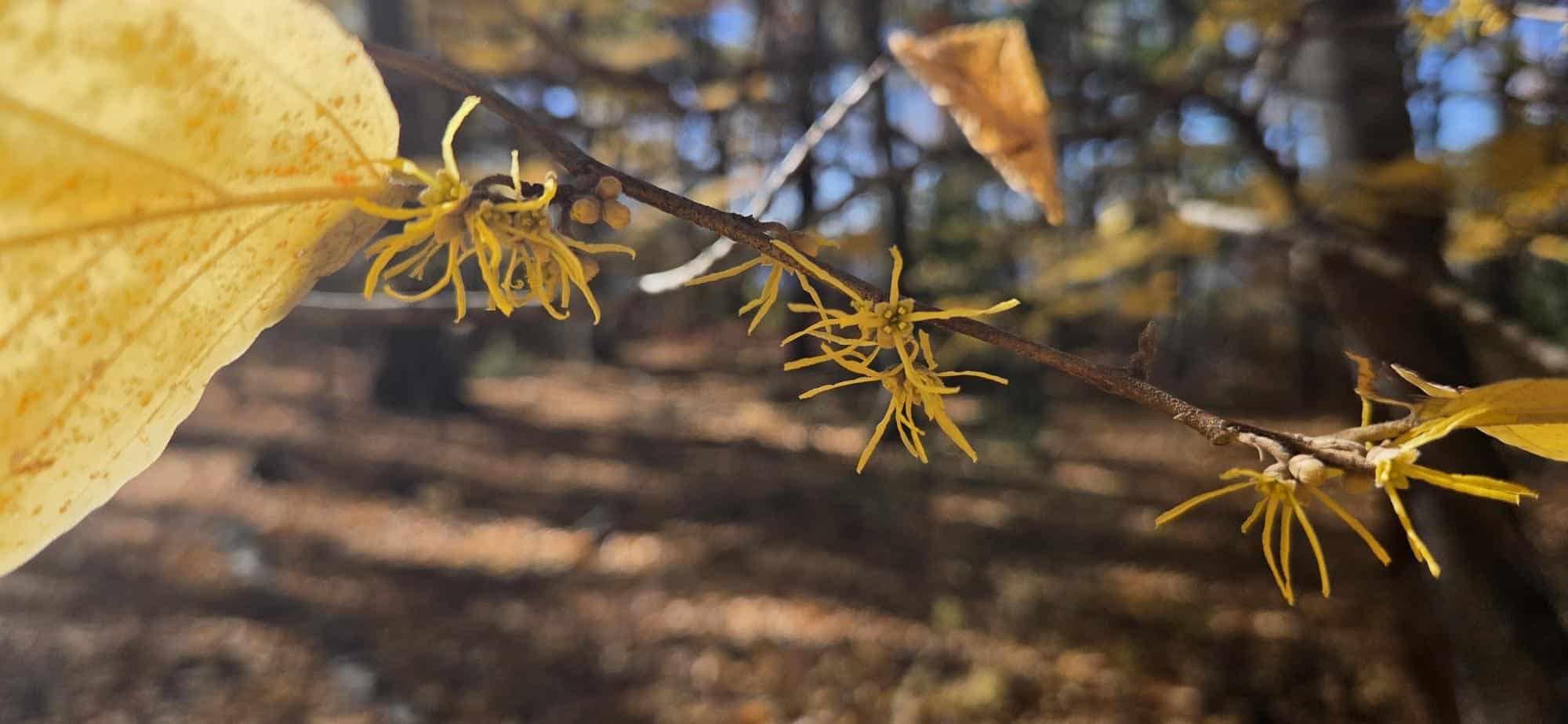
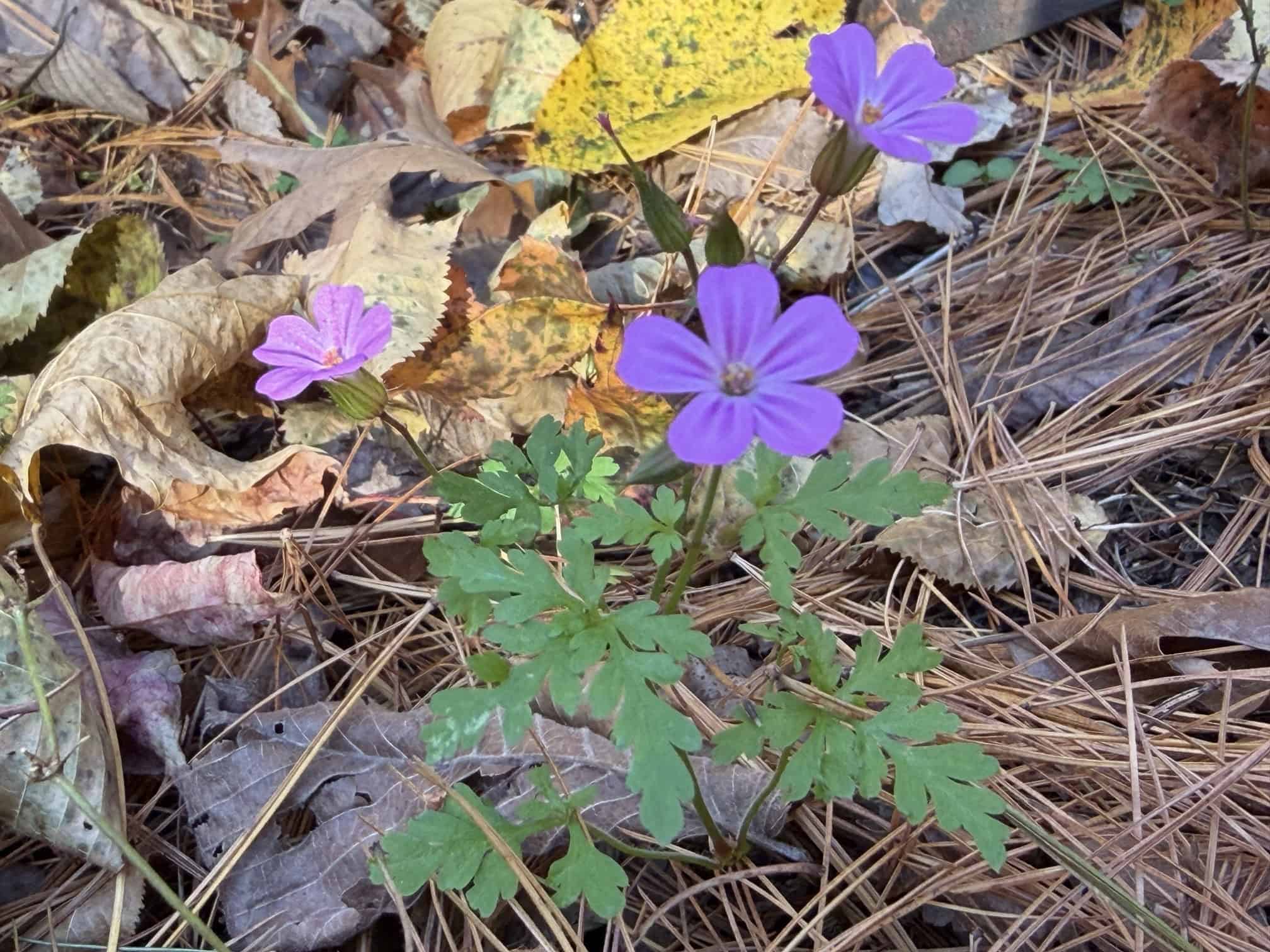
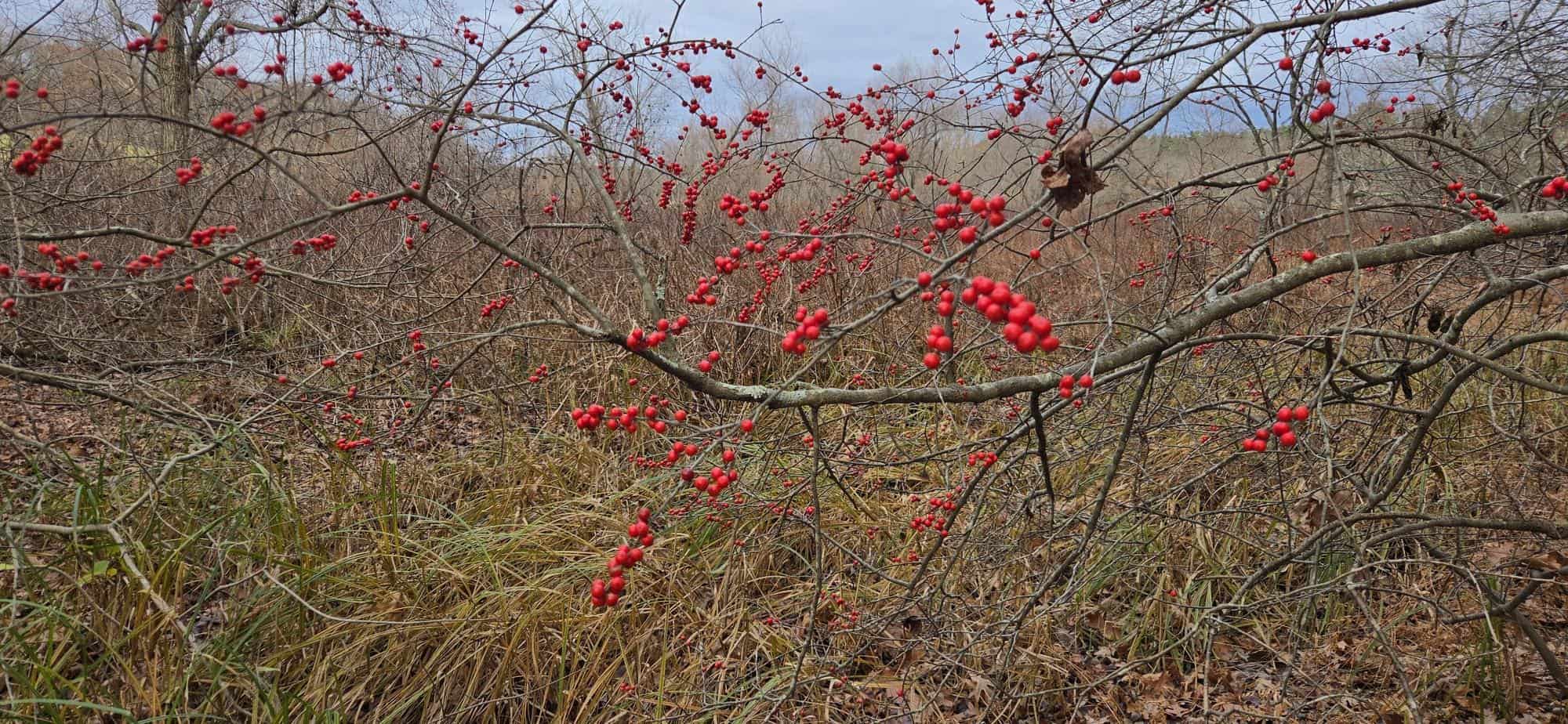
The October fall foliage was spectacular but now the landscape is primarily gray and brown, punctuated with color from lingering fall foliage on a few species of shrubs and trees. This is the time to focus on the less showy aspects of nature, such as the subtle colors of bark and lichen, and the shapes of trees and winter weeds. Fallen leaves crunch under foot on a woodland walk, and I marvel at how many shades of brown exist. It’s good to see that many people are following advice to “leave the leaves” and “save the stems” , thus benefiting the ecosystem in several ways. One shrub, American witch hazel, flowers in November and has an unusual manner of seed dispersal. As Ranger Will Leona explains, “ Witch hazel exhibits “ballistic seed dispersal” which is exactly as it sounds. The seeds are forced out by the immense pressure of the drying “fruit”. The result is an elastic like action where the seeds shoot outwards at the about 20mph and 20 to 30 feet in distance. I believe the process is known as ballistochory.” Will also photographed some beautiful winterberry, which is a deciduous holly, and the fruits are relished by many birds. A few hardy flowers such as dandelions and wild geraniums were spotted blooming in November.
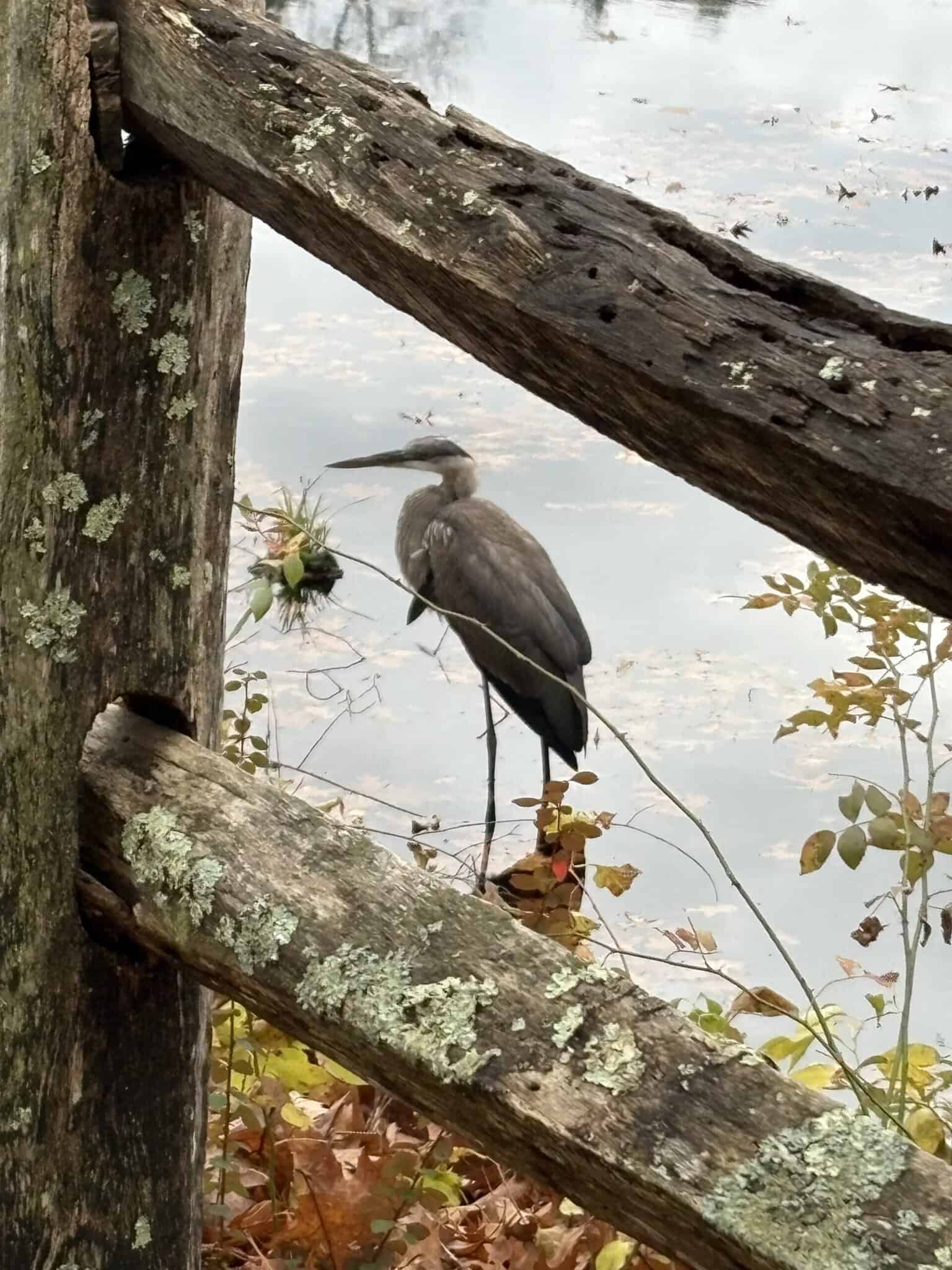
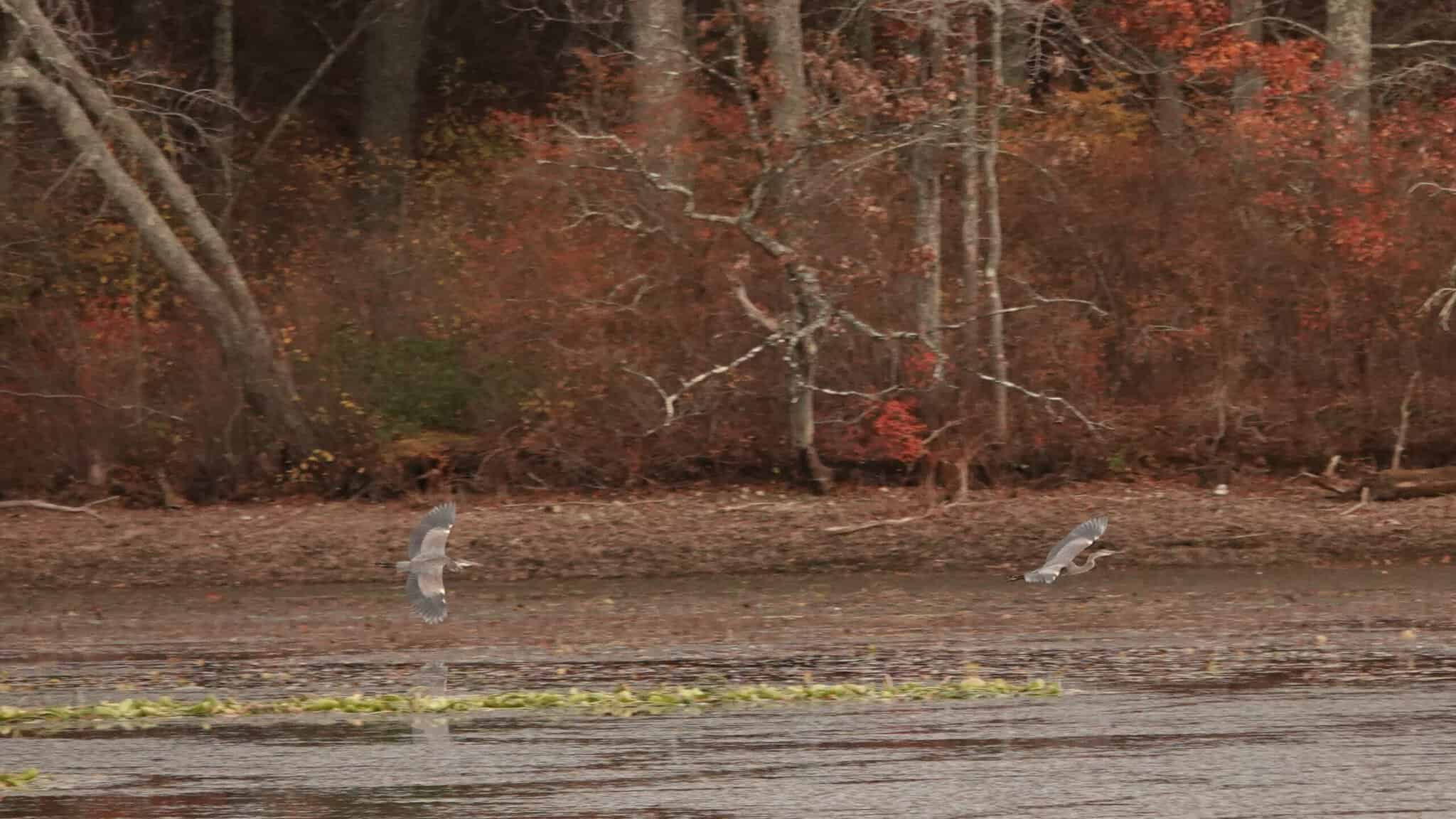
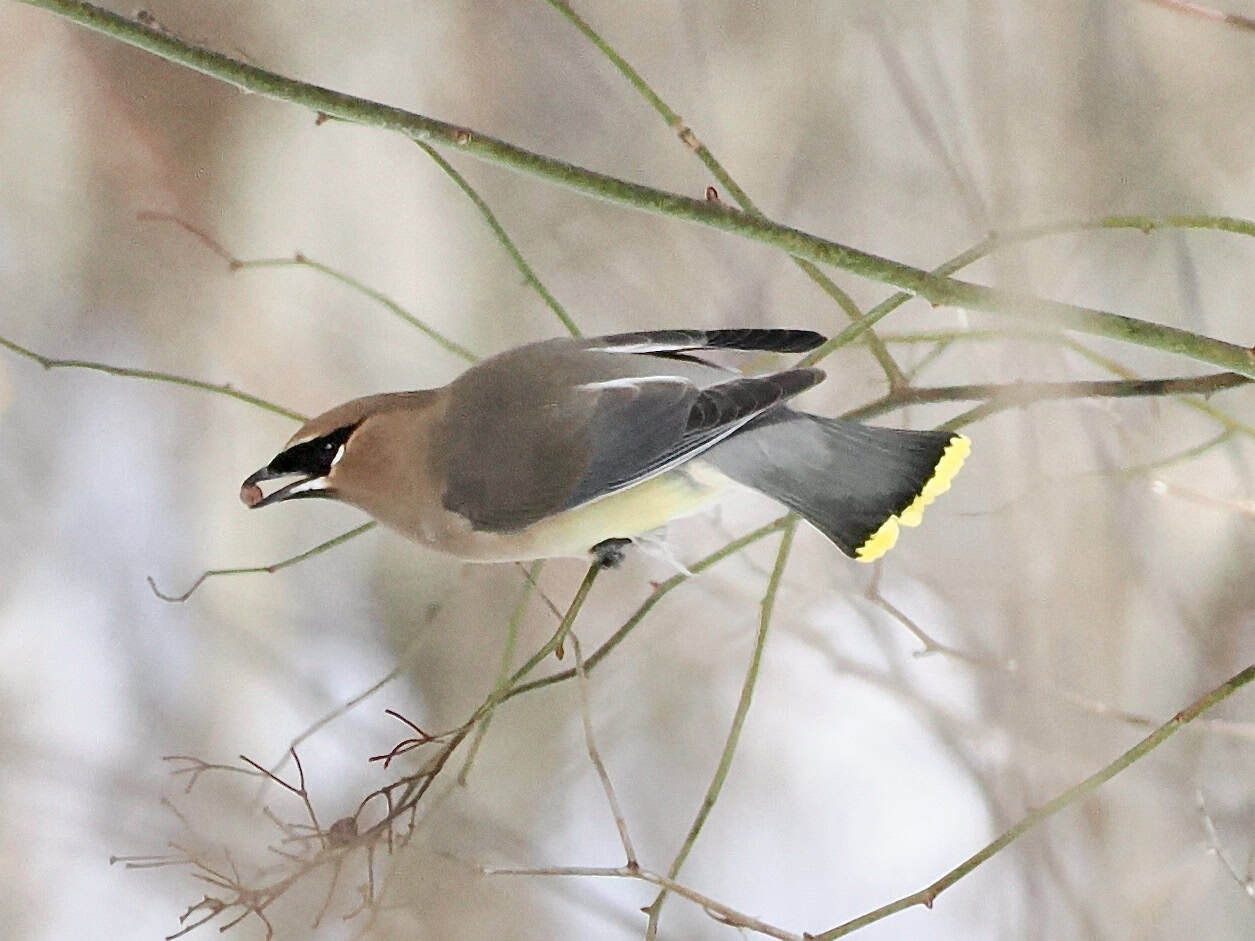
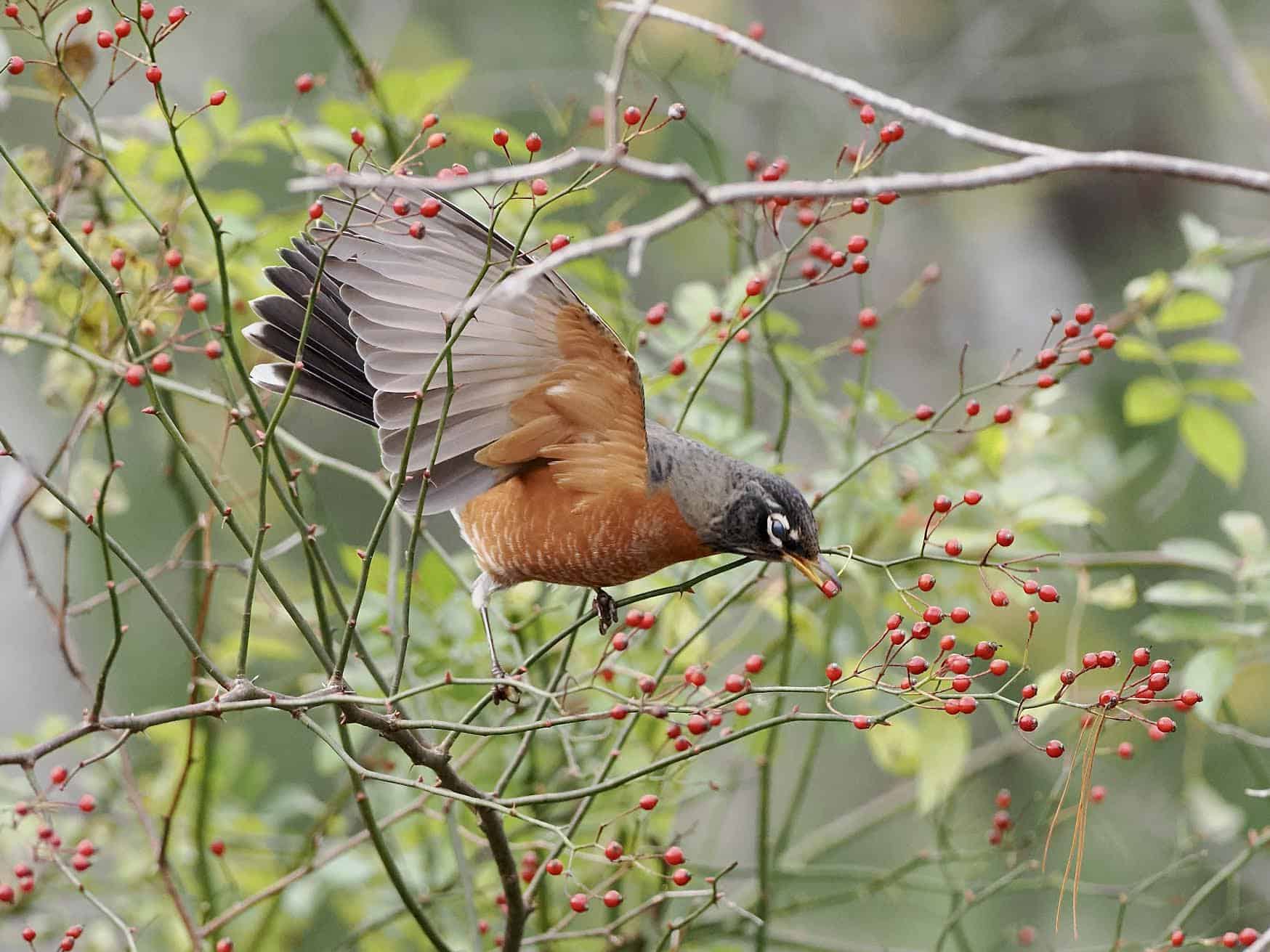
It has been a ‘birdy” fall, as the usual migrants pass through, winter residents arrive, and unusual species turn up. Observers saw flocks of robins feeding on lawns and fields, and although most of them were en route to places a bit farther south, some will stay here through the winter, feeding on berries. They have been eating the fruits on my flowering crab trees, alongside cedar waxwings. Other birds which are “short distant migrants”, i.e.they go slightly farther south in the US, such the Middle Atlantic states, include belted kingfishers and great blue herons. They may linger if there is still open water; it’s all about food availability. Some Eastern bluebirds overwinter, and hardy individuals of species such as hermit thrushes, pine warblers and gray catbirds often turn up on the Christmas Bird Count in tiny numbers.
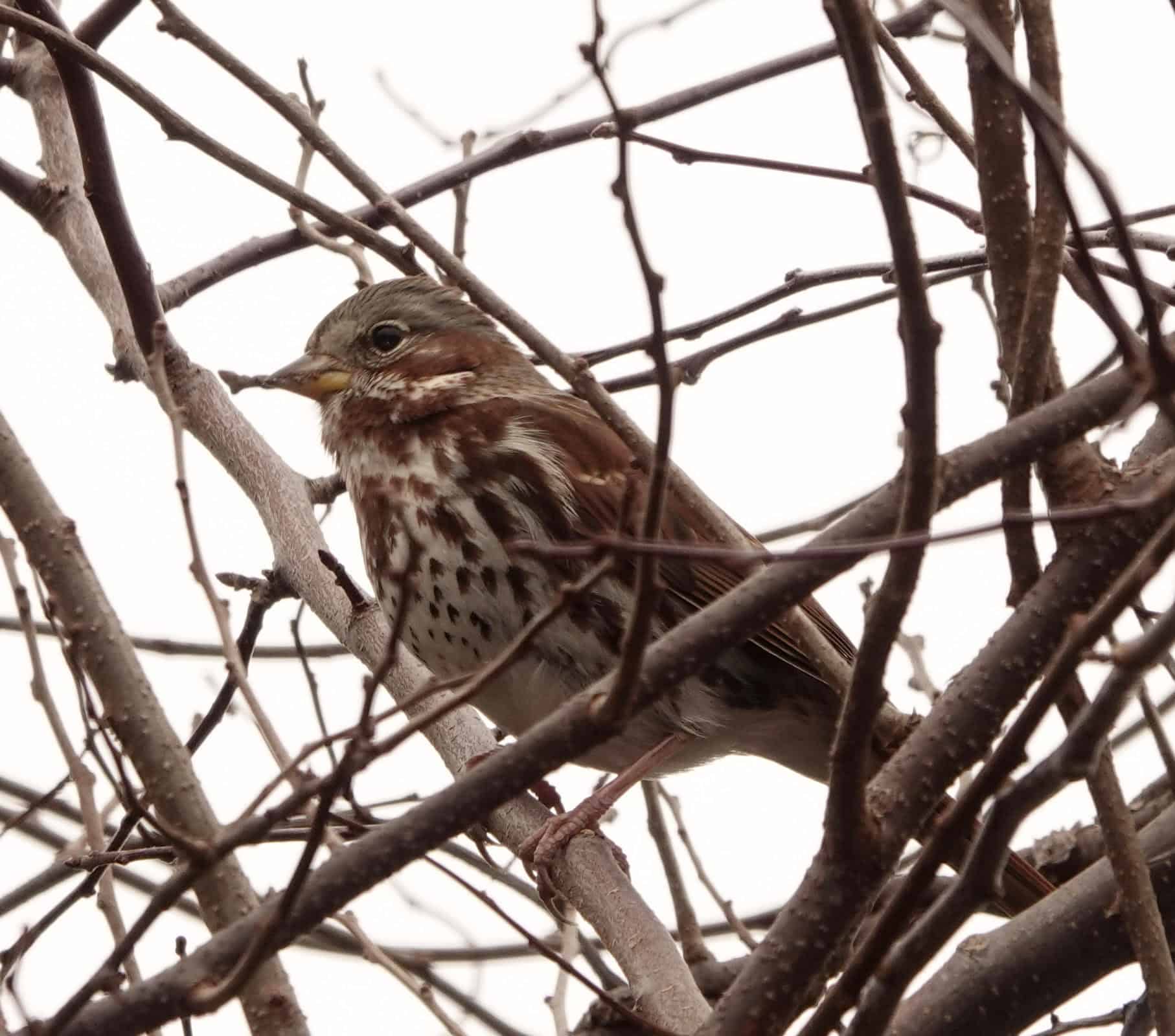
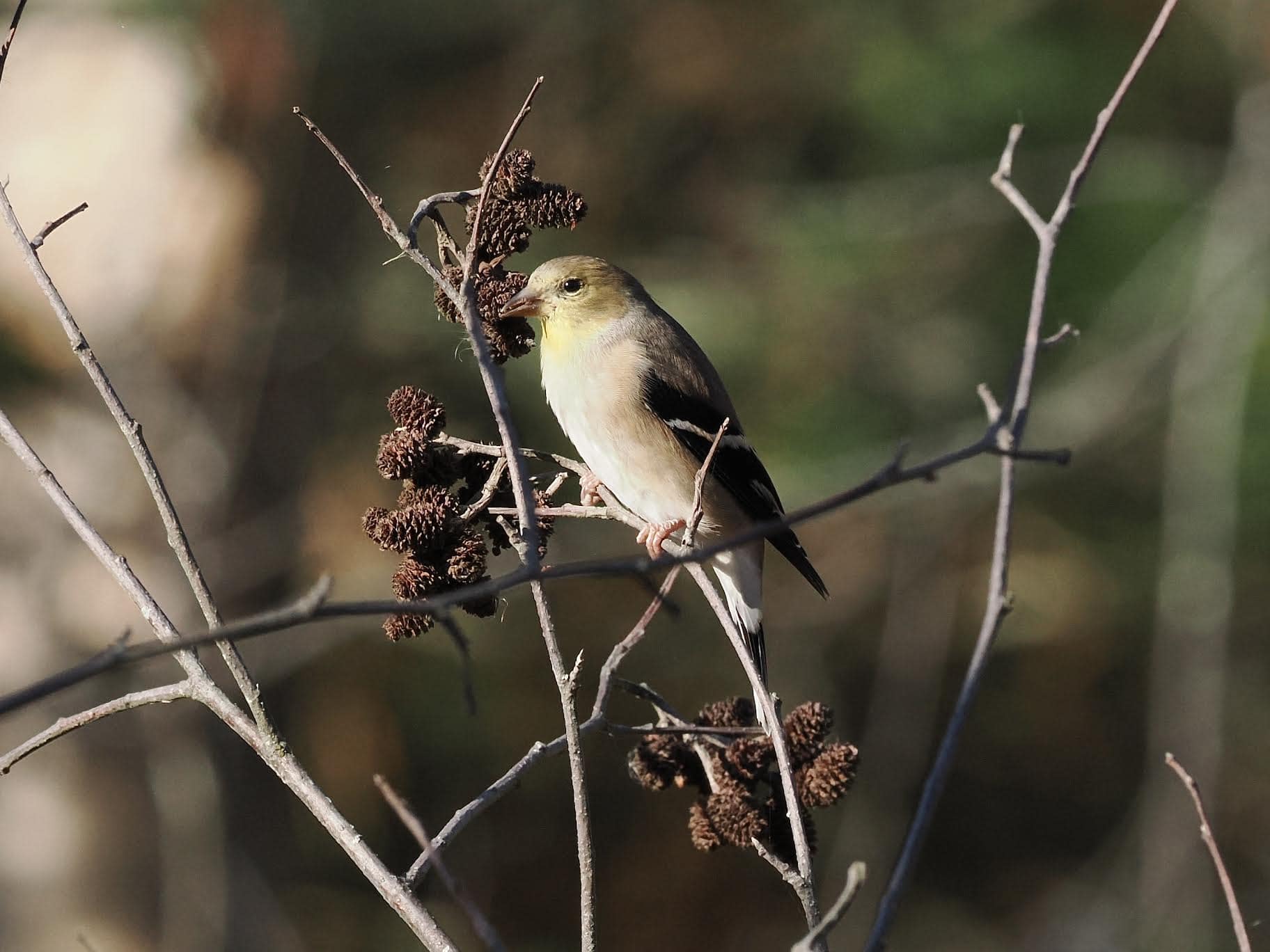
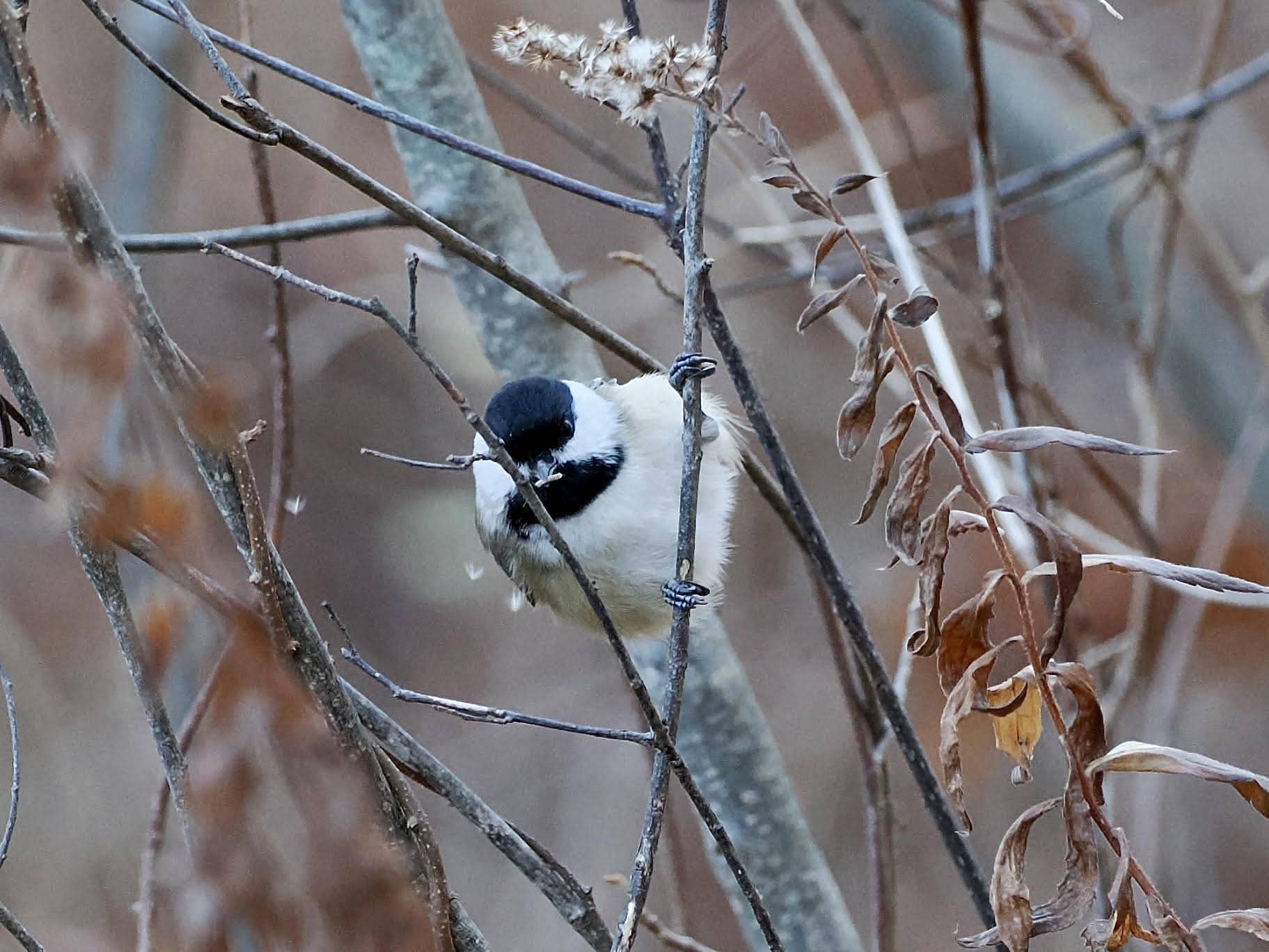
Dark-eyed juncos, white-throated sparrows, and American tree sparrows are here for the winter months, and late migrants are still coming through, such as common grackles, rusty blackbirds, savannah sparrows, a field sparrow, fox sparrow, marsh wren, and American pipits (over eighty on some days, at Drumlin Farm). Single Nashville, blackpoll, and yellow-rumped warblers have been spotted at Drumlin, as well as a dickcissel, sporadically. American goldfinches have molted to their drab winter plumage and I enjoy watching them feed on seed heads in my perennial garden.
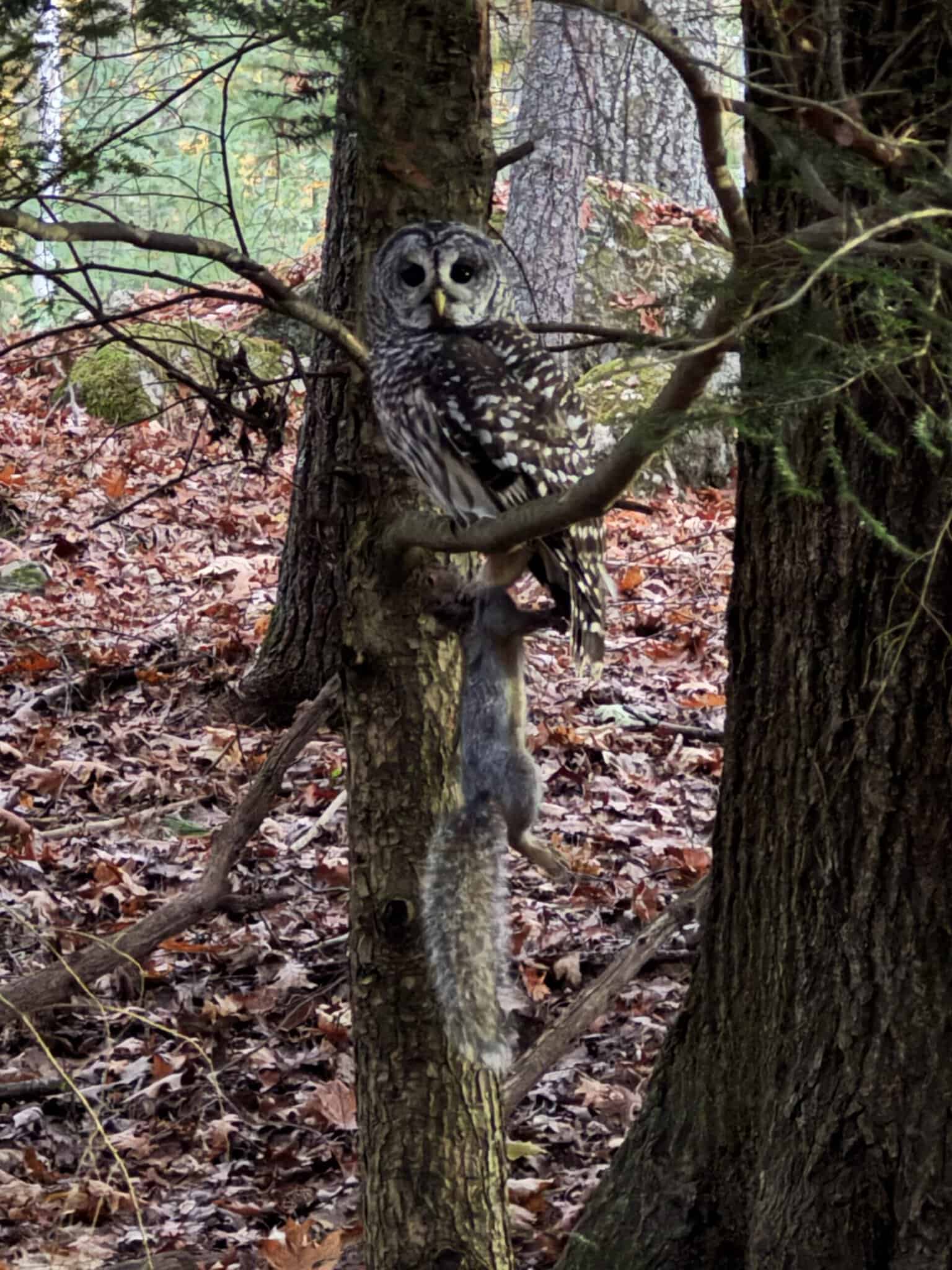
Various raptors have been reported, including bald eagles over Farrar Pond, Flint’s Pond, and the Cambridge Reservoir. Susan Packard photographed an unusual hawk, an American Goshawk, (juvenile), over Boyce Field, and Northern harrier, peregrine falcon, osprey, sharp-shinned hawk, red-shouldered hawk, and a merlin were all reported from Drumlin Farm. A Cooper’s hawk swooped through my bird-feeding area twice as I wrote this column; it flew way, empty-taloned. This is the season when great horned owls are hooting a lot; I was puzzled by a mewing call one night, which I learned was the call of a juvenile great-horned owl.
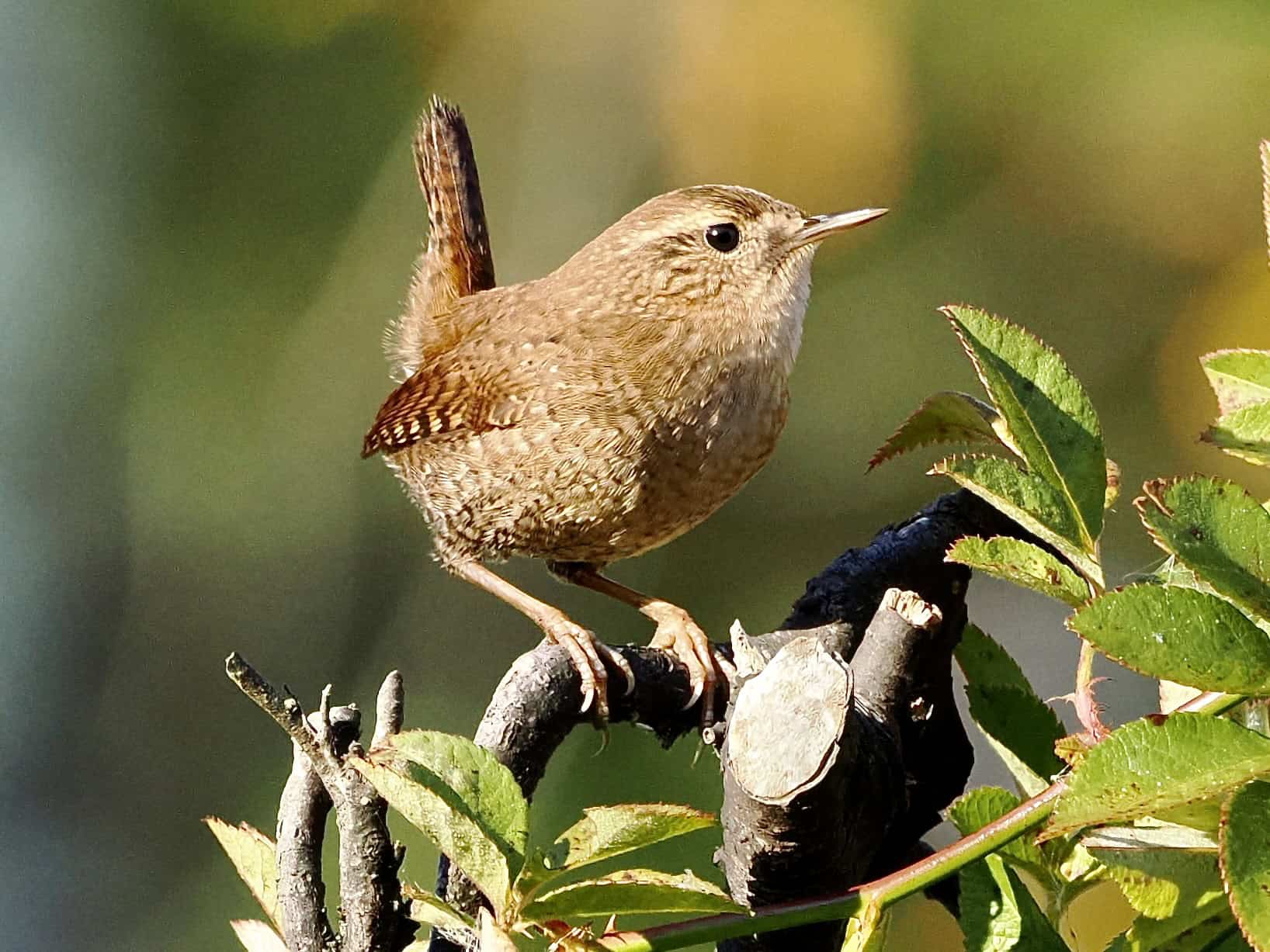
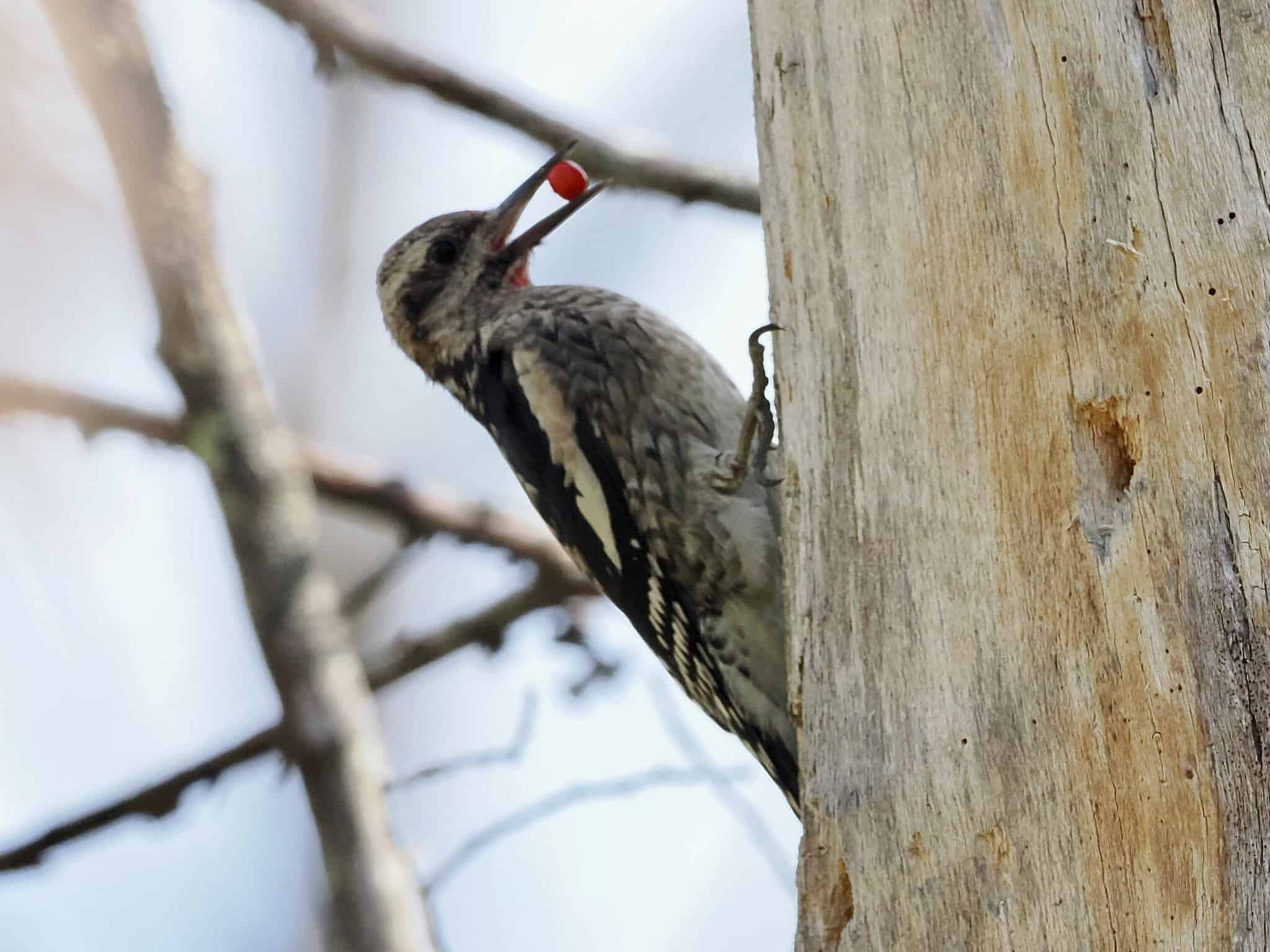
Other avian sightings of note include a winter wren and TWO pairs of yellow-bellied sapsuckers which whizzed through my garden, chasing each other. .Norm Levey happened to be at my house fixing a bird feeder and he recognized their call. One hit a window and was stunned, but seemed to recover and inched its way very high in a hemlock tree, out of sight.The others flew off, not to be seen again.
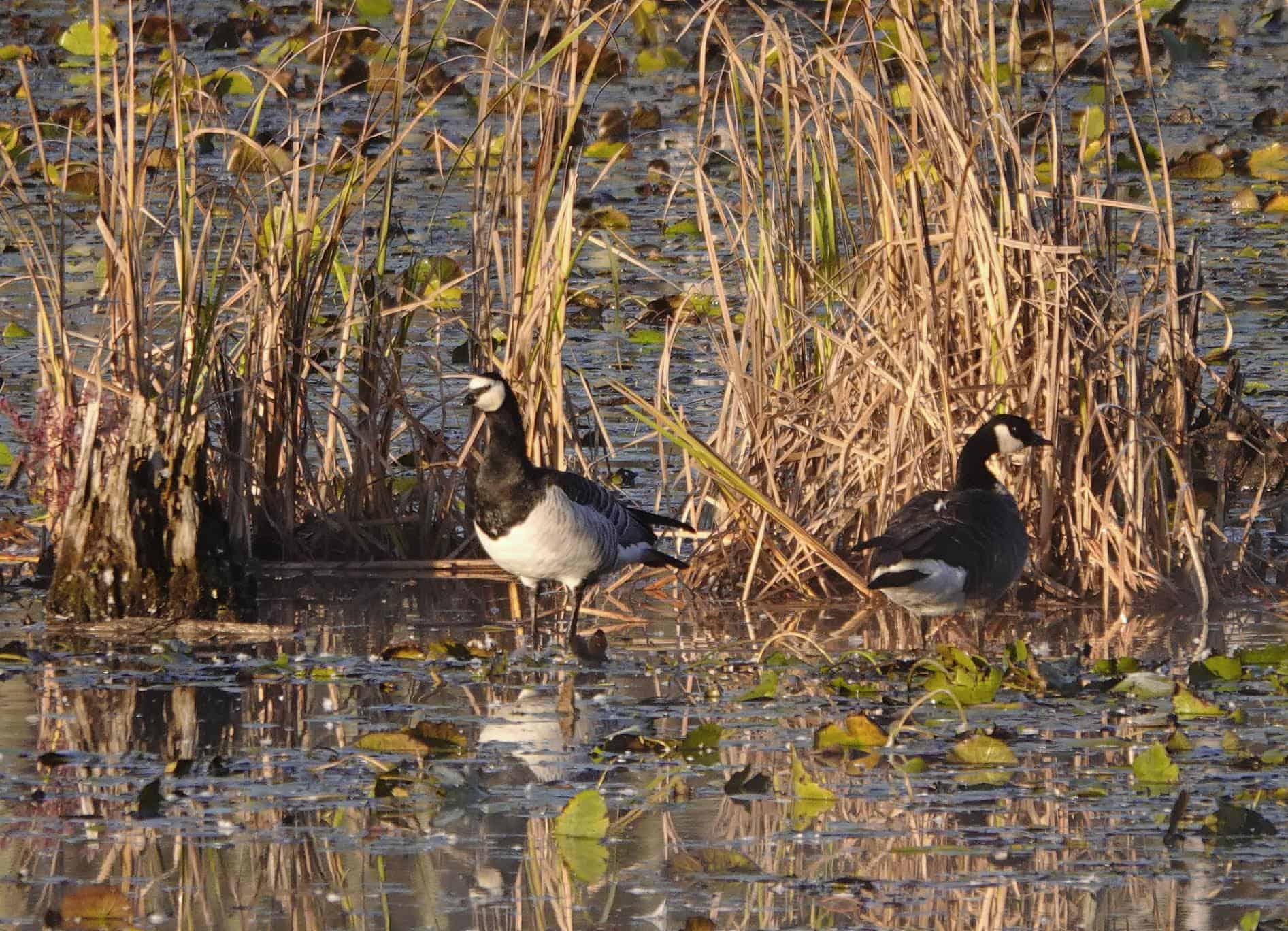
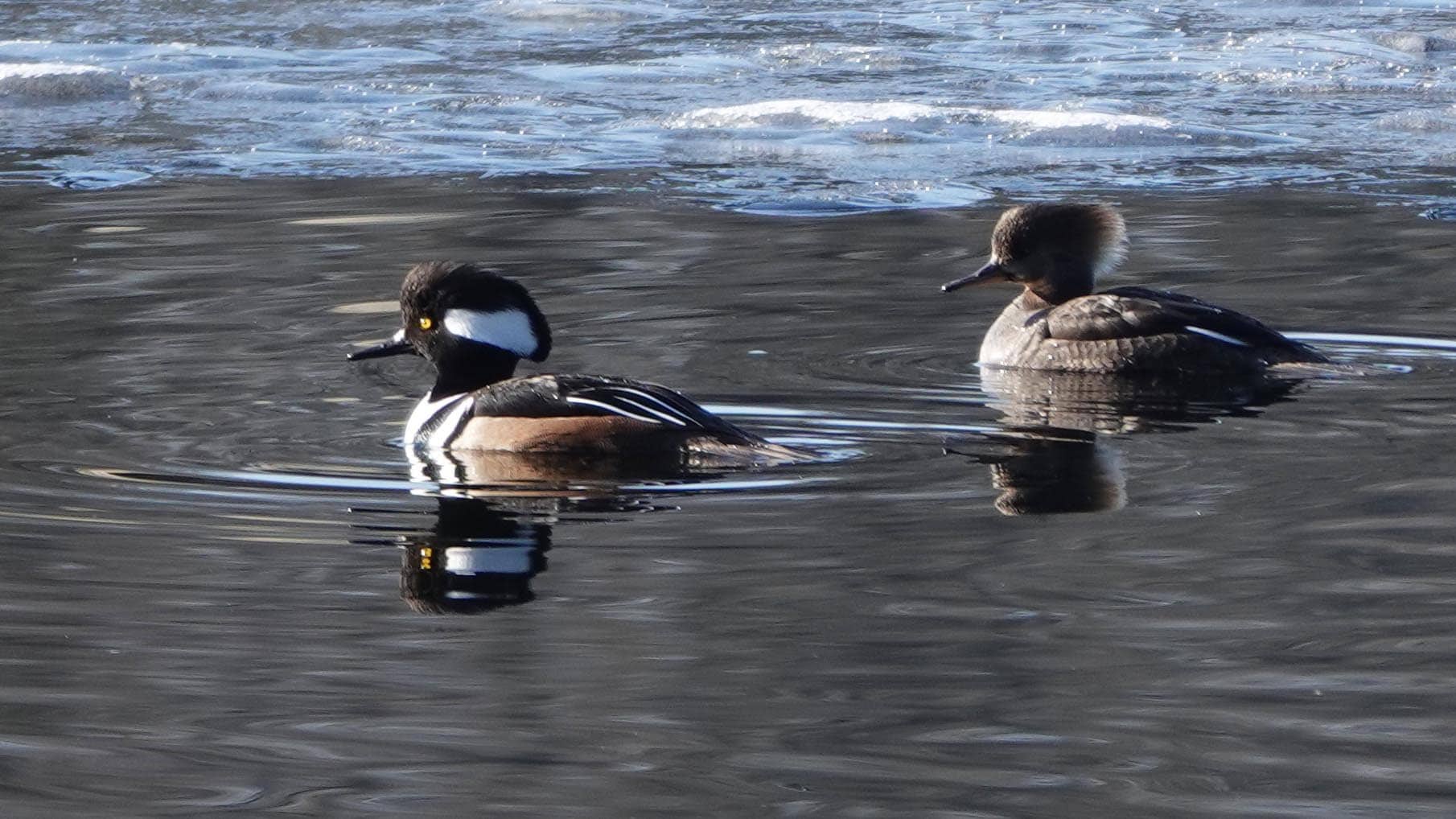
Numerous water birds have been frequenting ponds and the Cambridge Reservoir, including many Canada geese, mute swans, hooded mergansers, a common merganser, and mallards. An unusual species seen was a barnacle goose; see links to read the fascinating story about the origin of the name and the impact it had.
A red-necked grebe was at Flint’s Pond for several days, and the more common pied-billed grebes were spotted on a couple of ponds.
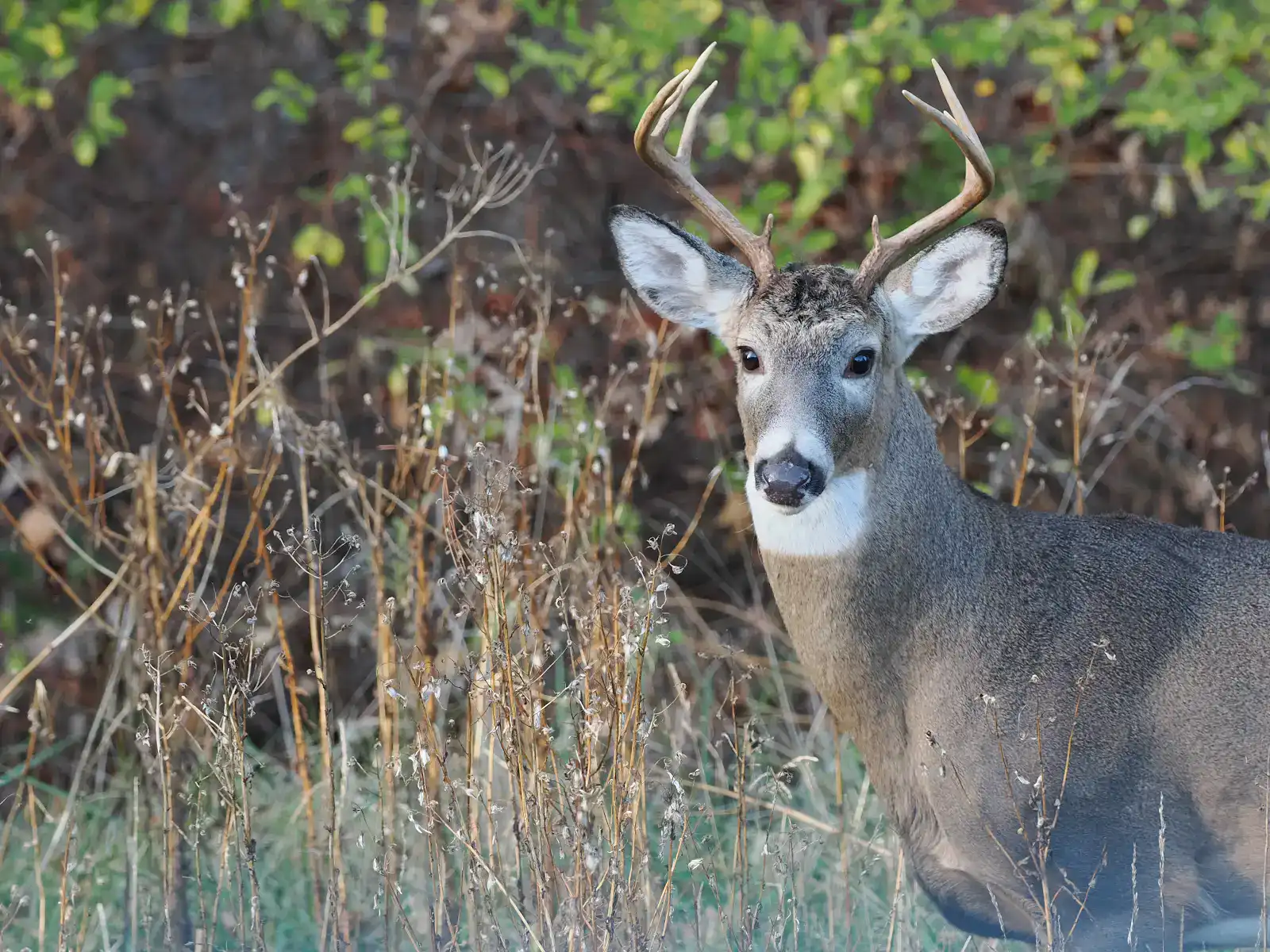
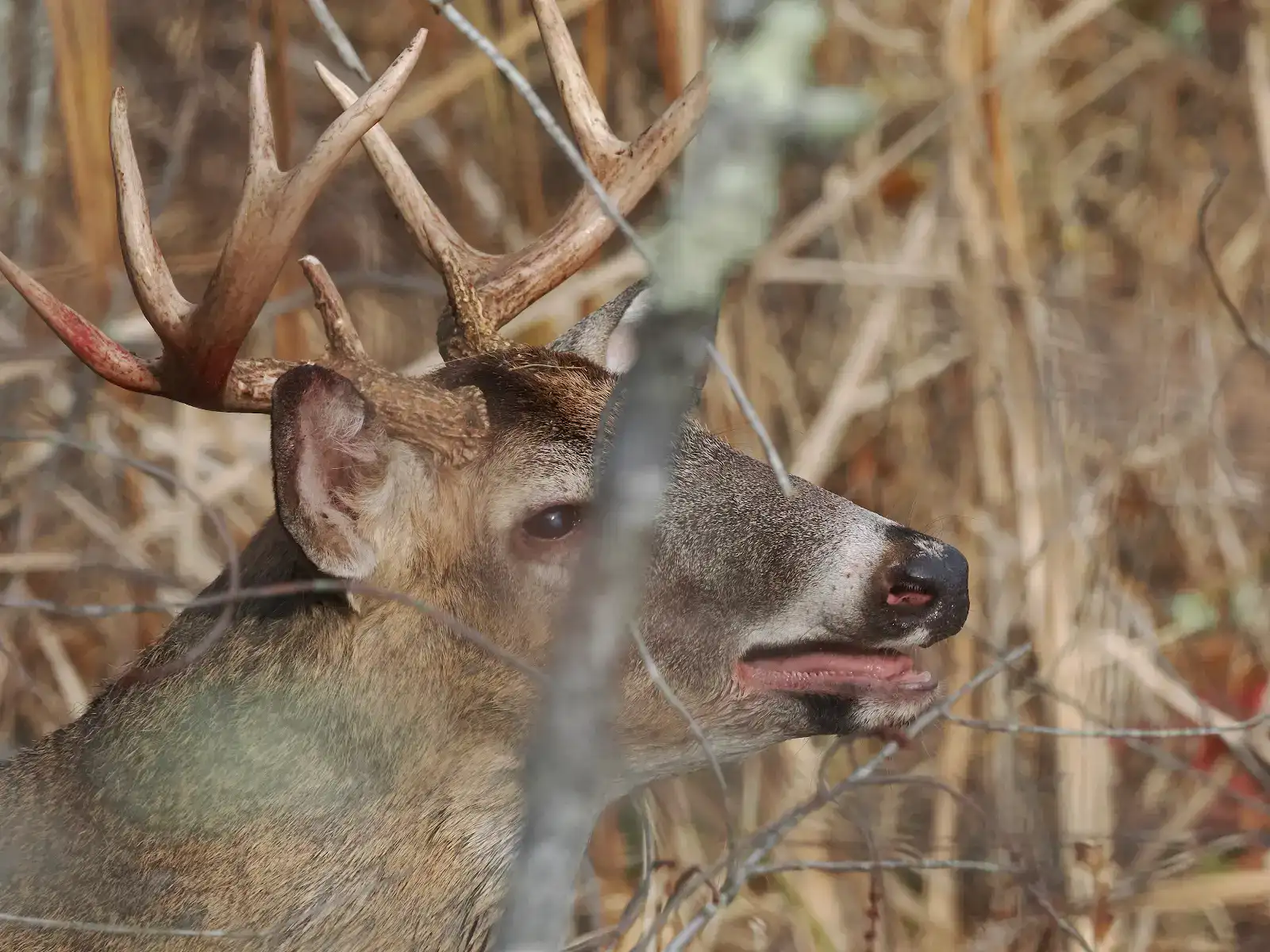
White-tailed deer are in the midst of their breeding season the “rut”, which peaks from mid-to late November. Hormones are high, and bucks leave scent messages for competing bucks and potential mates by rubbing their antlers, their foreheads and area below their eyes on trees. Carol Roede, seeing a buck, wrote, “ I heard him grunting, picking up the scent of a nearby doe – that’s when I took this close-up photo. He was pretty focused, and didn’t seem to notice me”.
In my October column I asked if readers had been seeing striped skunks, and one person, living on Bowles Terrace responded, saying their dog had had a skunk encounter back in August. Anyone else? Other mammals picked up on Carol Roede’s trail cam over the past month include opossum, mink, otters, flying squirrel, and coyotes. I still see an occasional rabbit, and a chipmunk stuffs its cheek pouches daily with dropped bird seed from my feeders. It is building up stores in its underground chambers for winter use. “Busy as a beaver” is a very appropriate phrase this month, as our local beavers are industriously preparing for winter. More about that in my December column. But a video Norm Levey snapped on his way to work raises the question, “Do beavers like jazz?”. While listening to jazz on the radio, Norm rolled down the window to watch a beaver having breakfast. He (or she) seemed completely unperturbed by the music. . See link to watch.
Insect activity is not very visible in the cold months, and many insects are just waiting in a state of “diapause” . As Mary Holland explains, the insects’ “growth, development, and activity are suspended temporarily, and they maintain a metabolic rate that is just high enough to keep them alive. Some insects overwinter as adults or larvae. Some pupate in the ground, in logs, or under bark, and many breed, lay eggs, and perish with the first hard frost.” Birds investigating tree bark are looking for the hidden insects. Recently I have observed moths flying at night, caught in my headlights. These are probably winter moths, although some may be Bruce spanworms, which are so similar they can only be distinguished under the microscope. When I look at a sunbeam I can see tiny insects flying on mild days.
Looking to the skies, the next full moon will be on November 24. It will also be a supermoon because it will be near its closest approach to the Earth (perigree) in its elliptical orbit and may look slightly larger and brighter than usual.
Links:
Watch Carol Roede’s trail cam video of a mink
Read how the Barnacle Goose got its name and the resulting behavior
Watch Rachel Neurath’s Lecture “Leave the Leaves”